Written by Ethan Walker · Reviewed against our Editorial Guidelines · Updated August 17, 2026
How to Clean a Slow Feeder Dog Bowl (Properly)
Clean a slow feeder bowl with a daily rinse and dish-soap scrub of the maze, a deeper soak-and-scrub once or twice a week, and — if it's stainless steel — a regular run through the dishwasher to sanitize it. A slow feeder's maze is brilliant for slowing your dog down, but it's also a magnet for trapped food, oils, and bacteria if you don't clean it right. This guide walks through the daily routine, the deep clean, and the dishwasher question.
The good news: with the right bowl it takes under a minute a day. With the wrong bowl, no amount of scrubbing fully fixes it — and we'll explain why.
Why slow feeder bowls need extra attention
A flat bowl is easy to wipe. A slow feeder has ridges, channels, and tight corners where kibble dust, food residue, and saliva collect. Left alone, that buildup grows bacteria, develops a film (biofilm), and starts to smell — and a dirty feeder can contribute to skin irritation around your dog's chin and mouth.
The maze that helps your dog is exactly what makes cleaning matter more. The payoff for a quick routine is a fresh, safe bowl your dog eats from happily every day.
Daily clean: the 60-second routine
Do this after every meal, or at least once a day:
- Scrape and rinse immediately. The longer food sits in the channels, the harder it is to remove. Rinse with warm water right after the meal.
- Add a drop of dish soap. A pet-safe or regular dish soap cuts through oils, especially with wet or raw food.
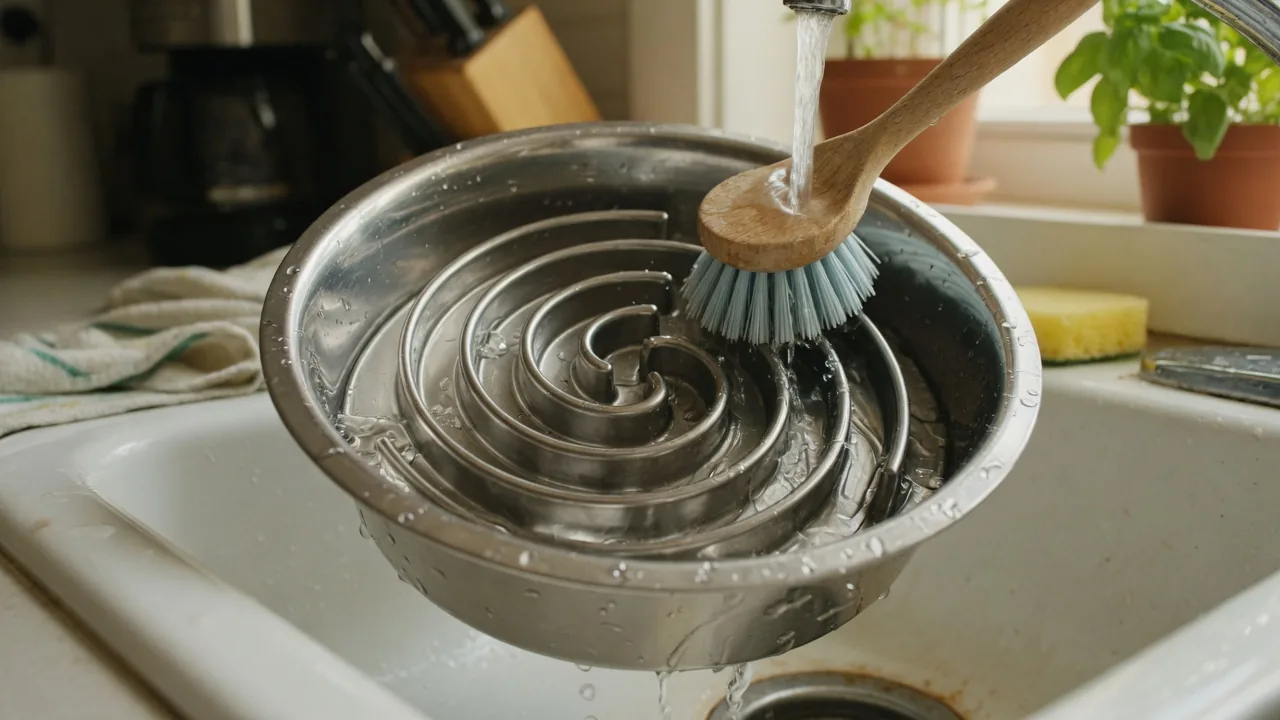
- Use a brush that reaches the grooves. A bottle brush or dish brush gets into the maze where a sponge can't. Work each channel.
- Rinse thoroughly. Soap residue can put picky eaters off, so rinse until the water runs clear.
- Dry or air-dry. A clean, dry bowl gives bacteria nothing to grow in between meals.
Deep clean: once or twice a week
Even with daily rinsing, give the maze a proper deep clean regularly:
- Soak first. Fill the bowl with warm, soapy water and let it sit 10–15 minutes to loosen residue in the grooves.
- Scrub every channel. Get into each ridge and corner with a brush.
- Natural option: a paste of baking soda and water, or a soak in equal-parts water and white vinegar, helps lift odors and stuck-on grime. Rinse well afterward.
- Rinse and dry completely.
For wet or raw feeders, deep clean more often — richer food builds up faster. (More on that in can you use a slow feeder for wet food.)
Can you put a slow feeder in the dishwasher?
It depends entirely on the material:
- Stainless steel: yes. It's fully dishwasher-safe, and the hot cycle sanitizes the maze far better than hand-washing. Top or bottom rack both work.
- Plastic: risky. Many plastic feeders warp in dishwasher heat, which ruins the fit of the maze and creates new crevices for bacteria. Check the label, and even then expect a shorter life.
The dishwasher is the easiest, most hygienic way to clean a slow feeder — which is one more reason steel wins for everyday use.
How to stop a slow feeder from smelling
A smelly feeder almost always means one of two things:
- Residue is trapped and growing bacteria — fix with a proper deep clean and a baking-soda or vinegar soak.
- The bowl is scratched plastic — and this one you can't fully fix. Once plastic develops micro-scratches, food and bacteria lodge in grooves that brushing can't reach, so the smell keeps coming back no matter how hard you scrub.
This is the core hygiene difference between materials. Stainless steel is non-porous — there are no scratches for bacteria to hide in, so a wash genuinely cleans it and it doesn't hold odors. If your current feeder smells even after cleaning, the bowl itself is the problem. (We compare them fully in stainless steel vs plastic slow feeders.)
If you're tired of fighting a smelly maze, a stainless steel slow feeder cleans up in seconds, goes straight in the dishwasher, and never traps odors the way worn plastic does.
Cleaning mistakes to avoid
- Letting food dry in the channels — rinse straight after meals.
- Using a flat sponge only — it can't reach the grooves; use a brush.
- Leaving the bowl wet in a cupboard — dry it so bacteria can't grow.
- Harsh chemicals or steel wool on plastic — they scratch it further and make the problem worse.
- Skipping the deep clean — daily rinsing isn't enough on its own.
The bottom line
Knowing how to clean a slow feeder bowl is mostly about consistency: a 60-second rinse after meals, a proper deep clean once or twice a week, and the dishwasher for sanitizing. But the bowl matters too — stainless steel rinses clean, sanitizes in the dishwasher, and never holds odors, while scratched plastic fights you forever.
Keep it clean and your dog gets all the slow-feeding benefits with none of the hygiene downsides.
👉 Stainless Steel Slow Feeder Dog Bowl — dishwasher-safe & odor-free →
Frequently Asked Questions
How do you clean a slow feeder dog bowl? Rinse it right after meals, add a drop of dish soap, and use a brush to scrub each maze channel, then rinse thoroughly and dry. Deep clean once or twice a week with a soak, and run stainless steel through the dishwasher to sanitize.
Can you put a slow feeder bowl in the dishwasher? Stainless steel slow feeders are fully dishwasher-safe and the hot cycle sanitizes the maze well. Many plastic feeders warp in dishwasher heat, so check the label — and expect a shorter lifespan.
Why does my slow feeder bowl smell? Usually trapped food residue growing bacteria, which a deep clean fixes. If it's scratched plastic, the odor keeps returning because bacteria hide in grooves brushing can't reach. Stainless steel is non-porous and doesn't hold smells.
How often should I clean a slow feeder? Rinse after every meal, and deep clean once or twice a week — more often for wet or raw food, which builds up faster.