Written by Ethan Walker · Reviewed against our Editorial Guidelines · Updated September 8, 2026
Stainless Steel vs Plastic Slow Feeder Dog Bowls: Which Is Better?
You've decided a slow feeder is right for your dog — good call. But now you're stuck on the next question: stainless steel or plastic? They look similar and plastic is usually cheaper, so is the upgrade actually worth it?
Short answer: stainless steel is the better choice for almost every dog — it's more hygienic, lasts far longer, and avoids a few problems plastic quietly causes. Here's the full comparison so you can decide with confidence.
Quick comparison table
| Factor | 🥈 Plastic Slow Feeder | 🥇 Stainless Steel Slow Feeder |
|---|---|---|
| Hygiene | Scratches trap bacteria | Non-porous, stays clean |
| Durability | Cracks, warps, gets chewed | Lasts for years |
| Dishwasher | Often warps in heat | Fully dishwasher-safe |
| Chin acne risk | Yes (bacteria in scratches) | No |
| Odor/taste | Holds smells, plastic taste | None |
| Chemicals | Possible BPA in cheap ones | Food-grade, inert |
| Upfront cost | Cheaper | Slightly more |
| Cost over time | Replace often | Buy once |
1. Hygiene: the biggest difference
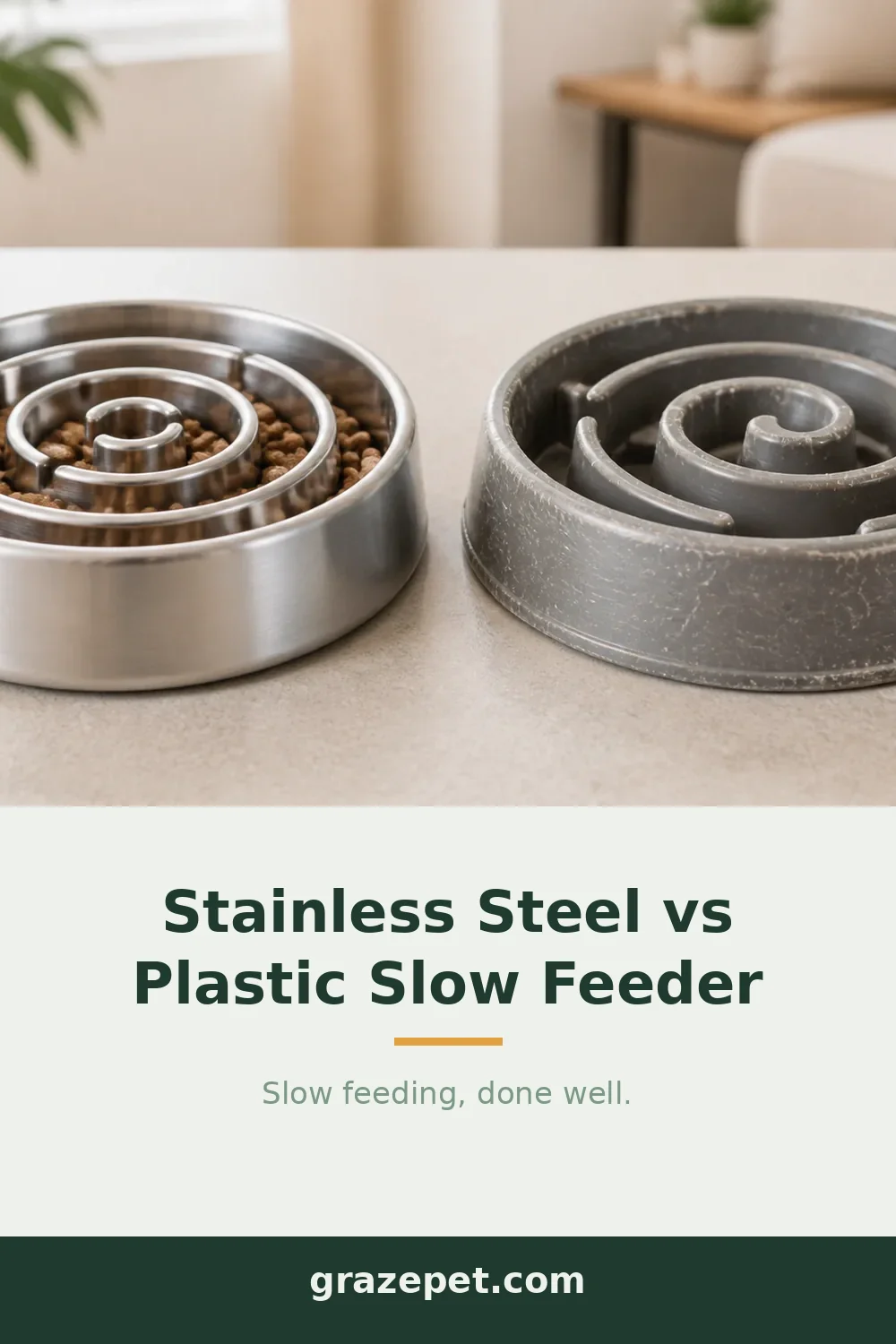
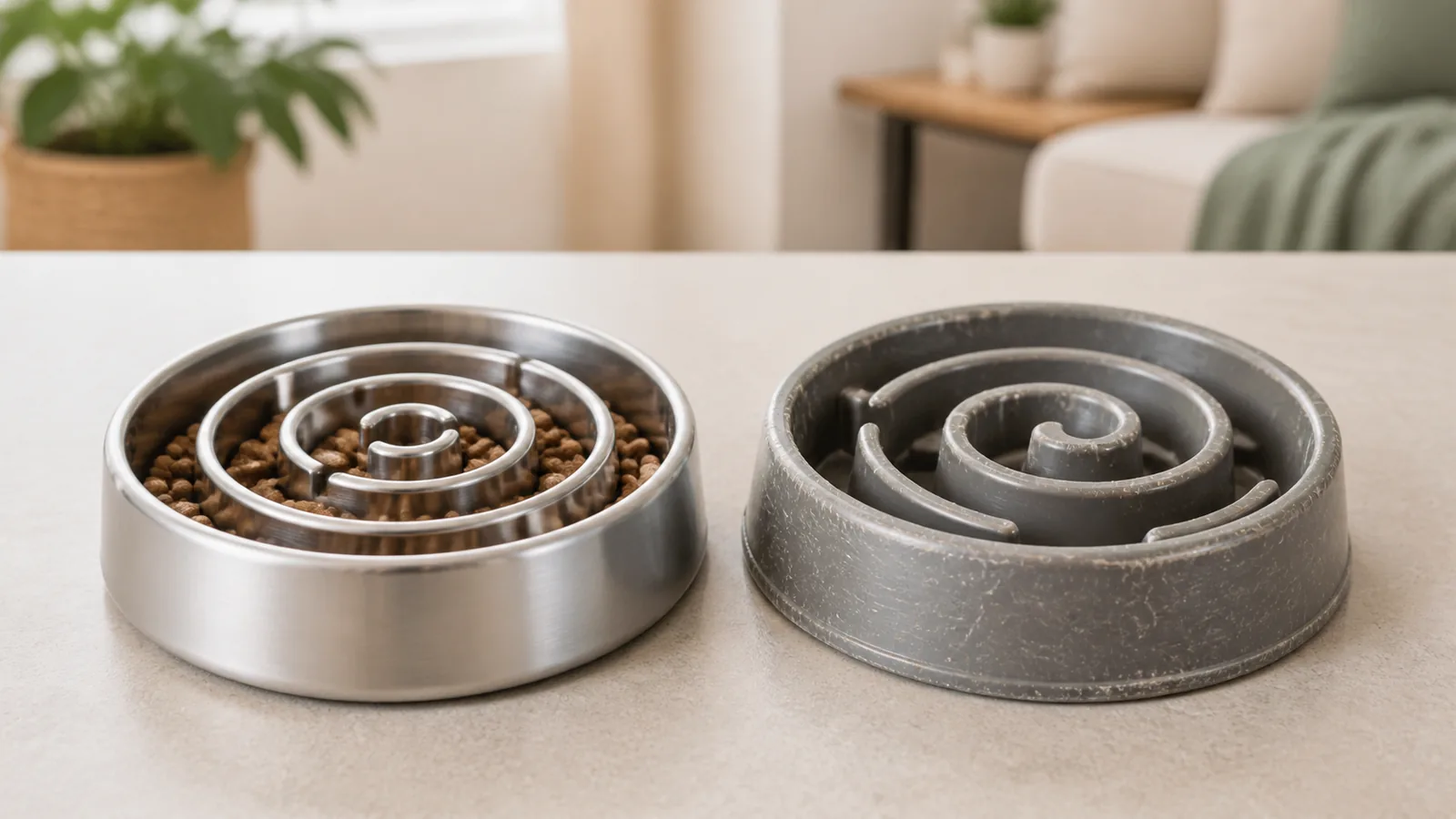
Hygiene is the single biggest gap between the two materials: plastic scratches with use, stainless steel doesn't. As your dog scrapes food out of the maze, the plastic develops micro-scratches — and those grooves trap food residue and bacteria that ordinary rinsing can't fully remove.
Over time this is linked to canine chin acne (those little bumps on a dog's chin and lips) and a bowl that starts to smell.
Stainless steel is non-porous. There are no grooves for bacteria to hide in, so a quick rinse or dishwasher cycle genuinely cleans it. For a bowl your dog eats from every single day, this matters more than people realize.
2. Durability: buy once vs buy again
Plastic slow feeders crack, warp in the dishwasher, and — if your dog is a chewer — can be gnawed apart, which creates a choking and blockage risk from swallowed plastic pieces.
A stainless steel slow feeder dog bowl shrugs all of that off. It won't crack, won't warp, and your dog can't chew chunks out of it. You buy it once instead of replacing a plastic one every few months. Cheaper upfront isn't cheaper over a year.
3. Safety and chemicals
Quality varies wildly with plastic. Cheaper plastic feeders can contain BPA or other additives, and worn plastic can leach into food, especially with wet or acidic food.
Food-grade stainless steel is inert — it doesn't react with food, leach chemicals, or impart a plastic taste that puts picky eaters off their meals.
4. When does plastic make sense?
To be fair, plastic isn't always wrong:
- You want the lowest possible upfront price for a short-term need (a foster, a trial run).
- You need an extremely lightweight travel bowl.
- Your dog is gentle and you're diligent about replacing it regularly.
For everyday, long-term feeding though, those advantages are small compared to the hygiene and durability wins of steel.
The verdict
For day-to-day feeding, stainless steel wins clearly: cleaner, safer, and cheaper in the long run. Plastic only makes sense for short-term or ultra-budget situations.
If you want a feeder that slows your dog's gulping and stays hygienic for years, this is the one to get:
👉 Stainless Steel Slow Feeder Dog Bowl — rust-proof, dishwasher-safe, non-slip base →
It has the maze pattern that paces fast eaters, without the scratch-and-bacteria problem of plastic.
❓ FAQ (add FAQ schema)
Is stainless steel really better than plastic for slow feeders? Yes — for hygiene, durability, and safety. Plastic only wins on upfront price, and that advantage disappears once you factor in how often plastic needs replacing.
Can plastic slow feeders cause chin acne in dogs? They can. Scratched plastic traps bacteria that contributes to canine chin acne. Stainless steel doesn't have this problem.
Are stainless steel slow feeders dishwasher-safe? Yes. Unlike many plastic feeders that warp in the heat, stainless steel is fully dishwasher-safe.
Do stainless steel slow feeders slow eating as well as plastic ones? Yes — the slowing comes from the maze design, not the material. You get the same pacing benefit with better hygiene and durability.
Save this guide