Written by Ethan Walker · Reviewed against our Editorial Guidelines · Updated September 8, 2026
Can You Use a Slow Feeder for Wet Food?
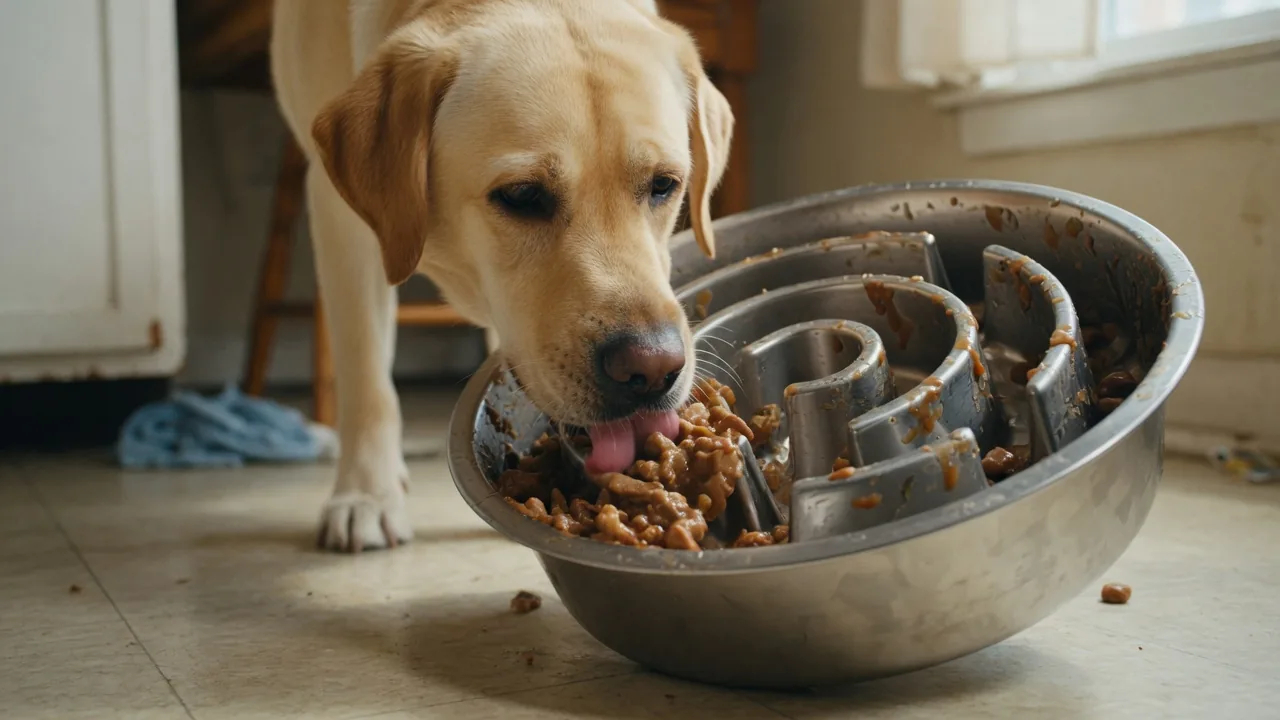
If you feed wet, raw, or mixed meals, you've probably wondered whether a slow feeder for wet food actually works — or whether the maze just turns into a sticky mess that's impossible to clean. Good news: yes, you can absolutely use a slow feeder for wet food, and done right it slows gulping just as well as it does with kibble.
The trick is choosing the right bowl material and using a couple of simple techniques. Here's everything you need to know.
Does a slow feeder work with wet food?
Yes. The maze slows your dog down by making them lick and nudge food out of the ridges — and wet food, raw, or a kibble-and-wet mix all spread into those grooves nicely. In some ways wet food is better suited to a slow feeder, because your dog has to lick it out of the channels rather than scoop it, which naturally extends the meal.
The pacing benefit is the same as with dry food: less gulping, less swallowed air, slower meals, and a little mental enrichment.
The one thing that matters most: material
This is where most people go wrong. Wet and raw food make material choice critical.
- Plastic feeders scratch over time, and those grooves trap wet-food residue, oils, and bacteria that rinsing can't fully remove. With wet or raw food — which is richer and stickier than kibble — that buildup happens faster and starts to smell.
- Stainless steel is non-porous. Nothing soaks in, nothing stains, and a rinse or dishwasher cycle genuinely cleans it. For wet food, this is the difference between a bowl that stays fresh and one that turns rancid.
That's why a stainless steel slow feeder is the right tool for wet feeders specifically. It's dishwasher-safe, won't absorb odors, and wipes clean even after sticky raw meals. (We break down the full comparison in stainless steel vs plastic slow feeders.)
How to use a slow feeder with wet food
A few simple techniques make wet feeding clean and effective:
- Press food into the channels. Spread the wet food along the maze grooves rather than dumping it in the middle. This forces your dog to work each section.
- Don't overfill. A thin layer worked into the ridges paces the meal better than a big mound that your dog can lick off the top.
- Try freezing for a longer meal. Spread wet or raw food into the maze and freeze it for 20–30 minutes. A "pupsicle" slow feeder lasts much longer and is great on hot days or for crate rest.
- Mix textures. Kibble pressed into wet food gives extra grip and makes the puzzle last.
- Rinse right after the meal. Wet food is easiest to clean before it dries. A quick rinse, then dishwasher or wash later.
Wet food, raw food, and mixed feeding
- Wet food: works great — spread it into the channels.
- Raw food: also fine in stainless steel, which is the most hygienic choice for raw because it doesn't harbor bacteria in scratches. Clean promptly and thoroughly, as you would any raw-feeding dish.
- Mixed feeding (kibble + wet): arguably the best of both — the kibble adds texture and the wet food makes your dog lick and slow down.
Whatever you feed, the bowl just needs to be non-porous and dishwasher-safe so cleanup stays easy and hygienic.
A quick word on cleaning
Wet and raw food make cleaning non-negotiable. Residue left in a maze can grow bacteria, so rinse after each meal and run it through the dishwasher regularly. Stainless steel makes this painless — it's dishwasher-safe and won't warp or stain. (Plastic often warps in dishwasher heat, which is another mark against it for wet feeders.)
The bottom line
Can you use a slow feeder for wet food? Yes — and it works well. The maze paces your dog whether the food is dry, wet, raw, or mixed. The one thing to get right is material: skip scratch-prone plastic and choose stainless steel so the bowl stays hygienic and easy to clean after sticky meals.
If you feed wet or raw and want a slow feeder that won't trap residue or hold odors, this is the one:
👉 Stainless Steel Slow Feeder Dog Bowl — dishwasher-safe, non-porous, wet-food friendly →
Frequently Asked Questions
Can you put wet food in a slow feeder? Yes. Spread the wet food into the maze channels so your dog has to lick it out. It paces the meal just like kibble does. Use a stainless steel feeder so the residue rinses clean.
Is a slow feeder good for raw food? Yes, as long as it's stainless steel. Steel is non-porous and the most hygienic option for raw, since there are no scratches to trap bacteria. Clean it promptly and thoroughly after each meal.
Can you freeze wet food in a slow feeder? Yes — spreading wet or raw food into the maze and freezing it for 20–30 minutes makes a longer-lasting "pupsicle" meal. It's ideal for hot days or crate rest.
How do you clean a slow feeder after wet food? Rinse it right after the meal before food dries, then run it through the dishwasher regularly. Stainless steel is dishwasher-safe and won't stain or hold odors.