Written by Ethan Walker · Reviewed against our Editorial Guidelines · Updated August 17, 2026
Best Slow Feeder Bowl for Labradors (Fast Eaters)
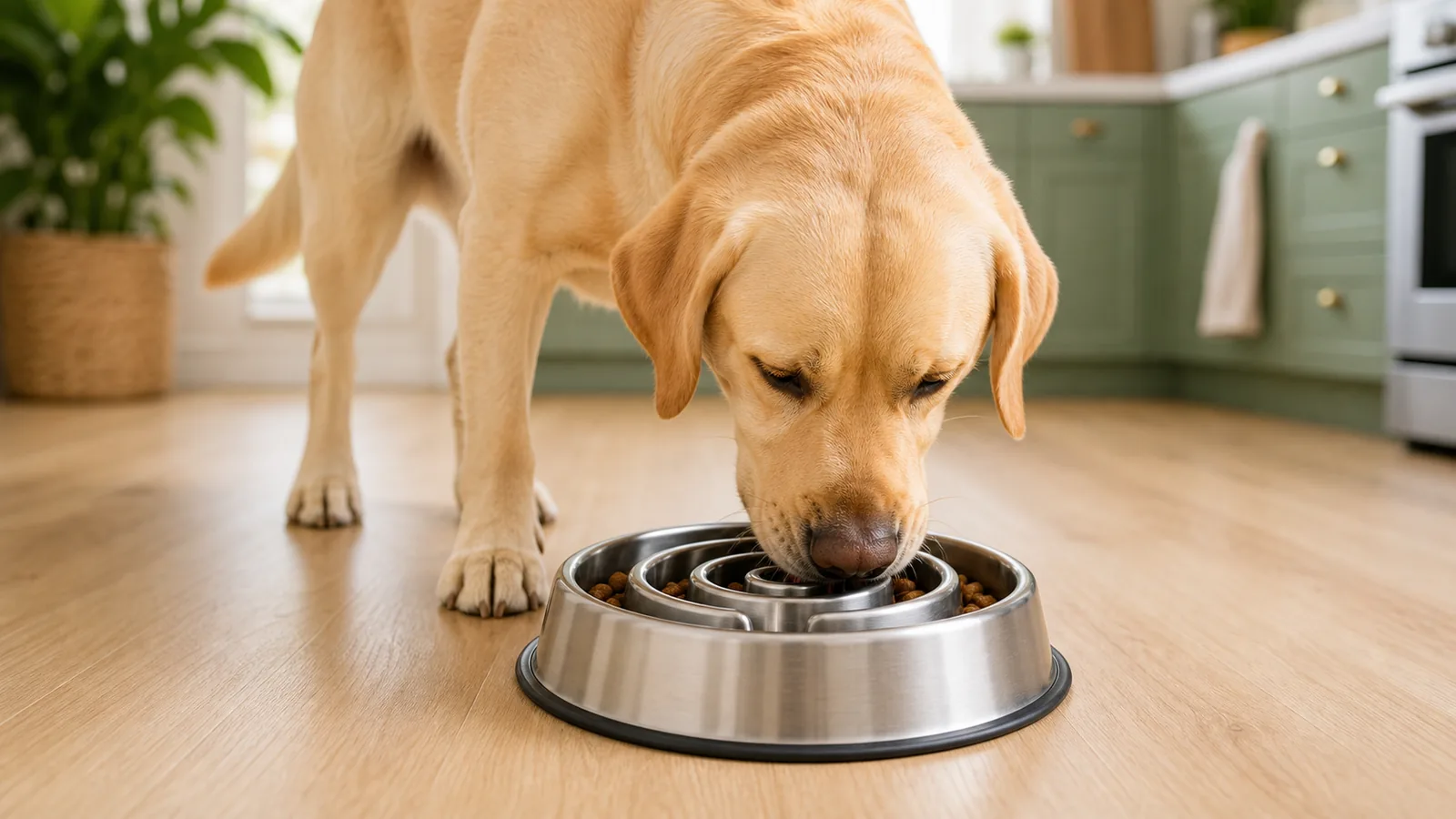
The best slow feeder bowl for Labradors is a durable stainless steel maze bowl with a genuinely challenging pattern and enough capacity for a full adult portion — flimsy or shallow feeders won't slow a determined Lab down. Labradors are famous for two things: being wonderful dogs, and eating like they've never seen food before. If your Lab clears the bowl in ten seconds flat and then stares at you, accusingly, a slow feeder for Labradors is one of the simplest fixes you can make.
In this guide we'll cover why Labs are such notorious gulpers, what to look for in a slow feeder built for a strong, food-driven big dog, and the bowl we recommend for Labradors and other fast eaters.
Why Labradors eat so fast
It's not just bad manners — it's partly wiring. Labs are a high-drive, food-motivated breed, and research has even linked many Labradors to a genetic variant associated with a stronger appetite and food obsession. Add a bit of mealtime excitement and you get a dog that inhales kibble in seconds.
The problem is that fast eating in a big dog isn't harmless. Gulping leads to:
- Swallowed air → gas, burping, and a bloated belly
- Vomiting or regurgitation right after meals
- Choking on large, unchewed mouthfuls
- A higher contribution to bloat (GDV) risk
Labradors are large and fairly deep-chested, so reducing gulped air matters. Slowing meals can help reduce that risk — swallowed air is one contributing factor — though it's a sensible precaution, not a guarantee. For the wider picture, see are slow feeder bowls good for dogs?
What to look for in a slow feeder for a Labrador
A Lab will defeat a flimsy or too-easy feeder in seconds, so for this breed prioritise:
- A genuine, challenging maze. Labs are clever and determined — a few shallow bumps won't slow them. You want real channels that make them work.
- The right size and capacity. Adult Labs eat adult-sized portions; the bowl needs to hold a full meal across its maze, not overflow it.
- Serious durability. Labs are strong-jawed chewers. A bowl that can be picked up and gnawed becomes a choking and blockage risk — this is where flimsy plastic fails.
- A non-slip base. A 30 kg dog shoving an empty-ish bowl will send it skating across the kitchen. Stability keeps mealtime tidy.
Why stainless steel suits Labradors best
For a powerful, enthusiastic eater like a Lab, material is not a small detail:
- Chew-proof durability: stainless steel won't crack or get chewed into swallowable plastic pieces the way budget feeders do.
- Hygiene: non-porous, so there are no scratch grooves trapping bacteria or odors — important for a bowl getting hammered twice a day.
- No plastic taste: not that most Labs are picky, but it keeps food appealing and clean.
- Dishwasher-safe & rust-proof: survives daily heavy use and frequent washing without warping.
Our Stainless Steel Slow Feeder Dog Bowl is built for exactly this kind of eater: a maze that genuinely paces a determined gulper, a non-slip base that stands up to a big pushy dog, and rust-proof steel that won't crack or get chewed apart.
👉 See the Stainless Steel Slow Feeder Dog Bowl →
How to introduce a slow feeder to your Lab
- Keep the portion the same — change the bowl, not the food amount.
- Expect instant success — most Labs solve the maze on meal one (they're motivated).
- Make it harder over time if your Lab gets too efficient — pack food deeper into the channels.
- Use it for wet and dry — the smooth stainless surface rinses clean for either.
- Clean after each meal — a quick rinse or dishwasher keeps a heavily-used bowl hygienic.
Beyond the bowl: more ways to slow a Lab
A slow feeder is the most reliable everyday fix, but Labs love variety and mental work, so combine it with:
- A snuffle mat to channel that food drive into foraging — great enrichment for a smart, high-energy breed.
- Smaller, more frequent meals to take the edge off the desperate hunger.
- Calm, separate feeding in multi-dog homes so there's no competitive gulping.
For the full toolkit, see how to stop your dog eating too fast, and to compare every option, our best slow feeder dog bowls guide lays them out side by side.
The bottom line
The best slow feeder bowl for Labradors is a tough, properly-mazed stainless steel bowl with a non-slip base. Labs are clever, strong, and food-obsessed, so you need a feeder that actually challenges them and survives daily abuse — which is precisely where steel beats plastic. Get one, keep the portion the same, and watch a ten-second inhale turn into a proper, calmer meal.
👉 Stainless Steel Slow Feeder Dog Bowl →
Frequently Asked Questions
What is the best slow feeder for a Labrador? A durable stainless steel maze bowl with a genuinely challenging maze, enough capacity for a full adult portion, and a non-slip base. Labs are strong and clever, so flimsy or too-easy feeders don't last or work.
Why does my Labrador eat so fast? Labs are a highly food-motivated breed — many even carry a genetic variant linked to a stronger appetite. Combined with mealtime excitement, that drives fast, gulpy eating.
Can a slow feeder help prevent bloat in a Lab? It can help reduce the risk by cutting how much air your dog swallows, which is one contributing factor in bloat (GDV). It's a sensible precaution, not a guarantee.
Will a Labrador just figure out the slow feeder and beat it? Most Labs solve the maze quickly, but it still slows them substantially. If yours gets too efficient, pack food deeper into the channels or choose a more challenging maze.