Written by Ethan Walker · Reviewed against our Editorial Guidelines · Updated September 8, 2026
How to Stop Your Dog Eating Too Fast: 7 Proven Ways
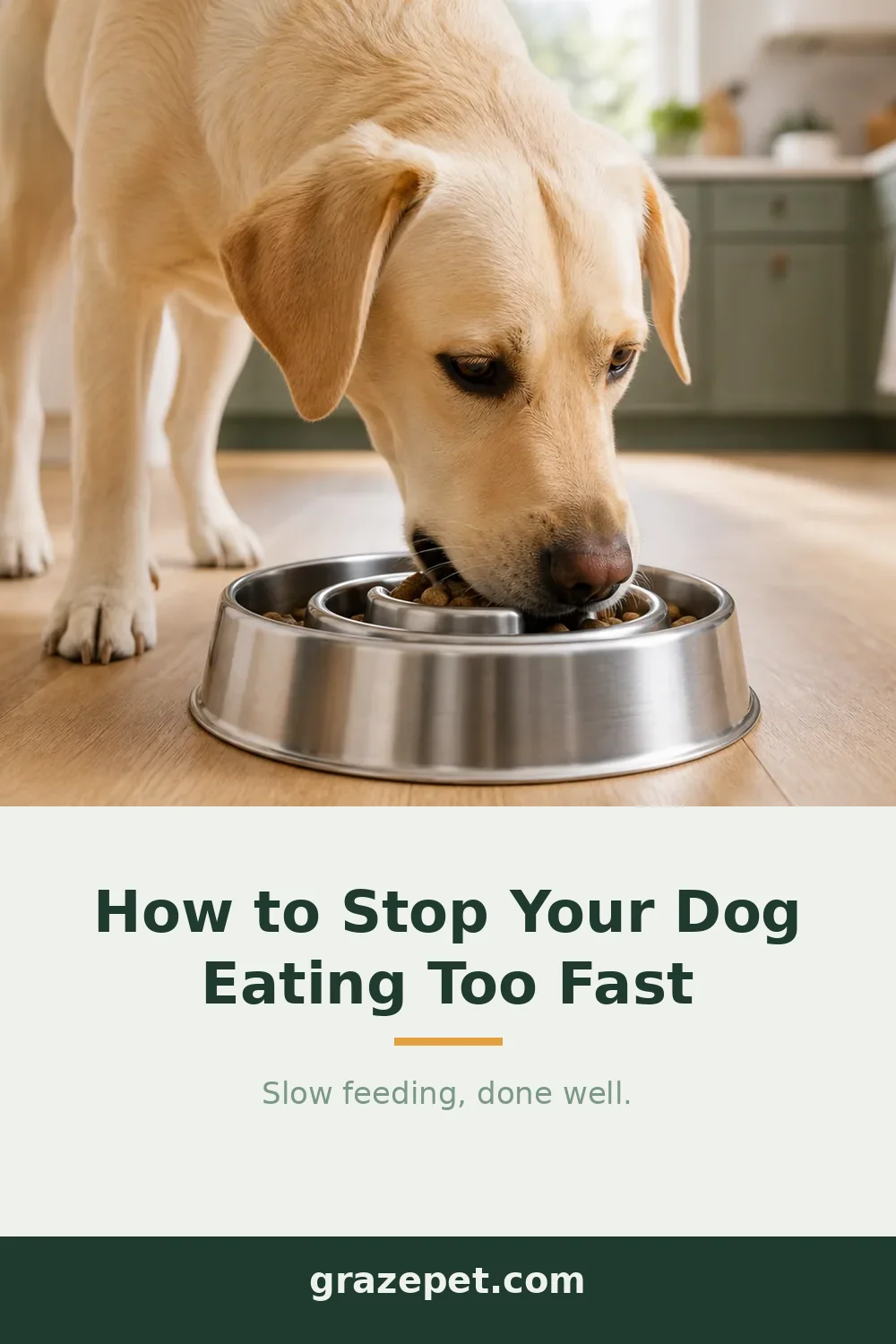
The most effective way to stop your dog eating too fast is a slow feeder bowl — its built-in maze slows eating by up to 5-10x compared to a flat bowl. Fast eating is common, but it's not harmless: gulping food causes gas, vomiting, and in some dogs raises the risk of a dangerous condition called bloat. Below are 7 proven ways to stop your dog eating too fast, ranked from most to least effective.
Why is my dog eating so fast?
Dogs eat fast for a few common reasons:
- Instinct/competition — in multi-dog homes (or shelter pasts), eating fast meant eating at all.
- Hunger or under-feeding — meals too small or too far apart.
- Excitement — some dogs just love food.
- Health issues — sudden ravenous eating can signal a medical problem (worth a vet check if it's new).
For most dogs it's simple instinct — and that's very fixable. If you're not sure your dog's pace even counts as "too fast," see how long it should take a dog to eat first.
Why fast eating is risky
Fast eating isn't just a bad habit. It can cause:
- Gulped air → gas and bloating
- Vomiting / regurgitation right after meals
- Choking on large unchewed pieces
- Bloat (GDV) — in deep-chested breeds, swallowed air contributes to a life-threatening stomach twist
That's why slowing your dog down is genuinely a health upgrade, not just a convenience.
7 ways to stop your dog eating too fast
1. Use a slow feeder bowl (most effective)
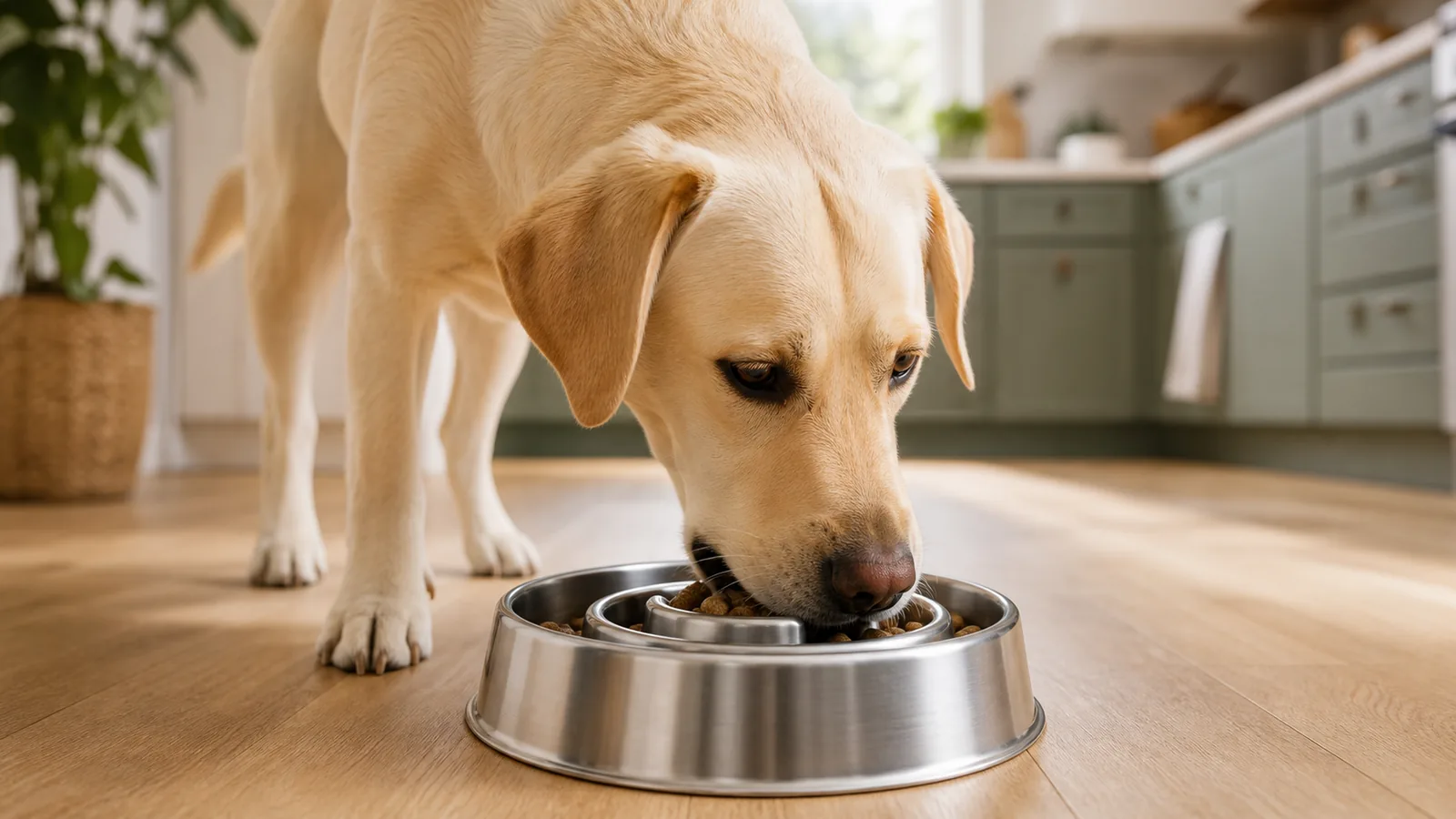
A slow feeder dog bowl has a built-in maze that forces your dog to work food out of the ridges — turning a 10-second gulp into a several-minute meal, slowing eating by up to 5-10x. It's the single easiest, most reliable fix, which is why it's #1.
For everyday use, a stainless steel slow feeder is best — it's hygienic, dishwasher-safe, and won't scratch like plastic. (More on why in our stainless vs plastic guide.)
2. Spread food on a lick mat or snuffle mat
A snuffle mat hides kibble in fabric folds so your dog has to sniff it out — great enrichment and natural pacing.
3. Use a muffin tin
Split the meal across the cups of a muffin tin. Your dog has to move between cups instead of inhaling one pile. A cheap DIY option.
4. Hand-feed or scatter feed
Toss kibble across a clean floor or grass so your dog "forages." Slows eating and adds mental stimulation.
5. Feed smaller, more frequent meals
Two or three smaller meals a day reduces the desperate hunger that drives gulping.
6. Put a large ball in the bowl
Place a clean, dog-safe ball (too big to swallow) in a regular bowl so your dog has to eat around it. A free, improvised slow feeder.
7. Reduce competition
In multi-dog homes, feed dogs in separate rooms or crates so no one feels they have to rush before another dog steals their food.
What's the best option?
DIY tricks (muffin tins, balls, scatter feeding) work, but they're messy and inconsistent. For a clean, reliable, everyday solution, a slow feeder bowl is the best choice — it does the job at every meal without extra effort from you.
If you want one that lasts and stays hygienic, start here:
👉 Stainless Steel Slow Feeder Dog Bowl →
When to see a vet
If your dog suddenly starts eating much faster or seems constantly ravenous, or if they retch, have a swollen hard belly, or seem distressed after eating, contact your vet — these can be signs of a medical issue or bloat, which is an emergency.
❓ FAQ (add FAQ schema)
How do I get my dog to eat slower? The easiest method is a slow feeder bowl, which uses a maze to pace eating. DIY options like a muffin tin, a large ball in the bowl, or scatter feeding also work.
Is it bad if my dog eats too fast? Yes, it can be. Fast eating causes gas, vomiting, and choking, and raises bloat (GDV) risk in deep-chested breeds. Slowing meals reduces all of these.
Do slow feeder bowls stop fast eating? Yes — they're the most reliable fix, slowing eating by up to 5–10x from the very first meal.
Why does my dog eat like it's starving? Usually instinct or competition, sometimes under-feeding. If it's a sudden change, check with your vet to rule out a medical cause.
Save this guide