Written by Ethan Walker · Reviewed against our Editorial Guidelines · Updated September 8, 2026
Are Slow Feeder Bowls Good for Dogs?
Yes — slow feeder bowls are good for most dogs, and vets regularly recommend them for fast eaters. They slow eating speed by 5–10x, which cuts down on gulping, gas, and bloat risk. If your dog finishes dinner before you've even sat down, you've probably wondered whether a slow feeder bowl is worth it — or just another pet-store gimmick.
In this guide we'll cover what a slow feeder actually does, the real health benefits, which dogs need one most, and what to look for so you don't waste money on a bowl your dog ignores.
What is a slow feeder dog bowl?
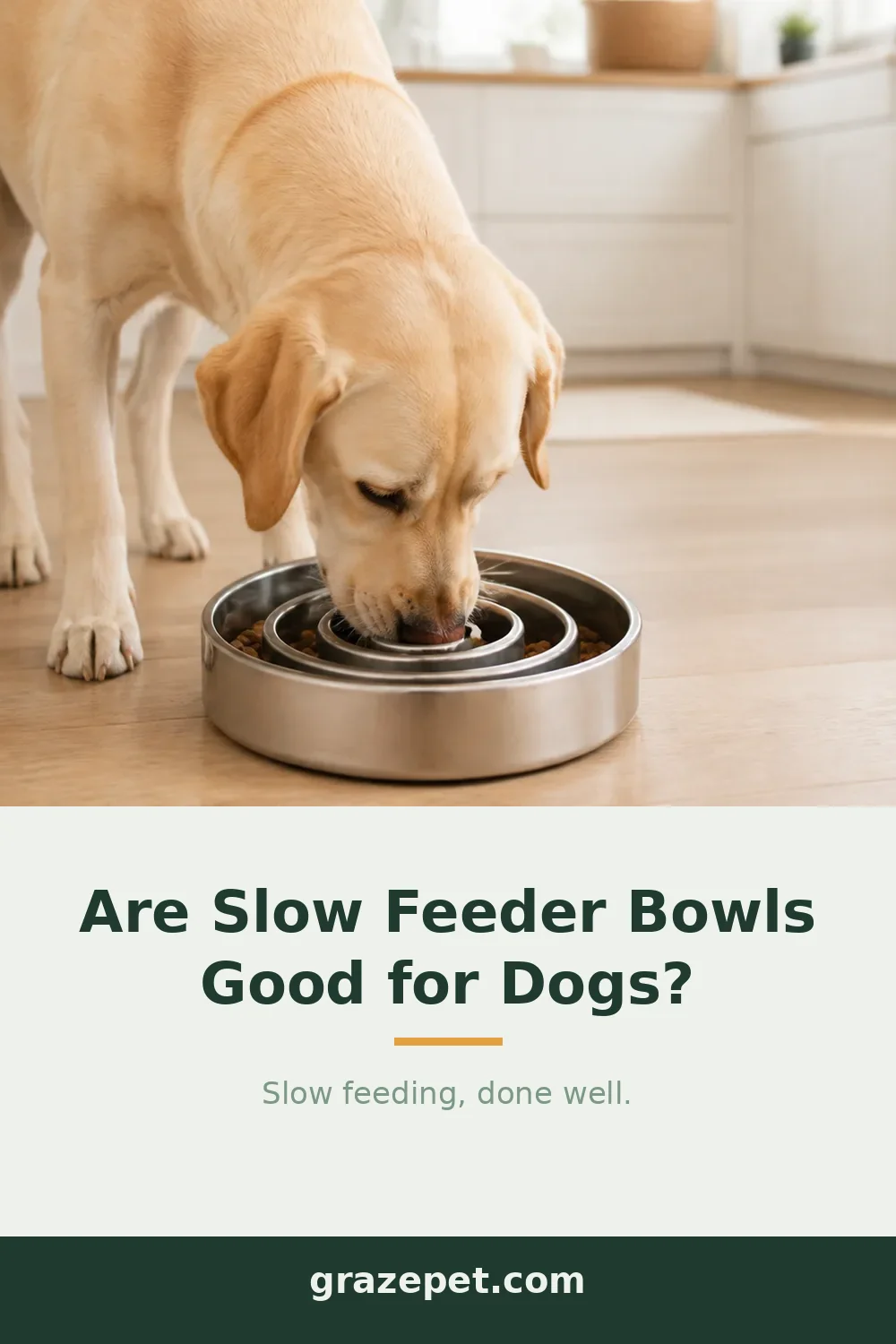
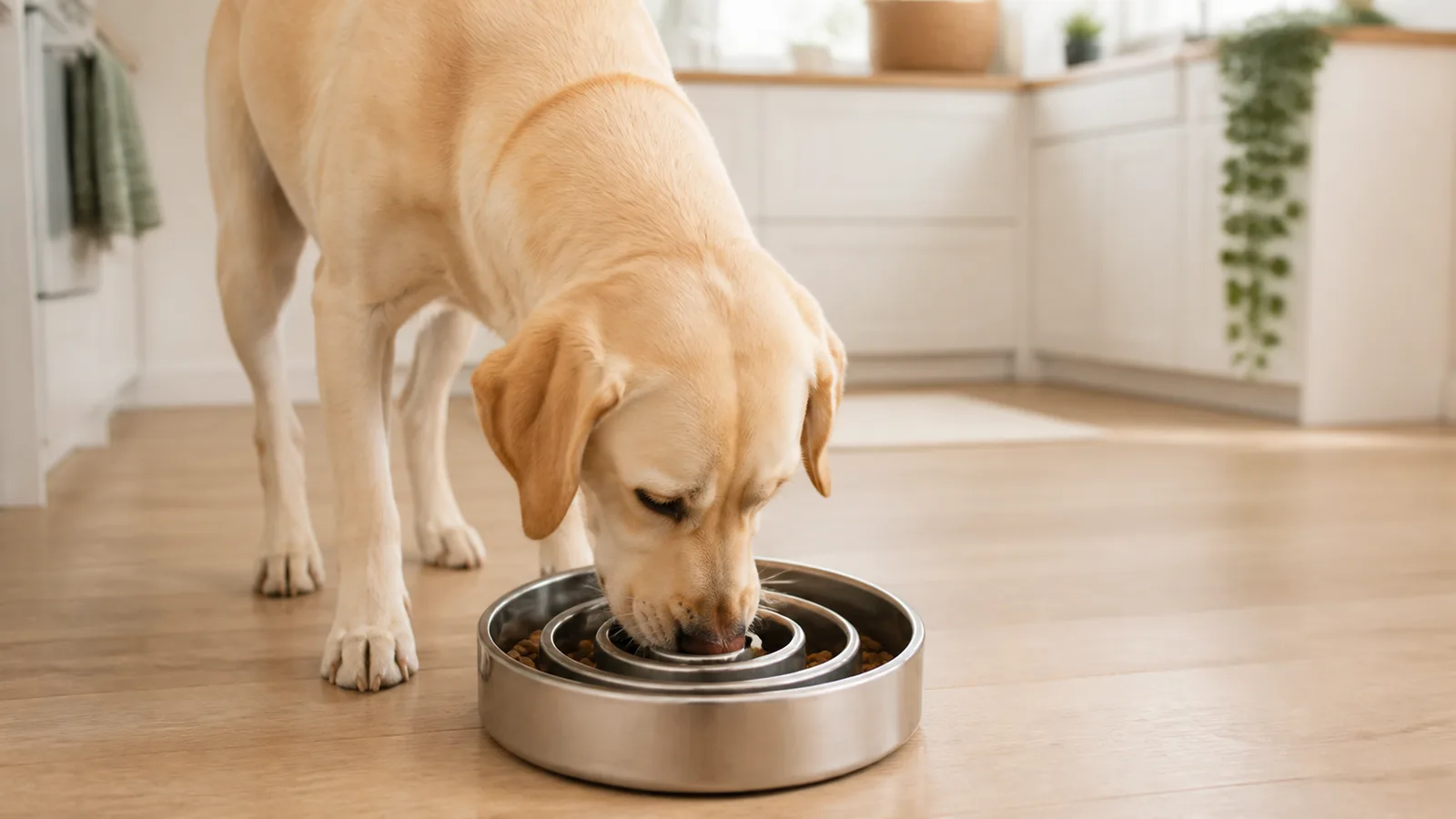
A slow feeder dog bowl is a feeding dish with raised ridges, mazes, or obstacles moulded into the base. Instead of one open pool of food your dog can inhale, the food sits between the ridges — so your dog has to nudge, lick, and work each piece out.
The result is simple: a meal that used to take 10 seconds now takes several minutes. That small change has a surprisingly big impact on your dog's health.
Do slow feeder dog bowls actually work?
Yes. This is the question most owners ask, and the evidence is clear: maze-style feeders measurably slow eating speed, often by 5–10x. Owners typically notice the difference from the very first meal — less gulping, less mess flicked across the floor, and a calmer dog afterward.
They work because they use your dog's natural foraging instinct. Dogs are wired to "work" for food, so the puzzle keeps them engaged instead of frustrated.
5 real benefits of slow feeder bowls
1. They reduce the risk of bloat (GDV)
This is the big one. When a dog eats too fast, it swallows air along with food. In deep-chested breeds (Great Danes, Boxers, German Shepherds, Standard Poodles), that can contribute to GDV — gastric dilatation-volvulus, a life-threatening twisting of the stomach. Slowing the meal reduces swallowed air and is one of the few easy at-home steps to lower the risk.
2. Less vomiting and regurgitation
Fast eaters often bring their meal back up minutes later. Slower eating gives the stomach time to keep up, which cuts down on that immediate post-meal vomiting.
3. Better digestion and less gas
Gulping air = a gassy, uncomfortable dog. Pacing meals improves digestion and reduces bloating and flatulence.
4. Helps with weight management
Because the brain takes about 20 minutes to register "full," a dog that eats slowly actually feels fuller on the same amount of food — useful if you're managing your dog's weight.
5. Mental stimulation
The puzzle element is light enrichment. It turns a boring 10-second event into a few minutes of focus, which is especially good for bored or high-energy dogs.
Which dogs need a slow feeder bowl most?
Slow feeders help almost any dog, but they're most important for:
- Fast eaters that inhale food in seconds
- Deep-chested breeds at higher bloat risk
- Flat-faced breeds (Bulldogs, Pugs, Frenchies) who gulp air easily
- Puppies learning portion control
- Multi-dog homes where dogs compete and rush their food
- Dogs that vomit or have gas after eating
If your dog already eats slowly and calmly, you may not need one — but it still adds enrichment.
Are there any downsides?
A few things to keep in mind so you choose well:
- Cheap plastic feeders scratch. Those scratches trap bacteria and cause chin acne and odors. This is the main reason vets and experienced owners prefer stainless steel slow feeders — they're non-porous, dishwasher-safe, and last for years.
- Get the right difficulty. Too hard and an anxious dog may give up. Start with a moderate maze.
- Match the size to your dog's portion and snout shape.
If you want the hygienic, long-lasting option, our Stainless Steel Slow Feeder Dog Bowl is built exactly for this — rust-proof, dishwasher-safe, with a non-slip base and a maze pattern that slows gulping without frustrating your dog.
How to introduce a slow feeder bowl
- Start with your dog's normal food amount.
- Let them explore — most dogs figure it out in one meal.
- If they seem frustrated, loosely scatter a little food on top to start.
- Rinse or dishwasher after each use (easy with stainless steel).
The bottom line
Are slow feeder bowls good for dogs? For the vast majority — yes. They slow fast eating, reduce the risk of bloat, cut down on vomiting and gas, and add a little daily enrichment. The one thing to get right is the material: skip the scratch-prone plastic and choose stainless steel for hygiene and durability.
If your dog is a gulper, a slow feeder is one of the cheapest, simplest upgrades you can make to their health.
👉 See the vet-friendly Stainless Steel Slow Feeder Dog Bowl →
Frequently Asked Questions
Are slow feeder bowls good for all dogs? They benefit most dogs, and are especially recommended for fast eaters, deep-chested breeds, and flat-faced breeds. Dogs that already eat calmly need them less, but still enjoy the enrichment.
Do slow feeder dog bowls really work? Yes — they slow eating speed by up to 5–10x, which reduces gulping, gas, vomiting, and bloat risk. Most owners see results from the first meal.
Is a stainless steel slow feeder better than plastic? Yes. Stainless steel doesn't scratch, trap bacteria, or hold odors the way worn plastic does, and it's dishwasher-safe and far more durable.
Can slow feeders help with bloat? They can lower the risk by reducing how much air your dog swallows while eating, which is one contributing factor in GDV (bloat). They're not a guarantee, but they're an easy preventative step.
Save this guide