Written by Ethan Walker · Reviewed against our Editorial Guidelines · Updated August 17, 2026
When Can Puppies Start Using Lick Mats?
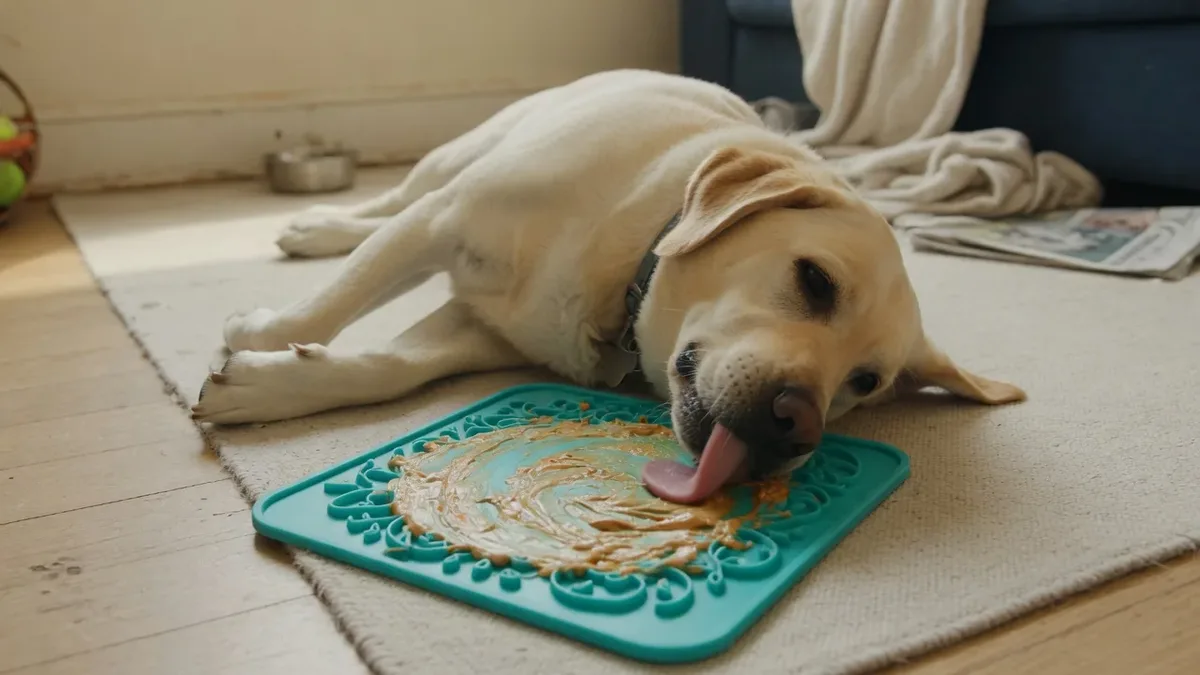
Most puppies can start using a lick mat once they're fully weaned and eating solid food on their own — typically from around 8 weeks old — as long as it's supervised and loaded with soft, puppy-safe food. There's no strict minimum age written into veterinary guidance the way there is for, say, vaccination schedules, but the practical requirement is simple: your puppy needs to already be eating solid food independently before a lick mat makes sense.
This guide covers what actually determines readiness (rather than a fixed age), which foods are safe for a young puppy's stomach, supervision rules that matter more for puppies than adult dogs, and when a lick mat might not be the right tool yet.
Is there an official minimum age for lick mats?
Not really — there's no standardized veterinary age cutoff for lick mats the way there is for, say, starting solid food or first vaccinations. What actually matters is developmental readiness, not a specific birthday:
- Your puppy should be fully weaned and eating solid puppy food independently, not still nursing or transitioning off milk.
- Your puppy should have enough coordination and interest to lick purposefully rather than just mouth or chew everything (which is normal, exploratory puppy behavior).
For most puppies, this lines up with somewhere around 8 weeks old and older — the same general age most puppies go home with a new family and are already established on solid food. A very young puppy still nursing, or one that's just been weaned in the last few days, isn't quite ready yet.
Why lick mats need extra care with puppies specifically
Lick mats are generally considered a low-risk enrichment tool, but a few puppy-specific factors are worth knowing before you hand one over:
- Teething puppies chew more than they lick. Puppies going through teething (roughly 3–6 months) often want to gnaw on anything textured, including a lick mat's ridges. A mat meant for gentle licking can get chewed on instead, which raises the risk of small pieces being bitten off.
- Smaller stomachs mean smaller portions. What looks like "just a thin smear" for an adult dog can be a meaningful chunk of a puppy's much smaller daily calorie needs. Anything spread on a lick mat should count toward your puppy's daily food total, not be treated as a free extra.
- New foods need to be introduced gradually. Puppies can have more sensitive digestion than adult dogs, so any new topping (yogurt, mashed pumpkin, etc.) should be introduced in small amounts first to check tolerance, rather than a full mat's worth on the first try.
None of this means puppies can't use lick mats — it means supervision and portion awareness matter more for a puppy than for a settled adult dog.
What foods are safe for a puppy's lick mat
Stick to soft, puppy-safe options, and introduce anything new gradually:
- Wet puppy food or softened puppy kibble
- Plain, unsweetened yogurt in small amounts, if your puppy tolerates dairy
- Xylitol-free dog-safe peanut butter — always check the label, since xylitol is toxic to dogs and puppies are smaller, so it takes less to cause harm
- Mashed pumpkin puree or mashed banana, in small quantities
Avoid anything with xylitol, chocolate, grapes, raisins, onion, or excess salt — the same list that applies to adult dogs, but a puppy's smaller size means a smaller amount of anything harmful goes further. When introducing a brand-new food for the first time, use a small test amount rather than a fully loaded mat, and watch for any digestive upset over the following day.
How to introduce a lick mat to a puppy safely
- Confirm your puppy is fully weaned and eating solid food confidently on their own.
- Start with a very thin layer of a food you already know your puppy tolerates well.
- Supervise the entire first few sessions. Watch whether your puppy licks calmly or starts chewing/biting the mat itself.
- Keep sessions short at first — a few minutes is plenty for a young puppy.
- If your puppy chews rather than licks, remove the mat and try again in a few weeks, or offer a sturdier chew-appropriate item instead during the heavy teething window.
- Count the food toward daily intake so you don't accidentally overfeed a puppy who's also getting regular meals.
Signs a lick mat isn't the right fit yet
Pull the mat back and try again later if you notice:
- Aggressive chewing or biting rather than licking, especially small pieces coming off the mat
- Swallowing large chunks of the mat's texture rather than just the food
- Disinterest or confusion — some very young puppies simply haven't developed the motivation yet, and that's normal
- Digestive upset after trying a new topping, which suggests backing off that specific food rather than lick mats generally
If your puppy consistently chews rather than licks, it may simply be too early in their teething stage — there's no harm in waiting a few weeks and trying again.
What if a lick mat isn't clicking for your puppy?
Not every puppy is that interested in licking, and to be upfront: we don't sell a lick mat. What we do offer is a snuffle mat, which works a puppy's nose instead of their tongue — hiding small amounts of dry puppy kibble in fleece for your puppy to sniff out. It's a gentler introduction to food-based enrichment for a young puppy, since there's no soft, spreadable food to overdo, and it's easy to load with a puppy's exact regular kibble.
For general guidance on how much and how often to feed a growing puppy — which matters more than any single enrichment tool — see our puppy feeding schedule guide.
👉 See the Snuffle Mat for Dogs →
The bottom line
There's no strict minimum age for lick mats — what matters is whether your puppy is fully weaned, eating solid food confidently, and past the stage of mouthing everything indiscriminately, which is usually around 8 weeks or older. Start with small amounts of a familiar, puppy-safe food, supervise closely (especially during teething), and count anything on the mat toward your puppy's daily food. If your puppy seems more interested in chewing the mat than licking it, that's a sign to wait a few weeks, not a sign lick mats are the wrong tool forever.
👉 See the Snuffle Mat for Dogs →
Frequently Asked Questions
At what age can a puppy use a lick mat? There's no official minimum age, but most puppies are ready once they're fully weaned and eating solid food confidently, typically from around 8 weeks old. Readiness matters more than a specific age.
Is it safe to give a teething puppy a lick mat? It can be, but teething puppies often chew rather than lick, which raises the risk of biting off small pieces. Supervise closely, and if your puppy chews more than licks, pull the mat back and try again in a few weeks.
What can I put on a lick mat for a puppy? Soft, puppy-safe foods like wet puppy food, small amounts of plain yogurt, xylitol-free peanut butter, or mashed pumpkin. Avoid xylitol, chocolate, grapes, onion, and excess salt, and introduce any new food gradually.
What if my puppy chews the lick mat instead of licking it? This is common during teething. Remove the mat, supervise more closely next time, or wait a few weeks before trying again. A puppy chewing rather than licking isn't ready for unsupervised use yet.
Save this guide