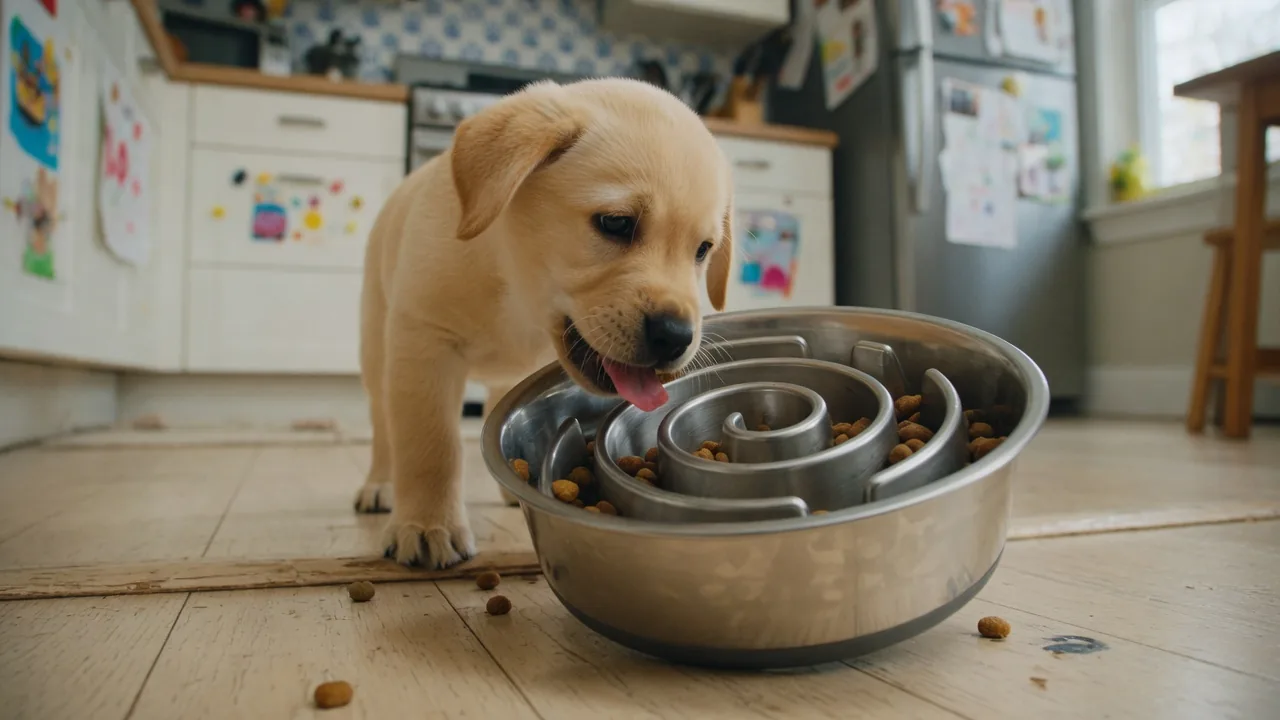
Puppy Eating Too Fast? How to Slow Them Down Safely
A puppy eating too fast — inhaling the bowl in seconds and looking around for more — is almost always normal puppy behavior, driven by instinct, litter competition, and excitement rather than anything wrong. Still, because gulping can cause gas, regurgitation, and choking, it's worth slowing your puppy down gently and safely.
Below we'll explain why puppies eat so fast, when it's worth a quick vet check, and the safe, age-appropriate ways to pace those meals — without ever restricting the food a growing puppy needs.
Why is my puppy eating too fast?
A puppy eating too fast usually comes down to a mix of instinct and their stage of life:
- Litter competition. Puppies grow up sharing a mother and a pile of food with several siblings. Eating fast means eating before a littermate does — and that habit often carries over to their new home even when there's no competition left.
- Rapid growth and real hunger. Puppies burn a lot of energy growing, so they're genuinely hungry and enthusiastic at mealtimes.
- Pure excitement. For a puppy, the bowl appearing is one of the best moments of the day. That excitement spikes the gulping.
- Instinct. The "eat now, eat fast" wiring is simply strong in young dogs.
For the vast majority of puppies, this is normal and nothing to worry about. It usually settles somewhat with age and routine — and a little help from you.
Is it bad for a puppy to eat too fast?
Fast eating in puppies is common, but it does carry the same downsides as in adult dogs:
- Gulped air → gas and a bloated-looking belly.
- Regurgitation — bringing up undigested food soon after a rushed meal.
- Choking on large, unchewed pieces of kibble.
So slowing your puppy down is a sensible, gentle habit to build early — not because fast eating is usually dangerous, but because calmer meals are easier on a developing digestive system and set a good lifelong pattern.
When to check with your vet
Most fast eating in puppies is normal, but it's worth a conversation with your vet if your puppy:
- Regularly regurgitates or vomits after meals, rather than just occasionally.
- Seems constantly ravenous or isn't gaining weight as expected despite eating well.
- Has a swollen, hard belly, retches without bringing anything up, or seems distressed after eating — treat this as urgent and contact a vet right away.
- Shows diarrhea, lethargy, or a poor appetite alongside the fast eating.
Puppies are more fragile than adult dogs, so when something seems off, it's always better to check early. Your vet can rule out anything underlying and confirm your puppy's growth is on track.
How to slow a puppy down safely
The key word is safely — you want to slow the pace, never reduce the food a growing puppy needs. Keep the normal portion your vet or the feeding guide recommends, and just change how it's delivered.
- Use a slow feeder bowl sized for a puppy. A maze bowl turns a 10-second gulp into a multi-minute meal. Choose one with a shallow-enough, puppy-appropriate maze they can actually reach into — not an extreme adult design that frustrates them. Our guide to the best slow feeder for puppies walks through picking the right one.
- Split meals into smaller, more frequent portions. Puppies usually eat three to four times a day anyway; more frequent smaller meals reduce desperate hunger and the urge to gulp.
- Feed littermates or housemates separately to remove any competition instinct.
- Try scatter feeding on a clean surface or a snuffle mat to tap their natural foraging drive.
- Keep mealtimes calm. An over-excited puppy gulps harder, so a settled routine helps.
A durable, easy-to-clean bowl matters for puppies, who make plenty of mess. A stainless steel slow feeder is dishwasher-safe and won't scratch and trap bacteria the way plastic does — handy when you're cleaning up after a growing puppy several times a day. Just make sure the size and maze suit a puppy, and size up as they grow.
👉 See the Stainless Steel Slow Feeder Dog Bowl →
The bottom line
A puppy eating too fast is usually just instinct, growth, and excitement — normal, and very fixable. Slow the meals down gently with a puppy-appropriate slow feeder, split food into smaller portions, and keep things calm, but never cut the amount a growing puppy needs. If the fast eating comes with regurgitation, a swollen belly, or other worrying signs, check in with your vet first. Otherwise, a good slow feeder is the simplest way to turn a frantic gulp into a calmer, healthier meal.
❓ FAQ (also add FAQ schema)
Why is my puppy eating too fast? Usually a mix of instinct, litter competition, rapid growth, and sheer excitement. Puppies learn to eat fast to beat their siblings to food, and that habit carries into their new home. For most puppies it's normal and settles with age and routine.
Is it bad for a puppy to eat too fast? It can cause gas, regurgitation, and choking on unchewed food, so it's worth slowing them down. It's usually not dangerous on its own, but calmer meals are easier on a developing digestive system and build a good lifelong habit.
How can I slow my puppy's eating down safely? Keep the full recommended portion and change how it's delivered — use a puppy-sized slow feeder, split meals into smaller more frequent portions, feed littermates separately, and keep mealtimes calm. Never reduce the food a growing puppy needs.
When should I worry about my puppy eating too fast? Check with your vet if your puppy regularly regurgitates or vomits, seems constantly ravenous, isn't gaining weight, or shows lethargy or diarrhea. Seek urgent care if the belly is swollen and hard or your puppy retches without bringing anything up.