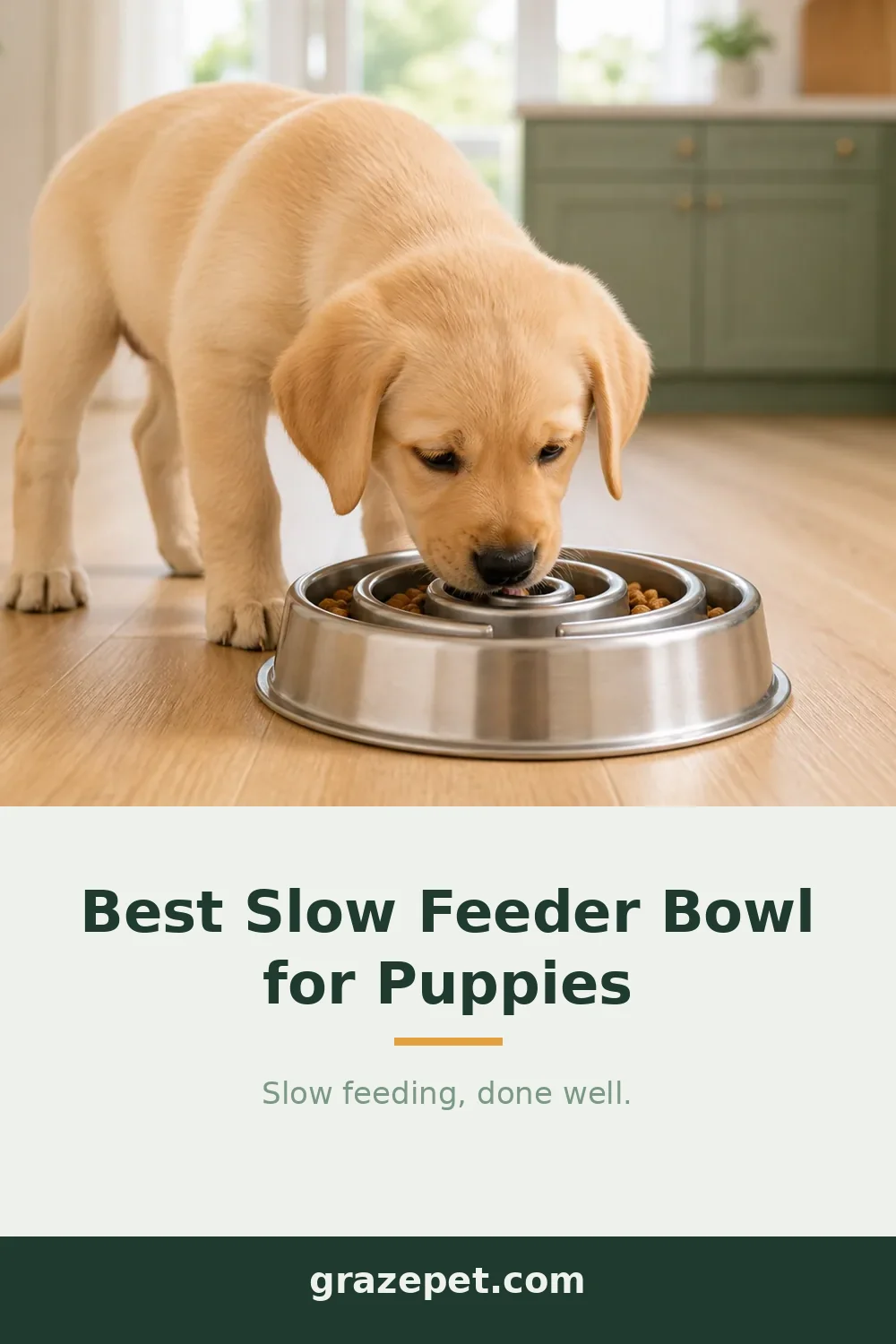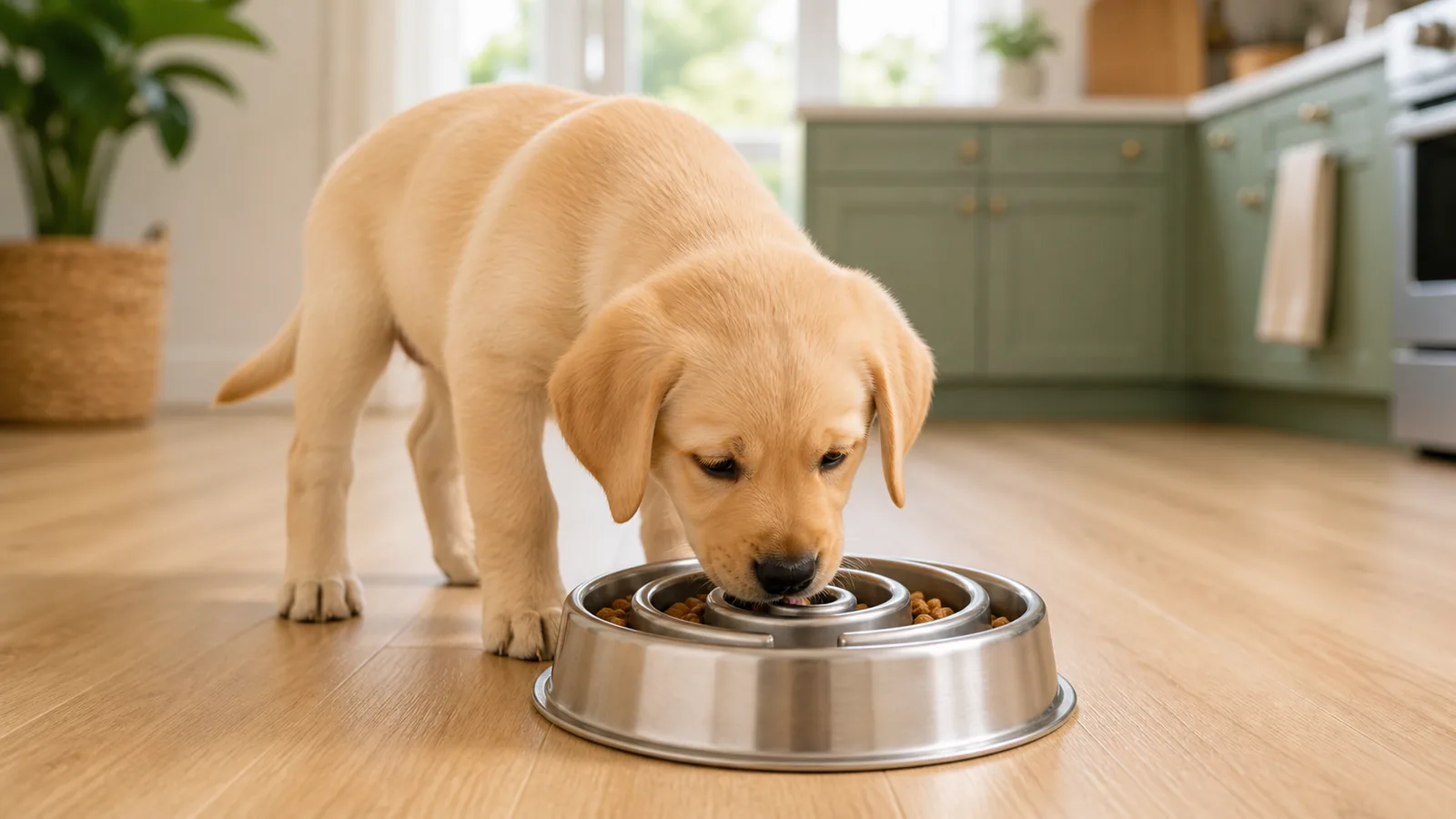
Best Slow Feeder Bowl for Puppies
Bringing home a new puppy means a lot of firsts — and if yours inhales every meal like it's a race, you're already wondering whether a slow feeder bowl for puppies is worth it. The short answer: yes — a good slow feeder paces a fast-eating puppy from day one, cutting down on gulping, gas and vomiting while it teaches better mealtime manners.
But puppies aren't just small adult dogs. The right feeder for a 10-week-old is different from one you'd buy a grown Labrador. Below is what actually matters when choosing one, plus a few simple tips to get your puppy eating at a healthier pace.
Why puppies eat too fast
Fast eating is incredibly common in puppies, and it usually comes down to instinct rather than a problem. Common reasons:
- Littermate competition. In the litter, the puppy that ate fastest ate most. That habit doesn't switch off the day they come home.
- Pure excitement. Everything is new and exciting — including food.
- Growth-driven appetite. Puppies are growing fast and genuinely hungry between meals.
For most puppies this is normal, but it's still worth slowing down. Gulping leads to gas, post-meal vomiting, and choking on large unchewed pieces — and pacing meals early builds a calmer habit for life.
What to look for in the best slow feeder bowl for puppies
Not every slow feeder suits a puppy. Here's what matters most.
1. The right size and portion fit
A puppy eats small portions, so a huge maze bowl leaves food scattered and hard to reach, which can frustrate them. Pick a feeder that holds your puppy's actual meal comfortably without drowning it in a giant maze. Many owners size up as the puppy grows.
2. Moderate maze depth (not the hardest one)
Deep, tight mazes are designed to challenge determined adult gulpers. For a puppy still figuring out the puzzle, a moderate maze depth is the sweet spot — slow enough to help, easy enough that they don't give up.
3. A hygienic, easy-clean material
Puppies are messy and their immune systems are still developing, so hygiene matters. Cheap plastic feeders scratch over time, and those tiny grooves trap bacteria and can contribute to chin acne. This is why a stainless steel slow feeder is the better long-term pick — it's non-porous, dishwasher-safe, and won't get chewed apart by a teething puppy.
4. A non-slip base
Puppies push their bowls all over the kitchen. A non-slip base keeps the feeder still so your puppy works the food out instead of chasing the bowl around.
5. Durability through the chewing stage
Teething puppies chew everything. A stainless steel bowl can't be gnawed into swallowable plastic shards the way a soft plastic feeder can — one less worry during a very chewy phase.
Our pick for puppies
For most puppy owners, the stainless steel slow feeder dog bowl is the easiest "buy once" choice. The maze pattern paces gulping, the steel stays hygienic through the messy puppy months, and it won't crack or get chewed apart while your puppy grows into it. Start with a moderate amount of food and let them learn — most puppies figure out the maze within a meal or two.
👉 See the Stainless Steel Slow Feeder Dog Bowl →
If you want the full background on how these bowls work before you buy, our guide on whether slow feeder bowls are good for dogs covers the benefits in detail.
How to introduce a slow feeder to a puppy
- Start with their normal meal size. Don't change the amount — just the bowl.
- Let them explore. Most puppies sniff out the puzzle within one or two meals.
- If they get frustrated, loosely scatter a few pieces on top of the maze to build early wins, then hide food deeper as they learn.
- Keep it calm. Feed in a quiet spot so your puppy can focus on foraging, not on what's happening around them.
- Rinse or dishwasher after each meal — easy and quick with stainless steel.
Is a slow feeder safe for a young puppy?
Generally, yes — a moderate slow feeder simply paces eating and is a gentle form of enrichment. A few sensible cautions:
- Match difficulty to age. Very young puppies do best with a shallower maze; save the hardest patterns for later.
- Watch the first few meals to make sure your puppy isn't giving up and walking away hungry.
- Talk to your vet if your puppy seems to struggle to eat enough, loses interest in food, or has any feeding or weight concerns — feeding amounts during growth are worth getting right.
A slow feeder helps with pace, but it's not a substitute for veterinary advice on how much a growing puppy should eat.
The bottom line
The best slow feeder bowl for puppies is one that fits their small portions, uses a moderate maze, and stays hygienic through the messy, chewy puppy stage. That points to stainless steel: easy to clean, impossible to chew apart, and built to last well past puppyhood. Pace your puppy's meals early and you'll build a calmer eater for life.
👉 Start your puppy off right — Stainless Steel Slow Feeder Dog Bowl →
❓ FAQ (also add FAQ schema)
What is the best slow feeder bowl for puppies? Look for a feeder sized to your puppy's small portions, with a moderate maze depth and a hygienic, easy-clean material. A stainless steel slow feeder is a strong choice because it's non-porous, dishwasher-safe, and can't be chewed apart by a teething puppy.
At what age can a puppy use a slow feeder? Most puppies can start with a moderate slow feeder once they're eating solid food confidently. Begin with a shallower maze and watch the first few meals to make sure they're getting enough.
Are slow feeders safe for puppies? For most puppies, yes — they simply pace eating. Choose a moderate maze, supervise early meals, and check with your vet if your puppy struggles to eat enough or has any growth or weight concerns.
How do I get my puppy to eat slower? A slow feeder bowl is the easiest fix, since its maze paces every meal. Scattering a few pieces on top at first helps a puppy learn, and feeding in a calm spot keeps them focused.
Save this guide