How Often Should I Feed My Dog? (Puppy to Senior)
Most adult dogs do well on two meals a day, puppies need 3-4 smaller meals, and seniors typically stay on that same two-meal routine. That's the short answer to how often should I feed my dog. Your dog's ideal schedule still depends on their age, size, breed, and health — so the guidance below is a starting point, not a rulebook.
Before anything else: always follow your veterinarian's advice and the feeding instructions on your dog's food label. They account for your specific dog and food in a way no general article can.
Quick answer: feeding frequency by age
Most dogs follow this general pattern by age. Use it as a rough map, then confirm with your vet and the label on your food:
- Puppies (under ~6 months): often 3-4 small meals a day — little tummies, big energy needs.
- Puppies (~6-12 months): commonly transition to 2-3 meals a day.
- Adult dogs (1-7 years): most do well on 2 meals a day, roughly 8-12 hours apart.
- Senior dogs (7+ years): usually 2 meals a day, though some benefit from smaller, more frequent meals depending on health.
These are broad ranges. Small breeds, very large breeds, pregnant or nursing dogs, and dogs with medical conditions can all need something different — which is exactly why the label and your vet come first.
Puppies: little and often
Puppies grow fast and can't hold much food at once, so they're usually fed 3 to 4 times a day when young, tapering to two or three meals as they mature. Consistency matters: regular meal times help with house-training and keep energy (and blood sugar) steady in small breeds especially.
Because puppies are enthusiastic — and often frantic — eaters, pacing their meals safely is worth thinking about early. Our guide to the best slow feeder for puppies covers how to slow a gulping puppy without under-feeding them.
Adult dogs: two meals is the common default
For most healthy adult dogs, twice a day — morning and evening — is the typical routine. It keeps hunger steady, avoids the long empty stretch that a single daily meal creates, and fits neatly around most people's schedules.
The amount per meal matters as much as the timing. Overfeeding is one of the most common issues in pet dogs, so:
- Measure meals using the guidance on your food's label for your dog's weight.
- Count treats and enrichment food as part of the daily total, not on top of it.
- Adjust for activity — a working or very active dog needs more than a couch companion of the same size.
Again, the food label gives portion guidance by weight, and your vet can fine-tune it for your dog's body condition.
Senior dogs: keep it steady
Older dogs usually do fine on the same two-meals-a-day rhythm, but their needs can shift — lower activity, dental changes, or medical conditions may change how much or how often they should eat. Some seniors do better with smaller, more frequent meals that are easier to digest. This is a conversation to have with your vet, especially if your senior is losing or gaining weight.
How you feed matters too
Frequency is only half the picture — how your dog eats affects their comfort. Dogs that gulp meals swallow air, which can cause gas, vomiting, and in deep-chested breeds contribute to bloat. Slowing meals down is a simple win at any age.
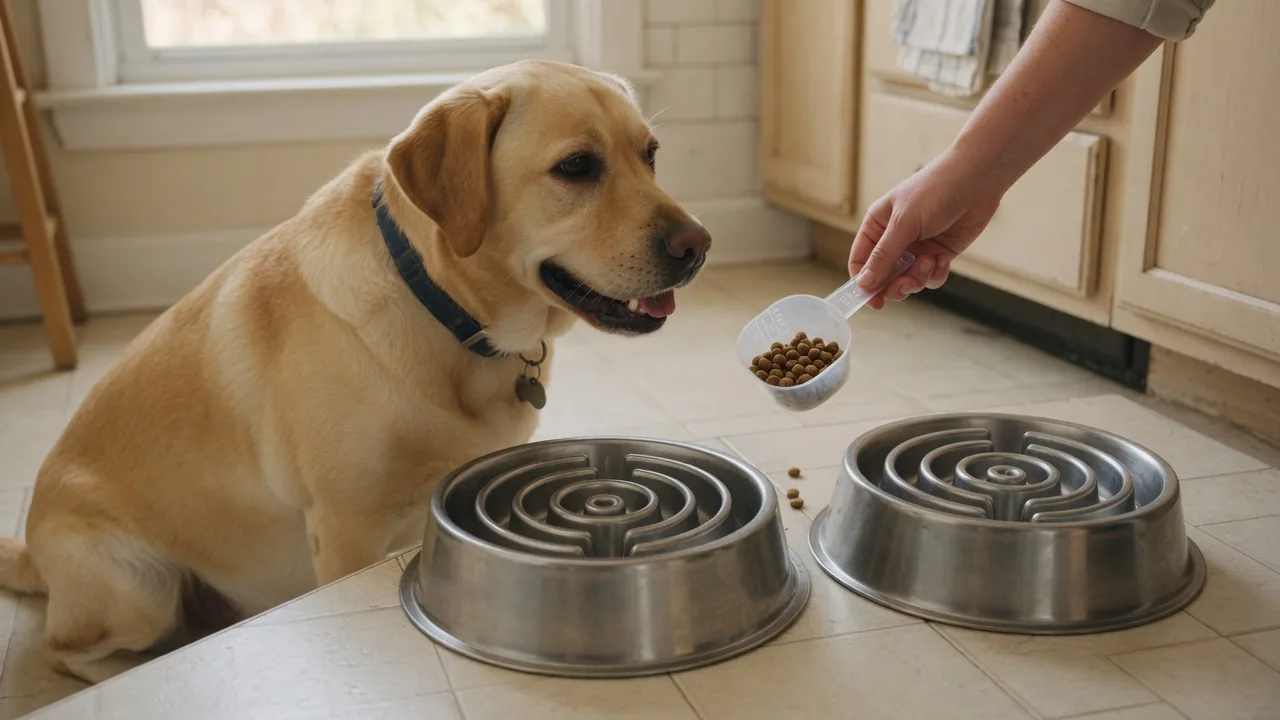
A stainless steel slow feeder dog bowl uses a built-in maze to stretch a fast gulp into a calmer few-minute meal. It's hygienic, dishwasher-safe, and works for the same twice-daily routine most dogs already follow — you just swap the bowl. For puppies and enthusiastic eaters, that pacing matters most.
👉 Stainless Steel Slow Feeder Dog Bowl →
A note on switching schedules
If you change your dog's feeding frequency — say, moving a puppy from three meals to two — do it gradually and keep an eye on their appetite, energy, and stools. Sudden changes in schedule or food can upset digestion. When in doubt, phase it in over a week or two, and check with your vet if anything seems off.
❓ FAQ (also add FAQ schema)
How many times a day should I feed my dog? Most healthy adult dogs do well on two meals a day, about 8-12 hours apart. Puppies usually need 3-4 smaller meals, tapering as they grow. Always confirm with your vet and your food's label.
Should I feed my dog once or twice a day? Twice a day is the common default for adult dogs. It keeps hunger steady and avoids one long empty stretch. Some dogs have different needs, so follow your vet's advice for your dog.
How often should I feed a puppy? Young puppies are typically fed 3-4 small meals a day, moving toward 2-3 meals as they approach a year old. Regular meal times also help with house-training.
Does it matter what time I feed my dog? Consistency helps more than the exact clock time. Regular, evenly spaced meals keep energy and digestion steady. Pick times that fit your routine and keep them consistent.
Can feeding my dog too fast be harmful? Fast eating swallows extra air and can cause gas, vomiting, and — in deep-chested breeds — contribute to bloat. A slow feeder bowl paces meals and reduces gulping.