Written by Ethan Walker · Reviewed against our Editorial Guidelines · Updated August 17, 2026
Why Does My Dog Get Hiccups After Eating?
That rhythmic little "hic... hic... hic" right after dinner can be startling the first time you notice it. The good news: dog hiccups after eating are almost always harmless, caused simply by swallowing extra air while eating too fast, which irritates the diaphragm.
Here's what's actually happening when your dog hiccups, why it's linked to mealtime specifically, and what you can do if it happens often.
What causes hiccups in dogs
Hiccups happen when the diaphragm — the muscle that helps control breathing — spasms involuntarily. In dogs, just like in people, this is usually triggered by:
- Eating or drinking too fast, which swallows extra air along with food or water
- Excitement around mealtime, which can cause rapid, gulping breaths
- A large meal eaten quickly, stretching the stomach faster than normal
- Stress or overstimulation, which some dogs channel into hiccup-triggering rapid breathing
Puppies get hiccups more often than adult dogs, partly because they tend to eat and play with more enthusiasm and less restraint.
Why hiccups show up specifically after eating
The mealtime connection comes down to swallowed air. When a dog gulps big mouthfuls of food, air goes down along with it. That extra air can irritate the diaphragm and trigger the spasm we see as hiccups. It's the same gulped-air mechanism behind post-meal gas and burping — hiccups are just another symptom of the same root cause: eating too fast.
That's why hiccups after eating are so often paired with other fast-eating signs, like gulping visible chunks of kibble whole, a bloated-looking belly after meals, or occasional post-meal vomiting.
Are dog hiccups after eating dangerous?
In the vast majority of cases, no. Hiccups are a normal, temporary reflex and almost always resolve on their own within a few minutes, without any treatment needed.
That said, hiccups aren't something to actively worry about unless they're paired with other signs. We're not vets, and this isn't a diagnosis — contact your vet if you notice:
- Hiccups that last much longer than usual (well beyond 15-20 minutes)
- Hiccups paired with labored breathing, distress, or a swollen/hard belly
- Repeated retching or unsuccessful attempts to vomit alongside the hiccups (this combination can be a sign of bloat/GDV and is an emergency)
- Hiccups that seem to genuinely bother or distress your dog rather than being a passing quirk
For the overwhelming majority of dogs, though, hiccups after eating are simply an odd little side effect of an enthusiastic eater — not a health concern.
How to help your dog stop hiccuping after meals
You usually don't need to do anything — hiccups pass on their own. But if they happen at almost every meal, it's worth addressing the root cause:
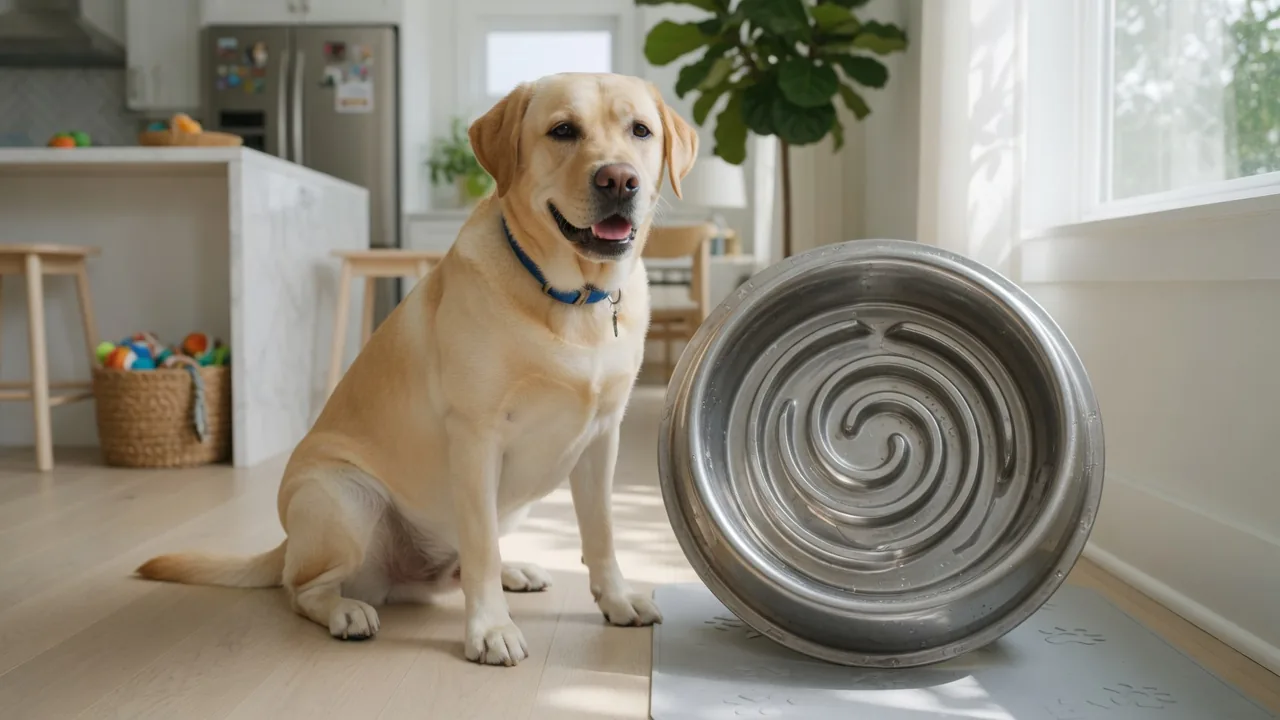
- Slow down the eating itself. Since gulped air is the main trigger, slowing down how fast your dog eats is the most direct fix. A stainless steel slow feeder uses a raised maze pattern to break food into small pockets, so your dog works for each bite instead of inhaling the whole meal in seconds.
- Offer smaller, more frequent meals instead of one large one, so there's less food (and less air) going down at once.
- Let your dog calm down before mealtime if excitement seems to be the trigger — a minute of settling before the bowl goes down makes a real difference.
- Encourage rest right after eating rather than immediate play or running, which can help avoid triggering a hiccup spell in an already-full stomach.
Because hiccups, gas, and burping after eating all trace back to the same gulped-air cause, fixing the eating speed tends to quietly clear up all three at once. Our guide on how to stop your dog eating too fast has more detail on slowing mealtime down generally.
Our Stainless Steel Slow Feeder Dog Bowl is designed with a proper maze depth to pace fast eaters without frustrating them — a simple mealtime change that can take the edge off the gulping behind hiccups, gas, and burping alike.
The bottom line
Dog hiccups after eating are almost always a harmless, short-lived reflex caused by swallowing extra air during a fast, excited meal. They usually resolve on their own in a few minutes. If hiccups become a regular pattern, slowing down mealtime with a proper slow feeder addresses the root cause rather than just the symptom — and if hiccups ever come with distress, a swollen belly, or repeated retching, that's a same-day call to your vet.
👉 See the Stainless Steel Slow Feeder Dog Bowl →
Frequently Asked Questions
Why does my dog get hiccups after eating? Usually because they ate too fast and swallowed extra air along with their food, which irritates the diaphragm and triggers a hiccup spasm. It's the same mechanism behind post-meal gas and burping.
Are hiccups bad for dogs? No, occasional hiccups are a normal, harmless reflex that usually passes within a few minutes. They're only a concern if they last unusually long or come with distress, a swollen belly, or repeated retching.
How do I stop my dog from hiccuping after meals? Slow down their eating with a slow feeder bowl, offer smaller and more frequent meals, and let your dog calm down before mealtime if excitement seems to trigger it.
Do puppies get hiccups more than adult dogs? Yes, puppies tend to hiccup more often, largely because they eat and play with more enthusiasm and less restraint than adult dogs.