Written by Ethan Walker · Reviewed against our Editorial Guidelines · Updated August 17, 2026
Dog Food Toppers Explained
A dog food topper is something added on top of a regular meal — plain meat, pumpkin, yogurt, broth, or a store-bought mix — to boost flavor, aroma, or moisture without replacing a complete, balanced diet. If your dog's regular bowl gets a lukewarm response, toppers are the usual fix owners reach for. Done well, they add variety and make mealtime more appealing without turning into a diet overhaul. This guide covers what toppers actually do, safe options to try, and the one thing owners often overlook: a topper can make your dog eat faster, not just happier.
What is a dog food topper?
A topper is simply something added on top of (or mixed into) your dog's regular food to boost flavor, aroma, or moisture. Toppers range from store-bought products made specifically for this purpose to simple additions from your own kitchen. They're meant to enhance a meal, not replace a complete and balanced diet — think of a topper as seasoning, not a substitute for proper nutrition.
Common reasons owners use toppers:
- Picky eating — a bland kibble becomes more appealing with a stronger smell or softer texture on top.
- Variety — even dogs on a consistent diet can benefit from occasional novelty.
- Hydration — wet or liquid toppers add moisture to a mostly dry diet.
- Medication time — a flavorful topper can help mask the taste of a pill.
Safe topper ideas to try
A few commonly used, generally dog-safe options, added in small amounts:
- Plain cooked meat (chicken, turkey, beef) with no seasoning, bones, or skin
- Plain canned pumpkin (not pie filling) for a bit of fiber and moisture
- Plain unsweetened yogurt, in small amounts, for dogs who tolerate dairy well
- Bone broth (unsalted, no onion or garlic) for extra aroma and hydration
- A small spoonful of wet food mixed into kibble for flavor without a full diet switch
- Store-bought toppers made specifically for dogs, which often list guaranteed analysis and are formulated to be safe as an addition
Avoid toppers with onion, garlic, chocolate, grapes/raisins, xylitol, excess salt, or seasoning blends — these are commonly known to be unsafe or harmful for dogs even in small amounts. If you're ever unsure whether a specific human food is safe as a topper, it's worth checking with your vet before adding it.
How much topper is too much?
Toppers add calories, and it's easy to underestimate how much a "small spoonful" adds up to over a week. As a general guideline, most owners keep toppers to a small fraction of the total meal — enough to add flavor and moisture without meaningfully changing the diet's balance. If you're adding a topper regularly (not just occasionally), it's worth adjusting your dog's regular portion slightly to account for the extra calories, and checking with your vet if you're unsure how to balance the two, especially for dogs managing their weight.
The problem toppers can create: faster eating
Here's the part that often gets missed: a tastier meal is often a faster-eaten meal. A topper that makes food more exciting turns an already-quick eater into an even quicker one, since there's suddenly more incentive to inhale the bowl before anyone else gets to it (real or imagined). Fast eating brings the usual downsides — gulped air, mess, and sometimes vomiting shortly after the meal, which can undo some of the benefit a topper was meant to add.
The fix isn't to skip toppers — it's to serve them in a way that still takes some effort to eat.
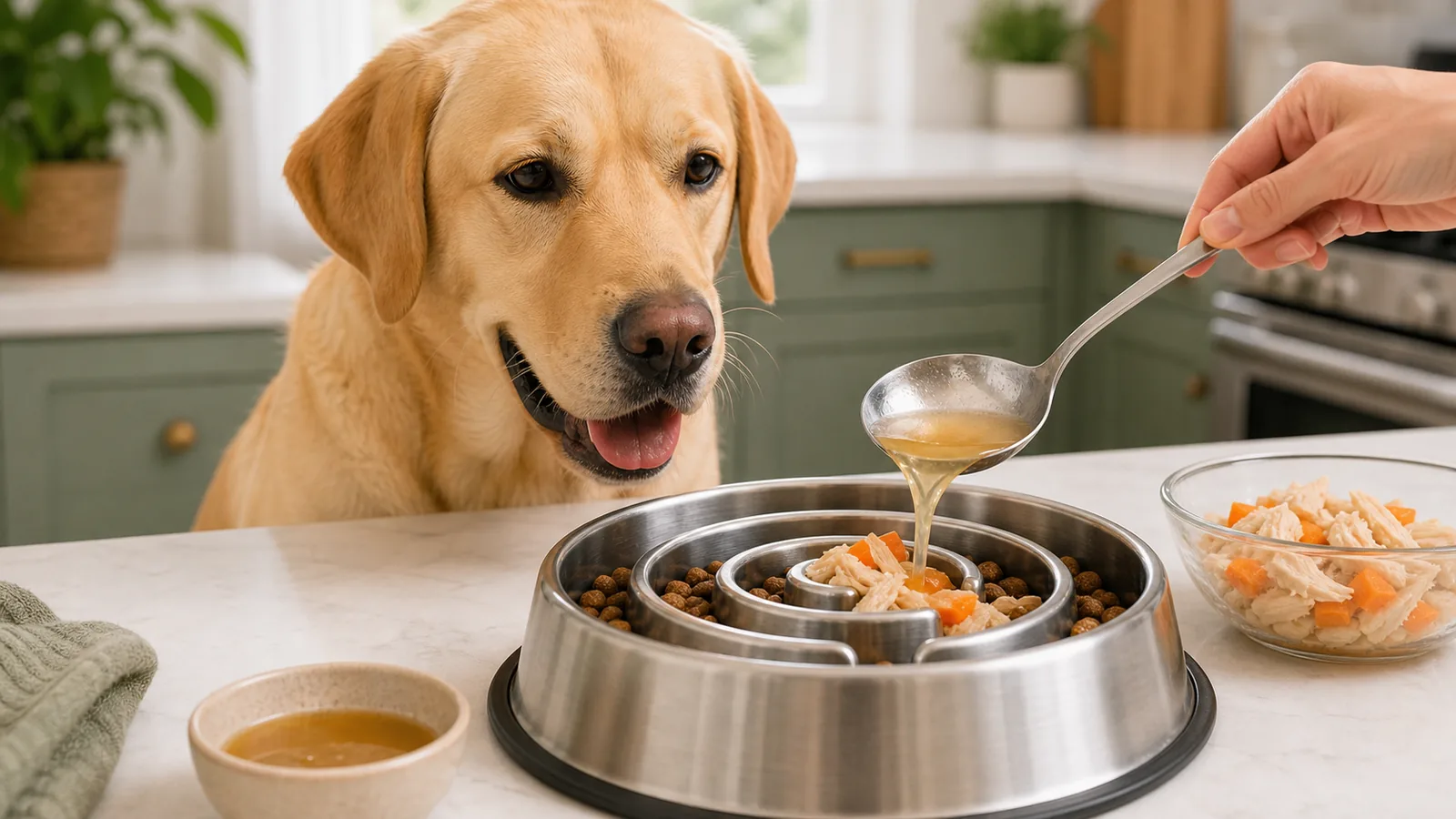
A stainless steel slow feeder works well here: mix your topper into the kibble and let the maze pattern do its job, since your dog still has to work pieces out of the raised ridges one at a time rather than lapping up a soft, topped meal in one motion. For wetter toppers like broth or pumpkin, a thin layer spread across the raised pattern gives your dog something to lick and work at rather than slurp in one go.
Our Stainless Steel Slow Feeder Dog Bowl handles both dry kibble with a topper mixed in and thinner wet toppers spread across the maze, since the raised ridges create texture and resistance either way.
If your dog's excitement over a topper turns mealtime into something closer to a snuffle-and-forage activity, a snuffle mat is another great option — scatter kibble lightly coated in a dry or crumbled topper across the fleece fabric and let your dog sniff each piece out. It stretches an exciting meal into a longer, more engaging routine instead of a 20-second event. For more ways to slow down an excited eater, see our guides on how to stop your dog eating too fast and dog enrichment ideas.
Introducing a new topper safely
Add any new topper gradually and in a small amount at first, watching for loose stools or other signs of an upset stomach over the next day or two. Dogs' digestive systems can react to sudden new additions even when the ingredient itself is generally safe. If you notice ongoing digestive upset, an allergic reaction (itching, swelling, vomiting), or your dog refuses food entirely after starting a topper, stop and check in with your vet.
The bottom line
Dog food toppers are a simple, low-risk way to add variety, moisture, and appeal to an otherwise plain meal — as long as you stick to safe ingredients, keep portions in check, and watch how it changes your dog's eating speed. If a topper turns your dog into a faster eater, pair it with a slow feeder or snuffle mat so the extra excitement doesn't come with the downsides of gulping.
👉 See the Stainless Steel Slow Feeder Dog Bowl →
Frequently Asked Questions
What can I use as a dog food topper? Plain cooked meat, plain canned pumpkin, plain unsweetened yogurt, unsalted bone broth, a spoonful of wet food, or a store-bought topper made for dogs are common safe options. Avoid onion, garlic, chocolate, grapes/raisins, xylitol, and heavily seasoned foods.
Do dog food toppers add enough calories to matter? Yes, especially if used regularly rather than occasionally. Keep toppers to a small portion of the overall meal and adjust your dog's regular food slightly if you're topping every day, checking with your vet if unsure.
Why does my dog eat faster with a topper on their food? Toppers make meals more appealing, which can increase the urgency your dog feels to eat quickly. A slow feeder bowl or snuffle mat can slow this back down without removing the topper.
Can I use a slow feeder bowl with wet toppers? Yes, though thinner wet toppers work best spread across the raised maze pattern rather than pooled, so your dog has to lick and work at it rather than slurp it up in one motion.