Written by Ethan Walker · Reviewed against our Editorial Guidelines · Updated August 17, 2026
DIY Slow Feeder vs Buying One: Which Is Worth It?
Searching for a DIY slow feeder dog bowl is smart — you've realized your dog needs to slow down at dinner, and you're checking whether you can solve it with stuff you already own. The honest answer: yes, DIY slow feeders work, and some are genuinely good — but they come with trade-offs in mess, hygiene, and how long they last.
This guide gives you real DIY options that actually slow your dog down, then walks through when a store-bought feeder is the better call, so you can decide with eyes open.
DIY slow feeders that actually work
These cost little or nothing and you can set them up tonight:
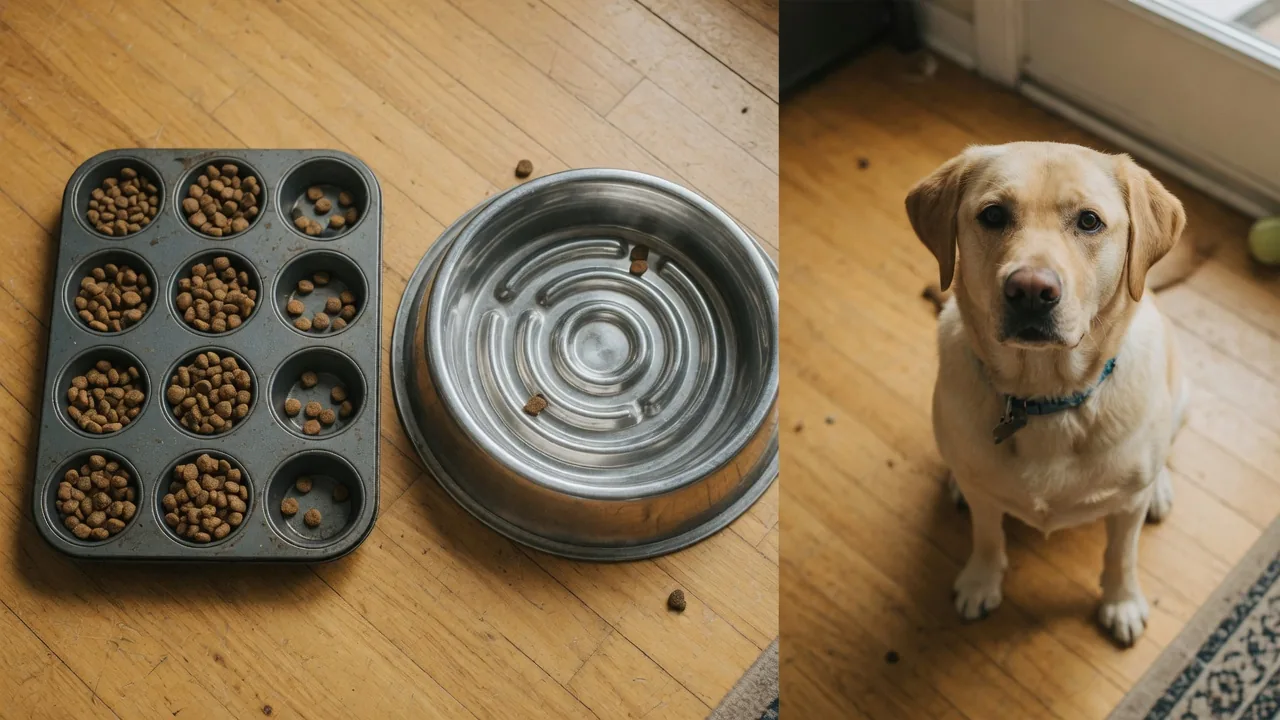
1. The muffin tin
Spread your dog's meal across the cups of a muffin tin. They have to move from cup to cup instead of inhaling one pile. Cheap, effective, and you probably own one.
2. A large ball in the bowl
Drop a clean, dog-safe ball (too big to swallow) into a regular bowl. Your dog has to eat around it, which paces the meal. Free, and a solid quick fix.
3. Scatter or "snuffle" feeding
Toss kibble across a clean floor, a towel, or the lawn so your dog forages for each piece. Slows eating and adds enrichment. A folded towel with kibble rolled inside works as a DIY snuffle setup.
4. An upside-down bowl inside a bigger bowl
Place a smaller bowl upside down inside a larger one and put food in the ring around it. Improvises a maze with bowls you already have.
5. A baking tray with obstacles
Spread food on a tray with a few clean, heavy items (like a mug or silicone cups) for your dog to eat around.
These all do the core job: turn a 10-second gulp into a slower meal.
The catch: where DIY falls short
DIY works, but it isn't free of downsides — and these are the reasons most owners eventually buy a feeder:
- Mess. Scatter feeding and trays fling food across the floor. Daily cleanup adds up.
- Hygiene. Towels and fabric need washing constantly or they get musty. A muffin tin's corners trap residue.
- Inconsistency. A ball gets nudged out; a tin gets flipped. The "difficulty" isn't reliable meal to meal.
- Safety. Balls and small items must be the right size and dog-safe, or they're a choking risk. You have to supervise.
- It's daily effort. DIY only works if you set it up every single meal. A purpose-built bowl just works, twice a day, with no thought.
For a one-off or a trial, DIY is perfect. For everyday feeding, the effort and mess pile up fast.
DIY vs buying: honest comparison
| Factor | 🥈 DIY Slow Feeder | 🥇 Store-Bought (Stainless Steel) |
|---|---|---|
| Upfront cost | Free / cheap | Low one-time cost |
| Setup effort | Every meal | None — just add food |
| Consistency | Hit or miss | Same maze every time |
| Hygiene | Fabric/tins trap residue | Non-porous, dishwasher-safe |
| Durability | Improvised, varies | Lasts for years |
| Mess | Often messy | Contained in the bowl |
| Safety | Supervise (choking risk) | Designed for safe feeding |
| Best for | Trials, one-offs | Everyday feeding |
When DIY is the right choice
DIY genuinely makes sense if:
- You want to test whether slowing meals helps before spending anything.
- It's a short-term need — a foster, travel, a one-time fix.
- You enjoy the project and don't mind the daily setup and cleanup.
There's no shame in starting with a muffin tin. Many owners do, confirm it helps, then upgrade.
When buying is worth it
A purpose-built feeder wins for everyday use because it removes all the friction: no setup, consistent difficulty, contained mess, and easy cleaning. And if you're going to buy one, material is the decision that matters — skip scratch-prone plastic (it traps bacteria and smells over time) and go straight to stainless steel, which is non-porous, dishwasher-safe, and lasts for years. (We cover exactly why in stainless steel vs plastic slow feeders.)
A stainless steel slow feeder gives you the reliable maze of a DIY tray without the mess, hygiene headaches, or daily setup — for the price of a couple of dog toys.
The bottom line
A DIY slow feeder dog bowl is a great way to prove the concept and slow your dog down for free today. But for everyday feeding, the mess, inconsistency, and daily effort make a purpose-built bowl worth it — and stainless steel is the version that stays hygienic and lasts. Start DIY if you're unsure; upgrade once you've seen it work.
👉 Stainless Steel Slow Feeder Dog Bowl — no setup, no mess, dishwasher-safe →
Frequently Asked Questions
How do you make a DIY slow feeder? Easy options include spreading the meal across a muffin tin, putting a large dog-safe ball in a regular bowl, scatter-feeding on a towel or floor, or placing a smaller bowl upside down inside a larger one and feeding in the ring. Each makes your dog work for the food.
Are DIY slow feeders as good as store-bought? They slow eating just as well for a single meal, but they're messier, less consistent, harder to keep hygienic, and need setting up every time. Store-bought feeders are more convenient and durable for everyday use.
Is a DIY slow feeder safe? It can be, with care. Make sure any ball or object is too big to swallow and dog-safe, and supervise the first few meals. If you'd rather not manage that, a purpose-built feeder is designed for safe everyday feeding.
Is it cheaper to DIY a slow feeder? Upfront, yes — most DIY options are free. But a stainless steel feeder is a low one-time cost that saves daily setup and mess, and it lasts for years, so the gap is smaller than it looks.