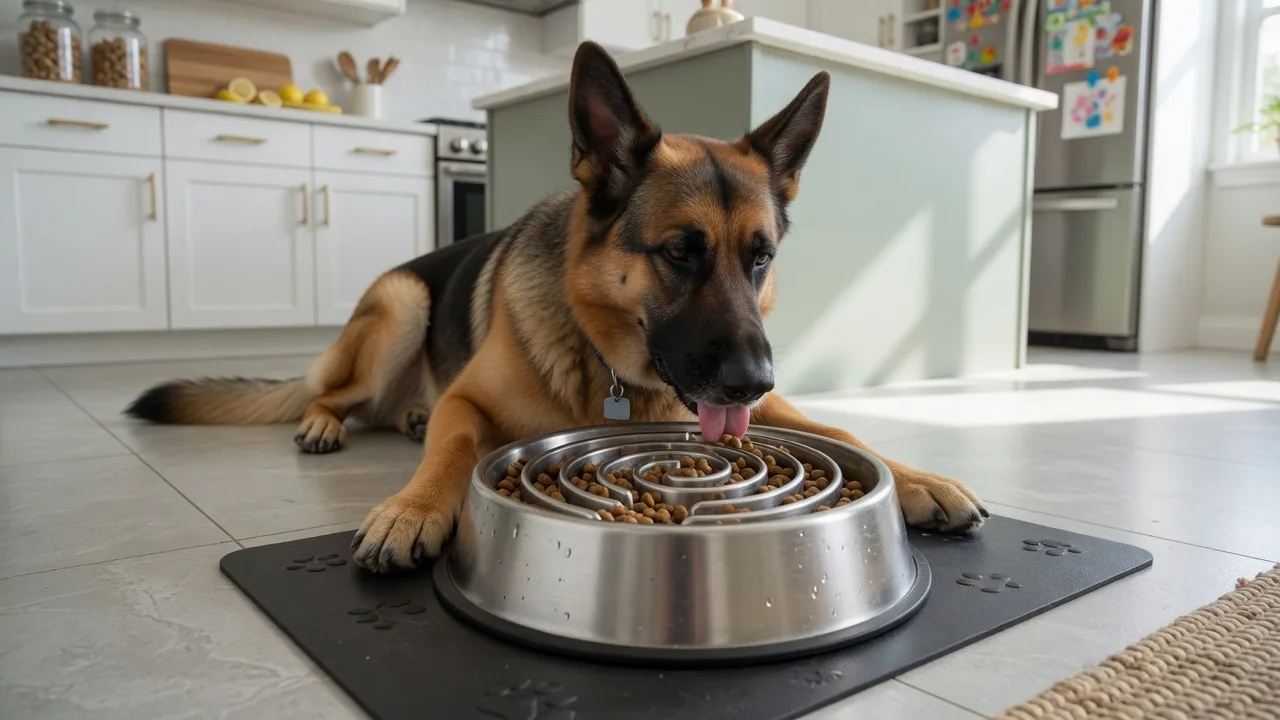
Best Slow Feeder for German Shepherds
The best slow feeder for a German Shepherd is a large-capacity, deep-maze stainless steel bowl with a heavy, non-slip base — sized for a big dog and effective at slowing the gulping that's linked to bloat (GDV) risk in deep-chested breeds. It's a sensible precaution, not a guarantee against bloat.
If you searched for a slow feeder for german shepherd, chances are bloat (GDV) is on your mind — and that's a smart thing to be thinking about. German Shepherds are a deep-chested breed, and deep-chested dogs carry a higher baseline risk for this serious, sometimes life-threatening condition. A slow feeder bowl won't guarantee your dog never bloats, but slowing down a fast, gulping eater is one of the more sensible, low-effort precautions you can take.
This guide covers the deep-chest connection honestly, what a good slow feeder for a German Shepherd should look like, and what a bowl can and can't do.
Why deep-chested breeds like German Shepherds carry extra bloat risk
Bloat, or gastric dilatation-volvulus (GDV), happens when the stomach fills with gas and, in the worst cases, twists on itself. It's a medical emergency. Deep-chested, large breeds — German Shepherds among them — are considered to be at higher baseline risk than smaller or barrel-chested dogs, likely due to the shape and mobility of the stomach in a deep chest cavity.
Eating fast and gulping air along with food is one of several contributing factors that's frequently discussed alongside bloat risk. It is not the only factor — genetics, age, single large meals, and exercise right after eating all play a role too. If your German Shepherd is a fast, gulping eater, reducing how much air they swallow at mealtime is a reasonable, practical step. It is not a substitute for your vet's guidance on your dog's individual risk.
If your dog shows signs of bloat — a swollen or hard abdomen, unproductive retching, restlessness, or collapse — this is an emergency. Contact your vet or an emergency vet clinic immediately.
What to look for in a slow feeder for a German Shepherd
German Shepherds are a large, strong-jawed breed with a big appetite, so a slow feeder built for a small dog will get flattened fast. Look for:
- A large-capacity bowl. It needs to hold a full meal, not force you to top up in a second, regular bowl.
- A deep, genuinely challenging maze. A shallow ridge pattern won't slow a German Shepherd's bite size in any meaningful way.
- A heavy, stable base. A large, motivated dog can shove a lightweight bowl across the kitchen floor mid-meal.
- Durable, easy-to-clean material. German Shepherds eat twice a day, every day — plastic scratches, stains, and can start to smell over time.
Our Stainless Steel Slow Feeder Dog Bowl is built with a raised spiral maze deep enough to genuinely slow gulping, a non-slip base that stays put, and dishwasher-safe stainless steel that holds up to daily large-breed use without scratching or absorbing odor.
Using a slow feeder alongside other bloat-conscious habits
A slow feeder is one piece of a broader approach, not a standalone fix. Many owners of deep-chested breeds also:
- Split meals into two or more smaller feedings rather than one large one, which some vets suggest may ease pressure on the stomach.
- Avoid vigorous exercise right before or right after meals, giving the stomach time to settle.
- Elevate or don't elevate feeding bowls based on their vet's specific recommendation — guidance on this has shifted over the years, so ask your vet rather than following generic internet advice.
- Know the emergency signs so they can act fast if something looks wrong.
None of this replaces a conversation with your vet, especially if your German Shepherd has a family history of bloat or you've noticed fast, gulping eating habits.
The bottom line
German Shepherds' deep chest is a real, breed-linked bloat risk factor, and a slow feeder that slows gulping and reduces swallowed air is a sensible, low-cost precaution — but it's a precaution, not a cure or a guarantee. Pair a well-built slow feeder with your vet's advice on meal sizing, exercise timing, and any breed-specific risk factors your dog may have.
For a broader look at how slow feeders work mechanically, see our guide on do slow feeder dog bowls actually work.
👉 See the Stainless Steel Slow Feeder Dog Bowl →
❓ FAQ (also add FAQ schema)
Can a slow feeder prevent bloat in German Shepherds? No. A slow feeder can help reduce swallowed air by slowing down gulping, which is one contributing factor discussed alongside bloat risk — but it is not a guarantee against bloat (GDV). Talk to your vet about your dog's individual risk factors.
Are German Shepherds prone to bloat? German Shepherds are a deep-chested breed, and deep-chested large breeds are generally considered to carry a higher baseline risk for bloat than smaller or barrel-chested breeds. Individual risk varies, so ask your vet about your specific dog.
What size slow feeder does a German Shepherd need? A large-capacity bowl with a deep, well-defined maze and a heavy non-slip base. A shallow or small-capacity feeder won't hold a full meal or meaningfully slow a dog this size.
What are the signs of bloat I should watch for? A swollen or hard abdomen, unproductive retching (trying to vomit without bringing anything up), restlessness, drooling, or collapse. These are emergency signs — contact your vet or an emergency vet clinic immediately if you see them.