Do Slow Feeder Dog Bowls Actually Work?
If your dog treats dinner like a race, you've probably asked the obvious question: do slow feeder dog bowls actually work, or is it just a moulded plastic gimmick with a price tag? Fair question — the pet aisle is full of things that promise more than they deliver.
Here's the honest answer up front: yes, slow feeder dog bowls work, and they work for a simple, mechanical reason — not marketing magic. In this guide we'll explain how they slow eating, what owners actually notice, who benefits most, and how to avoid the one mistake that makes a slow feeder fail.
So, do slow feeder dog bowls work?
Yes. A slow feeder bowl reliably slows how fast a dog eats — often by 5–10x — and most owners see the change at the very first meal. This isn't a subtle effect you have to squint to notice. A dog that used to clear the bowl in 10 seconds suddenly takes several minutes.
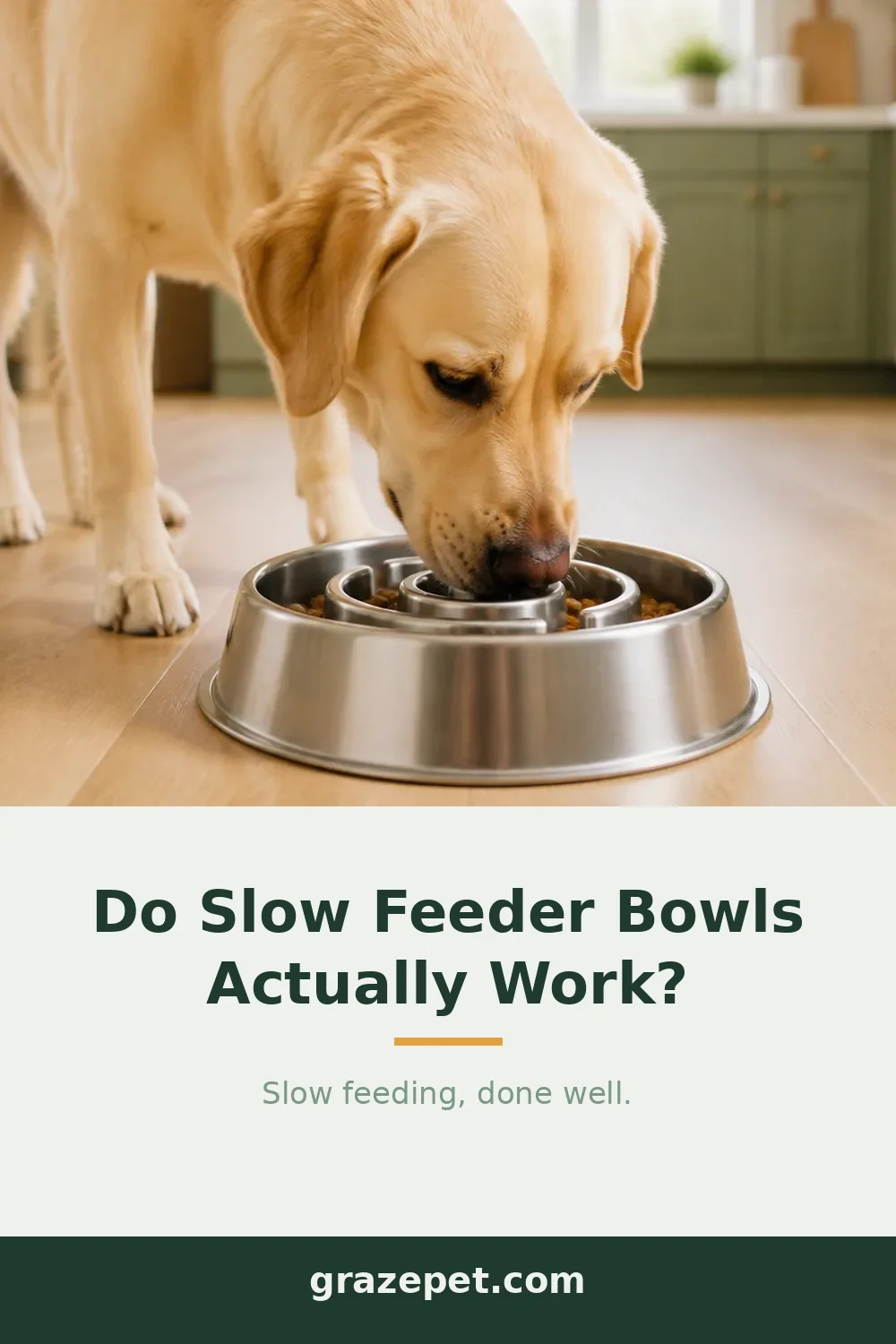
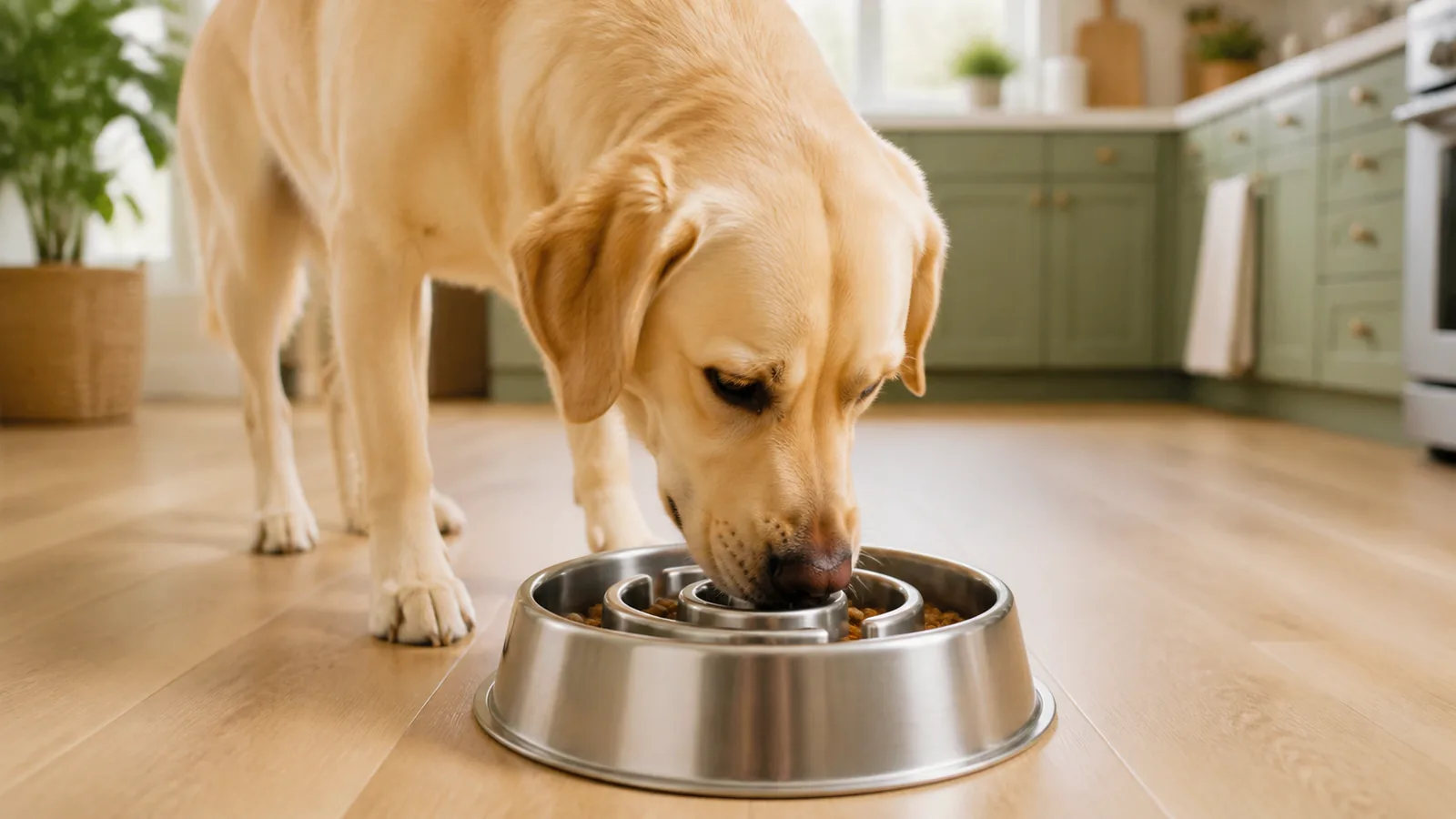
The reason it works is physical, not psychological. A standard bowl gives your dog one open pool of food they can inhale in big mouthfuls. A slow feeder breaks that pool into dozens of small pockets separated by raised ridges, so your dog can only get a little at a time. The food is still all there — it just can't be swallowed in three gulps.
How a slow feeder physically slows eating
A fast eater takes huge mouthfuls and barely chews — remove the ability to take huge mouthfuls and the speed problem solves itself.
A maze-style feeder does three things at once:
- Limits bite size — ridges block big scoops, so each mouthful is small.
- Forces tongue and nose work — your dog has to nudge and lick food out of the channels.
- Adds pauses — moving from one pocket to the next breaks the non-stop gulping rhythm.
None of that depends on your dog "deciding" to slow down. The bowl does the slowing for them, which is exactly why it's so reliable.
What owners actually notice
The slowdown is the headline, but it's the knock-on effects people really feel:
- Less gulped air — fast eaters swallow a lot of air, which means gas, burping, and a bloated-looking belly. Slower meals cut that down.
- Less post-meal vomiting — the classic "eat fast, bring it back up two minutes later" pattern eases when the stomach isn't hit with food all at once.
- A calmer dog after eating — instead of a frantic 10-second event, mealtime becomes a few minutes of focused work, which tends to settle dogs.
- Less mess — fewer mouthfuls flicked across the floor.
Slowing your dog's eating can also help reduce the risk of bloat (GDV) in deep-chested breeds, because swallowed air is one contributing factor — though a bowl is a sensible precaution, not a guarantee. (More on the health side in our guide to whether slow feeder bowls are good for dogs.)
When a slow feeder doesn't work (and why)
Slow feeders earn their bad reviews in a few specific situations — and they're all avoidable:
- The maze is too easy. A shallow design with wide channels barely slows a determined gulper. You want a real maze, not a few token bumps.
- The maze is too hard. Go too extreme and an anxious dog gives up or gets frustrated. Moderate difficulty is the sweet spot.
- Wrong size for the snout. A tiny maze and a big snout (or vice versa) means your dog either can't reach the food or sweeps it out too easily.
- Cheap plastic that gets ignored. Scratched, smelly plastic can put picky eaters off entirely — and those scratches trap bacteria.
The fix for almost all of these is choosing a well-designed feeder in a durable material. A stainless steel slow feeder with a proper maze pattern slows gulping without frustrating your dog, and it won't scratch, smell, or warp the way budget plastic does.
Our Stainless Steel Slow Feeder Dog Bowl is built for exactly this: a maze that actually paces fast eaters, a non-slip base so it doesn't skate across the floor, and a dishwasher-safe surface that stays hygienic for years.
How to make sure your slow feeder works
- Use your dog's normal portion — don't reduce food, just change the bowl.
- Let them figure it out — most dogs solve the maze in one meal.
- Ease anxious dogs in — scatter a little food loosely on top to start, then let them dig into the channels.
- Keep it clean — rinse or dishwasher after each meal so it stays appealing (effortless with stainless steel).
Do that and the bowl does the rest. There's no training program required — the design carries the work.
The bottom line
Do slow feeder dog bowls work? Yes — clearly and reliably. They slow eating by up to 10x through simple physics, and that translates into less gulping, less gas, less vomiting, and a calmer dog. The only way to get a disappointing result is to buy a poorly designed or scratch-prone bowl.
If your dog is a gulper, this is one of the cheapest, lowest-effort health upgrades you can make.
👉 See the Stainless Steel Slow Feeder Dog Bowl →
❓ FAQ (also add FAQ schema)
Do slow feeder dog bowls really work? Yes. They slow eating speed by roughly 5–10x by breaking food into small pockets your dog can't gulp all at once. Most owners notice the difference from the very first meal.
How much do slow feeders slow eating down? Commonly 5–10x. A meal that took 10 seconds in a normal bowl often takes several minutes in a maze feeder.
Are slow feeder bowls just a gimmick? No. The effect is mechanical, not marketing — ridges physically limit bite size and force tongue and nose work, so the slowdown happens whether or not your dog "cooperates."
Why isn't my slow feeder working? Usually the maze is too easy, the size is wrong for your dog's snout, or worn plastic is putting them off. A well-designed stainless steel feeder in the right size fixes most of these.
Save this guide