Written by Ethan Walker · Reviewed against our Editorial Guidelines · Updated August 17, 2026
8 Signs Your Dog Is Bored (and What to Do About It)
The most common signs your dog is bored are destructive chewing, digging, excessive barking, pacing, and eating too fast — all signs of an understimulated brain, not bad behavior. These eight patterns cover almost everything owners describe as sudden "acting out," from chewed shoes to a dug-up flower bed to barking at the wall for no obvious reason.
Below are the eight most common signs, why they happen, and what actually fixes them — most of which take less effort than dealing with the behavior itself.
Why boredom shows up as "bad behavior"
Dogs don't have a way to tell you they're understimulated, so the frustration comes out physically — chewing, digging, barking, or restlessness. It's not spite or stubbornness; it's a brain with nothing to do defaulting to whatever activity is available. Recognizing the signs early means you can add enrichment before it becomes a habit.
8 signs your dog is bored
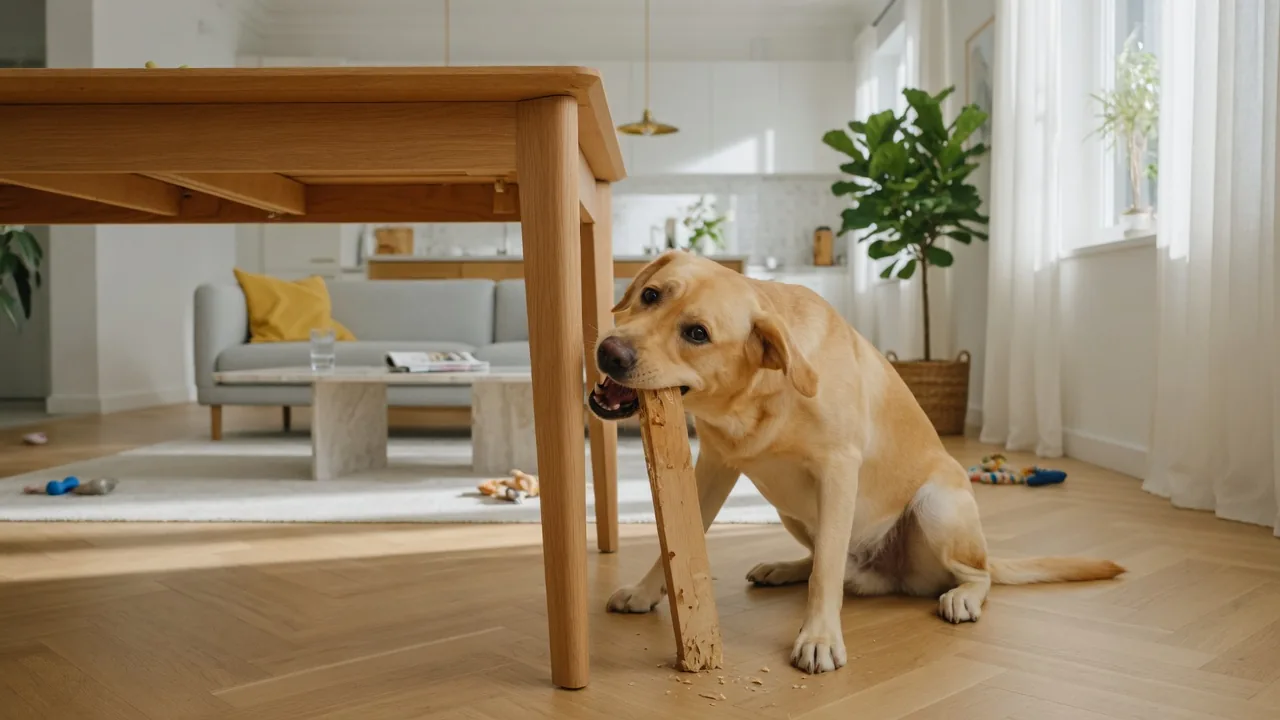
1. Destructive chewing
Shoes, furniture legs, remote controls — if your dog has chew toys available and still goes for household items, boredom (not just teething) is a likely driver, especially in adult dogs.
2. Digging, indoors or out
Digging is a natural foraging behavior. A dog with no outlet for it may dig up the garden or scratch at carpets and bedding simply because the urge has nowhere else to go.
3. Excessive barking at nothing obvious
Barking at passing cars, shadows, or seemingly nothing can be a bored dog creating its own stimulation. If exercise and attention haven't changed but the barking has increased, boredom is worth ruling out.
4. Pacing or restlessness
A dog that can't settle, circles the room, or seems unable to relax even after a walk may be mentally, not physically, unspent.
5. Following you from room to room
Occasional shadowing is normal, but constant, anxious following — especially paired with whining — can signal a dog looking for something to engage with.
6. Attention-seeking or demand behaviors
Nudging, pawing, barking directly at you, or dropping toys in your lap repeatedly are often a bored dog's way of generating interaction when nothing else is happening.
7. Eating too fast or "inhaling" meals
A dog with an understimulated day often has little to look forward to besides food, and mealtime becomes the one exciting event — inhaled in seconds. Slowing that moment down with a maze-pattern slow feeder gives them something to work at rather than something to rush through. See our guide on why dogs eat so fast for more on this link.
8. Escaping or fence-testing
Dogs that dig under fences, jump gates, or find gaps are sometimes looking for stimulation elsewhere because there isn't enough of it at home.
What to do about it
The fix for most of these signs isn't more discipline — it's more enrichment. A few low-effort changes cover a lot of ground:
- Turn a meal into a puzzle. A stainless steel slow feeder makes your dog work a maze pattern for their food instead of gulping it in seconds, adding daily mental work with no extra time commitment.
- Add sniffing time. Scatter kibble on a snuffle mat or in the garden. Sniffing is mentally tiring and calming, and it's one of the fastest ways to settle a restless dog.
- Rotate toys instead of leaving everything out at once — novelty matters more than quantity.
- Add five minutes of training a day. Simple cues like "touch" or "settle" give the brain a job.
- Build in sniff-led walks, where your dog chooses where to stop and explore instead of marching in a straight line.
For a broader list, see our full dog enrichment ideas guide.
When it's more than boredom
Most of these behaviors improve within a week or two of adding real enrichment. If they don't — or if they appear suddenly, intensely, or alongside other changes like appetite loss, limping, or unusual aggression — it's worth talking to your vet, since boredom can look similar to anxiety, pain, or other underlying issues that need proper diagnosis.
The bottom line
Chewing, digging, barking, and pacing are rarely about a "bad" dog — they're usually a dog with unspent mental energy. Recognizing the signs your dog is bored early lets you fix it with simple daily enrichment instead of managing the fallout.
Two of the easiest starting points:
👉 Snuffle Mat for Dogs → for daily sniffing and calm 👉 Stainless Steel Slow Feeder Dog Bowl → to turn mealtime into mental work
Frequently Asked Questions
What are the most common signs a dog is bored? Destructive chewing, digging, excessive barking, restlessness, demand attention-seeking, and eating too fast are among the most common signs.
Can boredom cause a dog to eat too fast? Yes, indirectly. A dog with little else to look forward to during the day can treat mealtime as the one exciting event and rush through it. Slowing feeding down with a puzzle-style bowl helps address this specific pattern.
How long does it take for enrichment to fix boredom behaviors? Many owners notice improvement within one to two weeks of adding daily mental stimulation, like a slow feeder, snuffle mat, or short training sessions.
When should I see a vet about my dog's behavior? If boredom-like behaviors appear suddenly, are severe, or come with other symptoms like appetite changes or lethargy, see your vet to rule out anxiety, pain, or a medical cause.