Written by Ethan Walker · Reviewed against our Editorial Guidelines · Updated August 17, 2026
Senior Dog Feeding Guide
Senior dog feeding means adjusting for a slower metabolism, less activity, and possible dental or digestive changes — not simply serving the same food in smaller amounts. These age-related shifts affect calorie needs, meal frequency, and mealtime comfort in different ways. This guide covers the general changes to expect and how to adjust mealtime for comfort, while leaving the specific numbers where they belong: with your vet.
When is a dog considered "senior"?
There's no single age that applies to every dog — it depends heavily on size and breed. As a rough guide:
- Small breeds are often considered senior around 10–12 years
- Medium breeds around 8–10 years
- Large and giant breeds can be considered senior as early as 6–8 years, since they tend to age faster
These are general patterns, not hard cutoffs. Your vet is best placed to tell you when it's worth shifting your dog's diet and routine based on their actual health, not just their age on paper.
How feeding needs typically change with age
Feeding needs change in several predictable ways as dogs age, though every dog is different:
- Lower calorie needs — many senior dogs are less active than they were as adults, so the same portion that kept a healthy weight at 4 years old can lead to weight gain at 10. Some senior-formulated foods account for this with lower calorie density.
- Joint support — some senior diets add ingredients aimed at joint comfort, though results vary and this is worth discussing with your vet rather than assuming any product delivers a guaranteed effect.
- Digestive sensitivity — older dogs sometimes tolerate rich or rapid diet changes less well than they used to, which makes gradual food transitions even more important.
- Dental changes — worn or missing teeth can make hard kibble harder to eat comfortably, which is one reason some owners soften food or shift toward wet food for senior dogs.
- Appetite changes — some seniors eat less due to a naturally lower calorie need; others lose interest in food due to an underlying health issue. Distinguishing between the two is a vet conversation, not a guess.
Any specific decision about switching to a senior formula, adjusting portions, or changing meal frequency should go through your vet, since it depends on your dog's individual weight trend, bloodwork, and health history.
Should you change meal frequency for a senior dog?
Many senior dogs do well continuing with the same two-meals-a-day routine they had as adults. That said, some owners find that splitting the same daily total into three smaller meals eases digestion for seniors with a sensitive stomach, since it avoids a large single load hitting an older digestive system at once. There's no universal rule here — if your senior dog seems uncomfortable after meals, mention it to your vet before assuming a frequency change is the fix, since discomfort after eating can also point to something else worth checking.
Making mealtime more comfortable
Beyond what and how much, how a senior dog eats matters more than people expect:
- Bowl height — a raised bowl can be more comfortable for dogs with joint stiffness, since it reduces how far they have to bend their neck and hips to reach the food. Ask your vet if a raised feeder is a good fit for your dog's specific joint situation.
- Non-slip base — older dogs with less stable footing benefit from a bowl that doesn't slide as they eat.
- Eating speed — some senior dogs who ate quickly their whole lives keep doing so even as their digestion becomes less tolerant of it, which can mean more gas or vomiting than it used to.
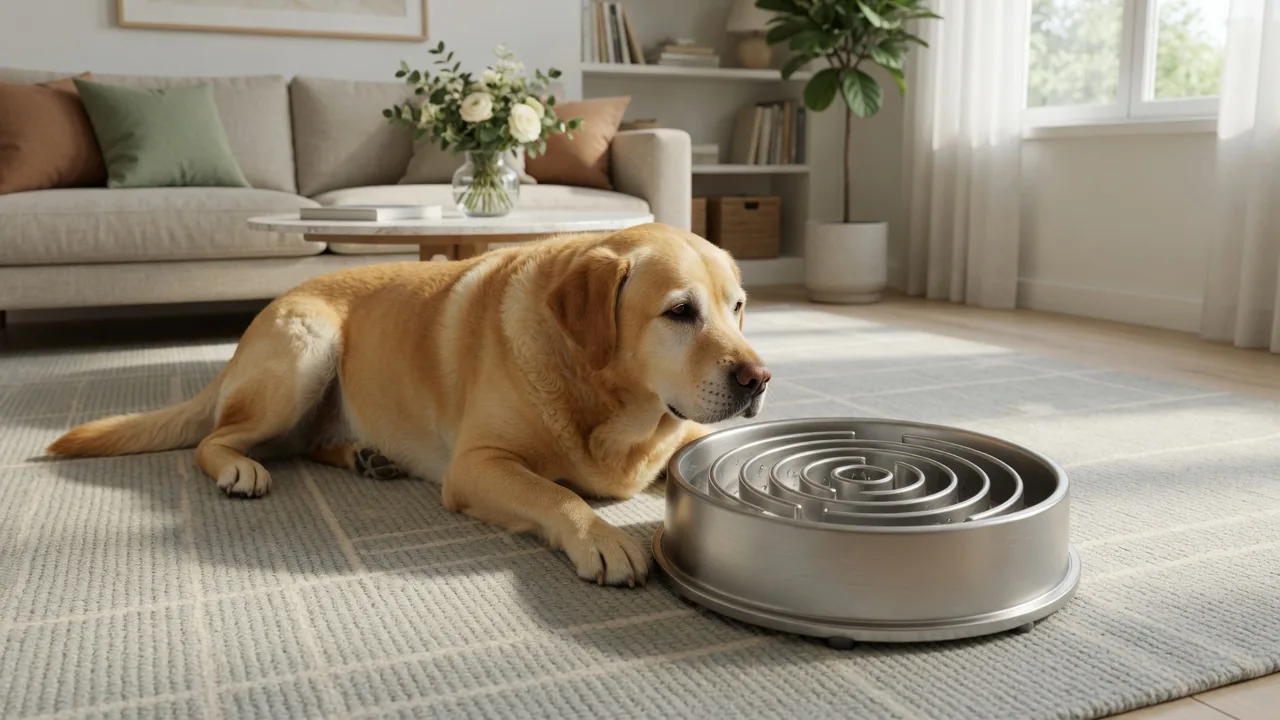
If your senior dog still eats fast, a stainless steel slow feeder can help — the raised maze pattern slows gulping without changing the amount you feed, and the non-slip base keeps the bowl steady for dogs who aren't as sure-footed as they once were. It's a low-effort change that can ease some of the post-meal discomfort owners sometimes notice in older dogs.
Our Stainless Steel Slow Feeder Dog Bowl is dishwasher-safe and won't scratch or trap odors over time the way older plastic bowls can, which matters for senior dogs who may already be more particular about their food.
Keeping a senior dog engaged at mealtime
Senior dogs often get less physical exercise than they used to, which makes mental stimulation at mealtime more valuable, not less. A snuffle mat lets a senior dog work for their food at their own pace — no jumping or running required, just sniffing and gentle foraging, which most senior dogs can still do comfortably. It's a gentle way to keep a senior dog's mind active even as their exercise routine changes. For more low-impact mental stimulation ideas, see our guide on dog enrichment ideas.
Warning signs that need a vet visit, not a diet tweak
Don't try to solve these with a feeding schedule change on your own — check with your vet if your senior dog shows:
- Sudden weight loss or gain
- Refusing food for more than a day
- Vomiting or diarrhea lasting more than a day
- Noticeably increased thirst or urination
- Signs of pain when eating (dropping food, chewing on one side, pawing at the mouth)
These can point to dental issues, organ changes, or other conditions that are common as dogs age and are worth ruling out with your vet rather than adjusting food and hoping it resolves.
The bottom line
Senior dog feeding usually means paying closer attention — to weight trends, dental comfort, and how mealtime itself feels for your dog — more than it means a single dramatic diet overhaul. Let your vet guide the specific changes to food and portions, and focus on what you can control day to day: a comfortable bowl, a steady routine, and a bit of mental engagement built into meals.
👉 See the Stainless Steel Slow Feeder Dog Bowl →
Frequently Asked Questions
At what age is a dog considered a senior? It varies by size — often 10-12 for small breeds, 8-10 for medium breeds, and as early as 6-8 for large and giant breeds. Your vet can give you a better estimate based on your dog's specific health.
Should I feed my senior dog less? Many senior dogs need fewer calories due to lower activity levels, but the right adjustment depends on your dog's weight, body condition, and health. Talk to your vet before making a significant portion change.
Do senior dogs need a different bowl? Not necessarily, but a non-slip, appropriately-sized bowl can help dogs with joint stiffness or less stable footing. A slow feeder can also help if your senior dog still eats quickly.
Why does my senior dog eat slower or refuse food some days? This can be normal aging, but it can also point to dental pain, nausea, or another health issue. If it lasts more than a day or two, or comes with other symptoms, check in with your vet.