Written by Ethan Walker · Reviewed against our Editorial Guidelines · Updated August 17, 2026
Mental Stimulation for Dogs: Why and How to Do It
Mental stimulation for dogs is a basic daily need, not an optional extra — a tired body isn't the same as a tired brain, and a dog that only gets physical exercise can still be understimulated. A dog that's walked every day and fed on time can still end up chewing the corner of the rug or barking at nothing because the walk tired its legs, not its brain.
In this guide we'll explain what mental stimulation actually is, why it matters as much as a walk, and simple ways to build it into a normal day without buying a shelf of gadgets.
What is mental stimulation for dogs?
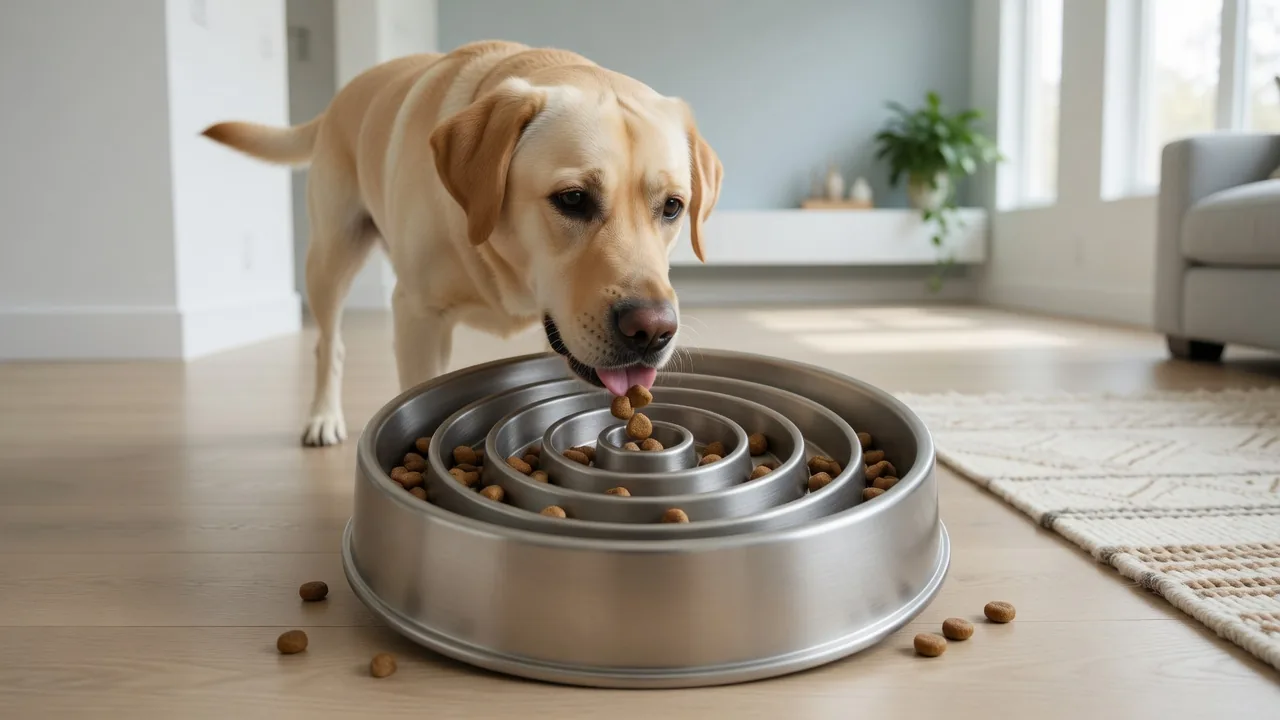
Mental stimulation is any activity that makes your dog think, problem-solve, or use their senses instead of just moving their legs. Sniffing out hidden food, working a puzzle, learning a cue, or nudging kibble out of a maze bowl all count. It's the mental equivalent of exercise — instead of tiring muscles, it tires the brain.
Dogs were bred to have jobs: sniffing out prey, herding, guarding, retrieving. Most pet dogs today have none of that, so their problem-solving drive has nowhere to go. Mental stimulation gives it somewhere to go.
Why mental stimulation matters
- It tires dogs out differently than exercise. A hard sniffing or puzzle session can leave a dog calmer than a jog, because focused mental effort is its own kind of tiring.
- It reduces boredom behaviors. Chewing, digging, excessive barking, and pacing are often signs of an under-stimulated brain, not just excess energy.
- It builds confidence. Dogs that regularly solve small problems (a toy, a scent trail, a new trick) tend to be calmer and more adaptable overall.
- It's useful for dogs who can't exercise much. Puppies still building joints, senior dogs, or dogs recovering from surgery can't always run — but they can almost always sniff, lick, or nose through a puzzle.
A dog getting enough mental stimulation is often visibly more settled at home: less pacing, less demand-barking, more time spent resting.
Easy ways to add mental stimulation
Feed at least one meal as a puzzle
The simplest fix is also the one that requires no extra time: change how your dog eats. A stainless steel slow feeder turns a 30-second gulped meal into five to fifteen minutes of nudging food out of a raised maze pattern — mental work, twice a day, with zero scheduling required.
Scatter feed or use a snuffle mat
Sniffing is one of the most mentally tiring things a dog can do — it uses far more of the brain than walking does. Scatter kibble across a snuffle mat and let your dog root each piece out of the fleece strips. Ten minutes of focused sniffing can be as settling as a long walk.
Teach or practice a cue
Five minutes of training — "touch," "spin," "settle on your mat" — is genuine mental work. It doesn't need to be new; even practicing something they already know keeps the brain engaged.
Rotate toys instead of leaving them all out
A basket of ten toys becomes background furniture. Put most away and swap a few in each week — novelty itself is stimulating, and it costs nothing.
Let sniffing lead the walk
A walk on a tight leash with no stopping is mostly physical. Build in "sniffari" time where your dog chooses where to stop and sniff. It's the mental equivalent of letting them read the local news.
How much mental stimulation does a dog need?
There's no universal number, but a rough guide: at least one dedicated mental activity per day, alongside physical exercise. High-drive breeds (working, herding, sporting types) often need more; older or lower-energy dogs may do fine with less. Watch your dog's behavior rather than the clock — a dog that's calmer and less destructive after a puzzle or sniffing session is getting roughly the right amount. If your dog seems restless, anxious, or is showing sudden behavior changes despite regular enrichment, it's worth a chat with your vet to rule out other causes.
The bottom line
Mental stimulation for dogs isn't a luxury add-on — it's a basic need most pet dogs don't get enough of. The good news is that the easiest wins hook directly into things you already do every day, especially mealtime. Start there, then layer in short training sessions and sniffing time as you go.
Two simple upgrades cover most dogs:
👉 Stainless Steel Slow Feeder Dog Bowl → to turn every meal into a puzzle 👉 Snuffle Mat for Dogs → for daily sniffing and calm
For more ideas, see our full list of dog enrichment ideas.
Frequently Asked Questions
What counts as mental stimulation for dogs? Any activity that makes your dog think or use their senses rather than just move — sniffing games, puzzle feeders, training, and scent work all count.
How do I mentally stimulate my dog at home? Feed a meal through a slow feeder or snuffle mat, practice a short training session, rotate toys, or scatter treats for a sniffing game. Most take five to fifteen minutes.
Is mental stimulation more tiring than a walk? It can be. Focused problem-solving and sniffing use a lot of brain energy and often leave dogs calmer than physical exercise alone. Most dogs do best with a mix of both.
How do I know if my dog needs more mental stimulation? Watch for boredom behaviors like chewing, digging, excessive barking, or restlessness despite regular walks. These often ease once daily mental activities are added.