Written by Ethan Walker · Reviewed against our Editorial Guidelines · Updated August 17, 2026
Food Aggression in Dogs: The Basics
Food aggression in dogs — more accurately called resource guarding — is a real, fairly common instinct to protect food from being taken away, ranging from a stiff body and hard stare to growling, snapping, or biting. Watching your dog react this way over their bowl is unsettling, especially if it's new or there are kids in the house, but understanding what's actually happening is the first step to handling it safely.
This guide covers what resource guarding is, why dogs do it, safe first steps for mild cases, and — importantly — when this is a job for a professional rather than a DIY fix.
What is food aggression / resource guarding?
Resource guarding is a dog's instinct to protect something they value — food, a bone, a toy, even a person or space — from being taken away. It's a normal survival behavior in the animal kingdom; it becomes a problem for us when it shows up as growling, snapping, or biting directed at people or other pets in the home.
Signs of food-related resource guarding range from mild to severe:
- Mild: eating faster when someone approaches, a stiff body, a hard stare, freezing over the bowl
- Moderate: growling, showing teeth, or lip-curling when approached while eating
- Severe: snapping, lunging, or biting
Any of these can appear with people, other dogs, or both, and a dog can guard food specifically without guarding anything else.
Why dogs guard food
- Instinct. Guarding a valuable resource is a deeply ingrained survival behavior, not a sign of a "bad" or dominant dog.
- Past scarcity. Dogs with a history of food insecurity — strays, shelter dogs, dogs from crowded litters — often guard more intensely because they've learned food isn't guaranteed.
- Competition in multi-dog or multi-pet homes. If food has ever felt like a limited resource, guarding can develop as a learned strategy.
- Learned reinforcement. If growling has ever successfully made a person or pet back away, the dog learns that guarding works.
- Pain or discomfort. Sometimes a dog that suddenly starts guarding food (when they never did before) is reacting to pain — dental issues, for example, can make a dog more protective and irritable around the mouth. A sudden change in behavior is always worth a vet visit to rule this out before treating it as purely behavioral.
Safe first steps for mild resource guarding
If your dog shows only mild signs — eating faster, a stiff posture, a hard stare, but no growling or snapping — there are some safe, gentle steps you can try:
- Give them space to eat undisturbed. Feed in a quiet area away from foot traffic, other pets, and kids, so guarding never gets "triggered" in the first place.
- Don't take the bowl away or reach into it while they're eating, even to "test" them or teach a lesson — this often makes guarding worse, not better.
- Practice trading up, away from mealtime. Offer a high-value treat in exchange for a low-value item they're holding (a toy, not food) so your dog learns that a hand approaching means something good is coming, not a loss.
- Feed multiple pets separately, with distance or in different rooms, so competition never becomes part of the routine.
- Keep mealtimes calm and predictable. Consistent timing and a calm environment reduce the anxiety that often underlies guarding.
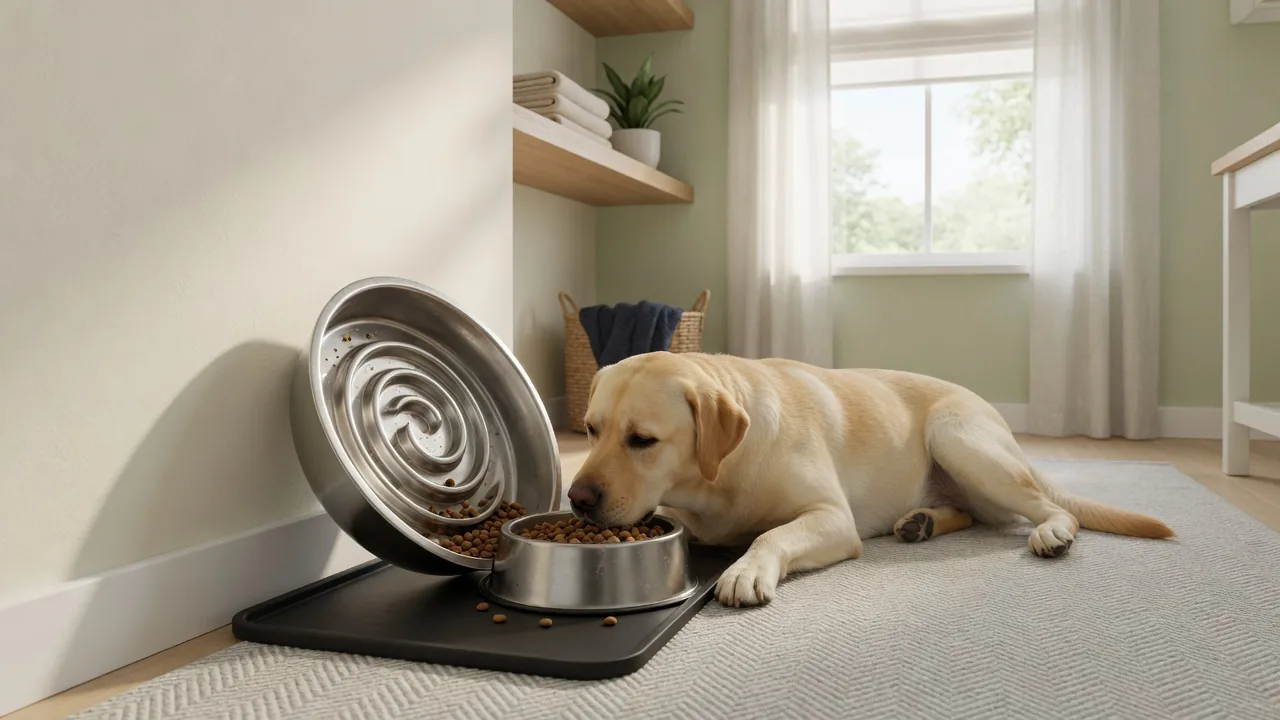
Slowing down the meal itself can also help take some of the intensity out of a frantic, anxious eating style. A stainless steel slow feeder paces eating with a raised maze pattern, which for some dogs turns a rushed, defensive gulp-fest into a slower, calmer activity — though it's a supporting tool, not a treatment for guarding itself. The same goes for scent-based feeding on a snuffle mat, which channels food-seeking energy into a calmer, more absorbing task. Our dog enrichment ideas guide has more ways to build a calmer routine around food generally.
These products are meant to support a calmer mealtime environment — they are not a fix for guarding behavior on their own, and they should never replace guidance from a professional for moderate or severe cases.
When to call a professional trainer or behaviorist
This is the most important section of this article: food aggression that involves growling, snapping, or biting — at people or other pets — is not something to manage with tips from a blog post. Please contact a certified professional dog trainer or veterinary behaviorist if:
- Your dog growls, snarls, or snaps when approached while eating
- Guarding is directed at children, or your household includes children
- Guarding has escalated over time, or has ever resulted in a bite
- Guarding extends beyond food to other objects, spaces, or people
- You feel unsafe or unsure how to manage feeding time safely
A professional can assess your dog's specific triggers and severity in person and build a structured, safe desensitization plan — something that genuinely cannot be done responsibly through a generic online guide. Attempting confrontational "corrections" (punishing growling, forcing a hand near the bowl) is a common mistake that tends to escalate guarding rather than resolve it, because it removes the dog's early warning signal without addressing the underlying anxiety.
If a sudden onset of guarding coincides with any signs of pain, discomfort, or illness, a vet visit should come first, alongside — not instead of — behavioral support.
The bottom line
Food aggression in dogs is really resource guarding — an instinctive, understandable behavior that ranges from a stiff posture to a genuine bite risk. Mild cases often respond well to calm, undisturbed feeding and gentle groundwork like trading exercises away from the bowl. Anything beyond mild — growling, snapping, biting, or guarding around children — deserves a certified trainer or veterinary behaviorist, not a DIY approach. A calmer mealtime routine, including slower feeding tools, can support the process, but it's a supplement to professional guidance, not a replacement for it.
👉 See the Stainless Steel Slow Feeder Dog Bowl → 👉 See the Snuffle Mat for Dogs →
Frequently Asked Questions
What is food aggression in dogs? It's more accurately called resource guarding — an instinctive behavior where a dog protects their food from being taken away, ranging from a stiff posture and hard stare to growling, snapping, or biting.
Is food aggression a sign of a bad dog? No. Resource guarding is a normal survival instinct, not a sign of dominance or a "bad" temperament. It's often linked to past food insecurity, competition with other pets, or learned reinforcement.
Can I fix food aggression myself? Mild guarding (stiffening, eating faster when approached) can often improve with calm, undisturbed feeding and gentle trade-up exercises. Growling, snapping, or biting should be handled by a certified professional trainer or veterinary behaviorist, not managed alone.
Does a slow feeder bowl help with food aggression? It can support a calmer mealtime environment for mild cases by reducing frantic, rushed eating, but it isn't a treatment for guarding behavior — moderate to severe cases need a professional's help.