Written by Ethan Walker · Reviewed against our Editorial Guidelines · Updated August 17, 2026
Enrichment for Anxious Dogs: Why Sniffing Helps Them Settle
Enrichment for anxious dogs — especially sniffing-based activities — can genuinely help a dog settle in the moment and take the edge off day-to-day stress, though it won't fix the underlying cause of anxiety. An anxious dog can feel impossible to help: pacing, panting, whining, or struggling to settle even in a calm room.
This guide focuses on what actually helps and where enrichment's limits are — because a nervous dog deserves an honest answer, not a bowl marketed as a cure.
Why sniffing helps anxious dogs settle
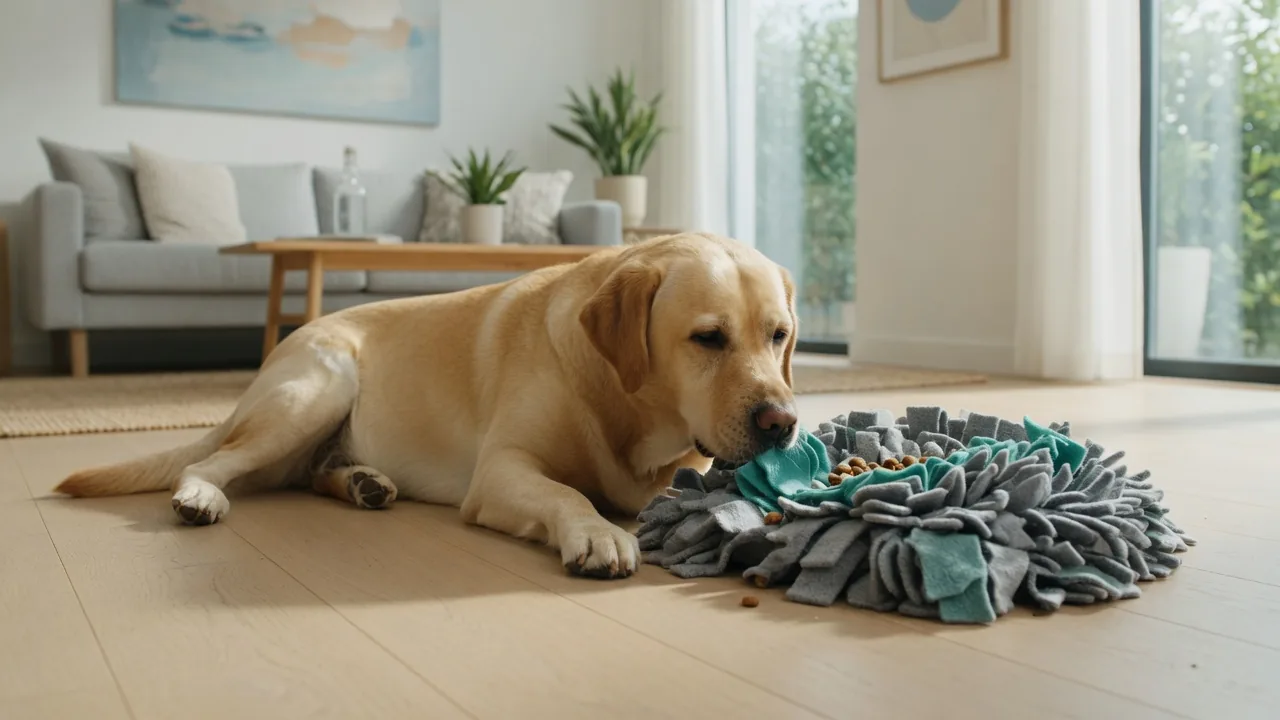
Sniffing is one of the few activities that seems to have a calming effect on dogs, likely because it's a low-arousal, focused task that shifts attention away from whatever is triggering the stress. Unlike fetch or tug, which raise excitement and heart rate, sniffing tends to bring a dog's energy down. Many owners notice their dog's breathing slow and body loosen during a good sniffing session — a visible shift from tense to settled.
That's why scent-based enrichment, more than most other activities, tends to be a good fit for anxious dogs specifically.
Enrichment ideas that help anxious dogs settle
1. Slow, low-pressure sniffing on a snuffle mat
A snuffle mat lets a dog sniff out scattered kibble at their own pace, with no pressure to perform or get it "right." Start with an easy scatter — just a few treats on top of the fleece strips — so an anxious dog isn't overwhelmed by a mat that seems too complex at first. Let them build confidence before making it harder.
2. A slow feeder for calmer mealtimes
Anxious dogs sometimes eat very fast (stress eating) or pick at food nervously. A stainless steel slow feeder turns mealtime into a slower, more focused activity, which can help settle a dog who otherwise gulps food anxiously. Introduce it gradually — scatter a little food loosely on top at first if your dog seems unsure of the maze.
3. A stuffed, licked chew toy
Licking has a similar calming effect to sniffing for many dogs. A frozen, stuffed chew toy given during a stressful moment (visitors arriving, a thunderstorm approaching) can give an anxious dog something constructive to focus on instead of pacing.
4. Predictable, low-key routines
Anxious dogs often do better with predictability. Feeding enrichment (slow feeder, snuffle mat) at the same times each day adds a calm, expected ritual to the day rather than a novel stressor.
5. A safe, quiet space paired with enrichment
Pairing a stuffed toy or snuffle mat with a dog's usual safe spot — a crate, a bed in a quiet corner — can help them associate that space with calm, focused activity rather than isolation.
What enrichment can and can't fix
Enrichment is a genuinely useful daily support tool, and sniffing-based activities in particular can measurably help a dog settle in the moment. But it's important to be honest about its limits:
- It's not a treatment for separation anxiety. True separation anxiety — panic, destructive escape attempts, or distress specifically when left alone — is a behavioral condition that usually needs a structured plan from a vet or a qualified behaviorist, sometimes alongside medication. A snuffle mat or slow feeder can be a helpful part of that plan, but it is not a substitute for one.
- It won't resolve fear of specific triggers like thunderstorms, fireworks, or other dogs on its own. Enrichment can help redirect and soothe in the moment, but underlying fear responses often need a broader desensitization approach guided by a professional.
- Sudden or severe anxiety deserves a vet visit first. New or worsening anxiety can sometimes have a medical component (pain, thyroid issues, cognitive changes in older dogs), so it's worth ruling that out before assuming it's purely behavioral.
Think of enrichment as one useful tool in a broader toolkit — genuinely helpful for taking the edge off daily stress, but not a stand-alone fix for a diagnosable anxiety condition.
The bottom line
Sniffing-based enrichment is one of the most reliable ways to help an anxious dog settle in the moment, and building it into daily routines can meaningfully reduce everyday stress. But if your dog's anxiety is severe, sudden, or centered on being left alone, enrichment should support a proper plan from your vet or a behaviorist — not replace one.
👉 Snuffle Mat for Dogs → for calming, low-pressure sniffing sessions 👉 Stainless Steel Slow Feeder Dog Bowl → for slower, more settled mealtimes
For more everyday enrichment ideas, see our guide to dog enrichment ideas.
Frequently Asked Questions
Does enrichment help with dog anxiety? It can help with day-to-day stress, especially sniffing-based activities that tend to have a calming effect. It's a useful support tool but isn't a treatment for diagnosed anxiety conditions.
Can a snuffle mat help separation anxiety? It may help ease general stress, but separation anxiety is a specific behavioral condition that usually needs a structured plan from a vet or behaviorist. A snuffle mat can be part of that plan, not a replacement for it.
Why does sniffing calm dogs down? Sniffing is a low-arousal, focused activity that seems to shift a dog's attention and energy away from stress, often visibly slowing their breathing and posture. It isn't a guaranteed fix for every dog, but many owners notice a calming effect.
When should I see a vet or behaviorist about my dog's anxiety? If anxiety is sudden, severe, involves destructive behavior when left alone, or doesn't improve with daily enrichment, it's time to consult a vet or a qualified behaviorist rather than relying on enrichment alone.