Written by Ethan Walker · Reviewed against our Editorial Guidelines · Updated August 17, 2026
Crate Rest Activities for Dogs: Calm Enrichment During Recovery
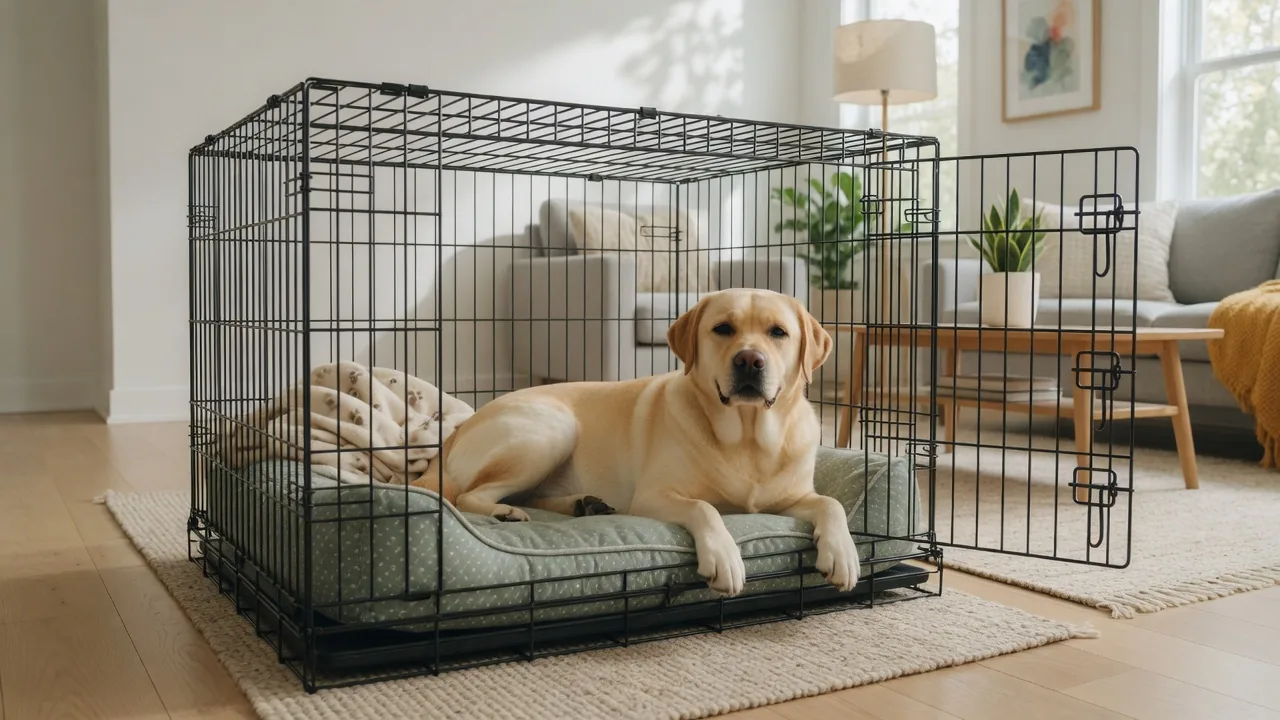
The best crate rest activities are stationary ones — a stuffed frozen chew toy, a lick mat, or calm attention — that occupy your dog's mind without any standing, jumping, or twisting. Vet-ordered crate rest is hard on dogs and owners alike. Your dog feels fine (or fine enough) and wants to move, but surgery, an injury, or a medical condition means they need to stay still — and a bored, restless dog in a small space can turn into a dog who chews the crate bars or works itself into a stressed state. Crate rest activities for dogs need to solve boredom without adding any movement that could interfere with healing.
This guide covers calm, low-movement enrichment ideas that fit inside a crate, plus what to avoid. Always follow your vet's specific instructions for your dog's recovery — this is general guidance, not a substitute for their advice, especially around activity level, food restrictions, and how long crate rest should last.
Why crate rest boredom needs a careful approach
Normal enrichment ideas — tug games, fetch, anything that gets a dog standing, twisting, or jumping — are exactly what crate rest is meant to prevent. The goal here is different: activities that keep the mind busy while the body stays still. Lying down, gentle head and mouth movement, and quiet sniffing are usually the ceiling of what's appropriate, but confirm with your vet what's safe for your dog's specific injury or surgery before trying anything new.
Calm enrichment ideas for crate rest
1. A stuffed, frozen chew toy
Packing a rubber chew toy with a small amount of vet-approved food and freezing it gives a dog something to lick and gently work at for a long stretch, without needing to stand or move around. Licking is naturally calming for many dogs. Confirm with your vet what foods are appropriate if your dog is on a restricted diet post-surgery.
2. A flat lick mat
A lick mat spread with a thin layer of a vet-approved soft food lets your dog lie down and lick in place — no standing, no jumping, minimal head movement. It's one of the lowest-effort, lowest-movement enrichment options available.
3. Gentle scent enrichment
If your vet confirms it's safe, a small snuffle mat with kibble tucked shallowly into the top layer can be placed flat inside a larger crate, letting your dog sniff and nose at it while lying mostly still. Skip this if your dog tends to get excited or dig at mats — the goal is calm, not activated.
4. Feeding through a very low-effort puzzle
Some recovering dogs do fine eating from a shallow slow feeder placed flat in the crate, since it only requires small head and tongue movements rather than standing or pacing. A stainless steel slow feeder with a gentle maze pattern can slow a fast eater down further, but only introduce this if your vet has cleared normal head movement and there's no restriction on bending the neck or torso.
5. Calm one-on-one attention
Quiet talking, gentle petting, or sitting near the crate can go a long way for a dog who's stressed about confinement. This costs nothing and carries zero movement risk.
6. Background calm — white noise or quiet company
Some dogs settle better with a TV or radio on low volume, or simply not being left alone in a silent room for long stretches. This won't solve boredom on its own but can reduce anxiety around confinement.
7. Short, supervised sniffing breaks (if permitted)
If your vet allows brief supervised time out of the crate, a minute or two of gentle sniffing at ground level (not walking) can offer mental relief without asking for real movement. Only do this within whatever limits your vet has set.
What to avoid during crate rest
- Anything that gets your dog standing, jumping, or twisting — puzzle toys that need to be pushed or rolled, tug games, or excitable play.
- New foods or treats not cleared by your vet, especially after surgery involving the digestive system.
- Highly exciting scent games that might make your dog want to dig, paw, or lunge at the mat.
- Leaving your dog without any enrichment at all — total boredom can increase stress and, in some dogs, lead to self-soothing behaviors like excessive licking or chewing at the crate.
If your dog seems distressed, is refusing to eat, or shows any signs like limping, swelling, vomiting, or unusual lethargy during recovery, contact your vet promptly rather than waiting it out — these can be signs of a complication that needs attention.
The bottom line
Crate rest is uncomfortable for most dogs, but calm, low-movement enrichment can make it more bearable without risking their recovery. Lick mats, stuffed frozen toys, and quiet company are the safest starting points — always check anything new against your vet's specific restrictions first.
👉 Snuffle Mat for Dogs → for gentle scent enrichment once cleared by your vet 👉 Stainless Steel Slow Feeder Dog Bowl → for slow, low-effort mealtime enrichment once movement is cleared
For general enrichment ideas once your dog is back to normal activity, see our guide to dog enrichment ideas.
Frequently Asked Questions
What can I give my dog to do during crate rest? Low-movement options like a stuffed frozen chew toy, a lick mat, calm attention, and — if your vet clears it — gentle scent enrichment placed flat inside the crate. Always confirm with your vet before introducing anything new during recovery.
Is it safe to use a snuffle mat during crate rest? Only if your vet confirms your dog's recovery allows the head and neck movement involved in sniffing. Skip it for dogs who tend to get excited, dig, or paw at mats, since that level of movement may not be appropriate post-surgery.
How do I keep my dog calm during crate rest? Combine low-movement enrichment (lick mats, stuffed toys) with quiet company, gentle petting, and low-volume background noise. Avoid anything that encourages standing, jumping, or excited movement.
What are warning signs I should call my vet about during crate rest? Refusing to eat, limping, swelling, vomiting, unusual lethargy, or visible distress are all reasons to contact your vet promptly rather than waiting for the next scheduled check-in.