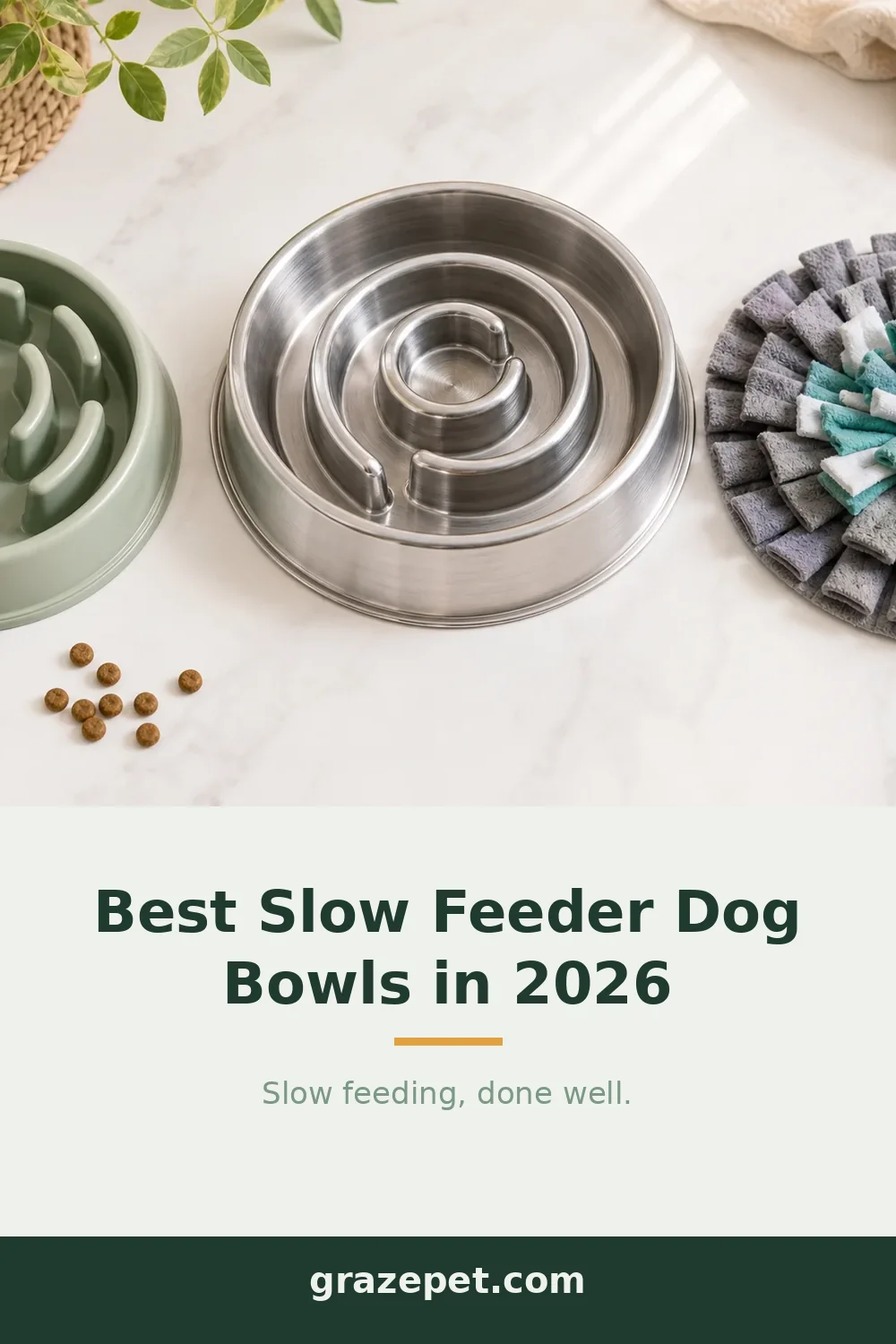
Best Slow Feeder Dog Bowls in 2026 (Tested & Compared)
For most dogs, the best slow feeder dog bowl is a stainless steel maze bowl — it slows gulping as effectively as plastic but stays hygienic and lasts for years. Looking for the right one without wading through fifty near-identical listings? You're in the right place. This is our hub guide to slow feeders — what separates a genuinely good one from a frustrating dud, the trade-offs that actually matter, and our top pick for everyday feeding.
We'll keep it practical: the criteria we judge on, a side-by-side comparison, breed-specific picks, and the honest cases where a slow feeder bowl isn't even the right tool. By the end you'll know exactly which slow feeder to buy and why.
How we picked the best slow feeder bowls
Not all slow feeders are equal. We weighted five things that change the day-to-day experience:
- Material & hygiene — does it scratch and trap bacteria, or stay clean for years?
- Maze design — does it genuinely slow a determined gulper without frustrating an anxious dog?
- Stability — does it skate across the floor, or stay put with a non-slip base?
- Cleaning — dishwasher-safe, or a fiddly hand-wash chore?
- Value over time — cheap once, or cheap forever because you keep replacing it?
A bowl can win on price and still lose overall if you're buying a new one every few months or scrubbing scratched grooves by hand.
Quick comparison: the main slow feeder types
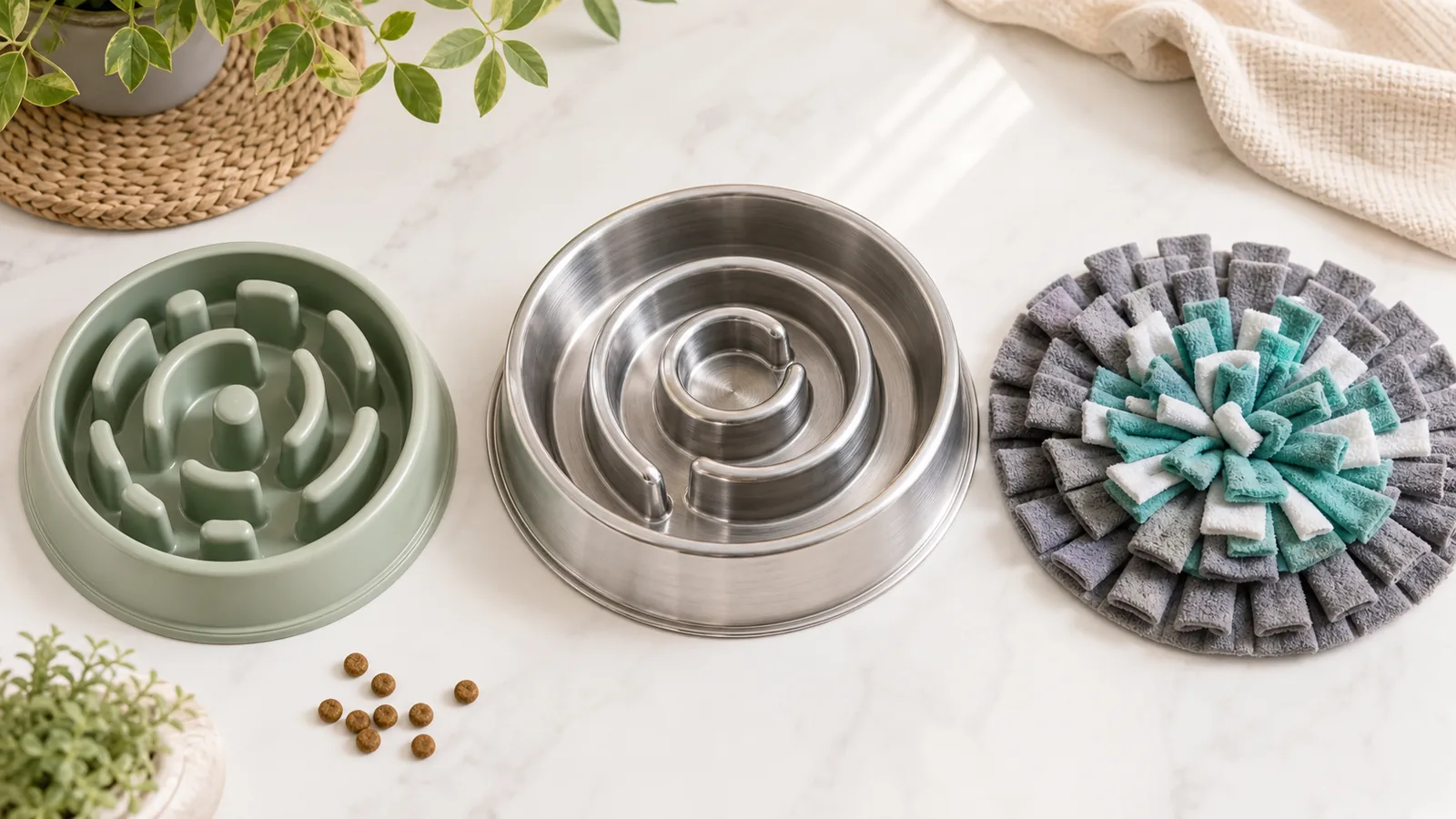
| Type | Hygiene | Durability | Slows gulping | Best for |
|---|---|---|---|---|
| 🥇 Stainless steel maze bowl | Non-porous, stays clean | Years | Yes (proper maze) | Everyday feeding, most dogs |
| 🥈 Plastic maze bowl | Scratches trap bacteria | Months | Yes | Short-term / lowest upfront cost |
| 🥉 Silicone feeder mat | Decent, can tear | Medium | Moderate | Travel, gentle eaters |
| Snuffle mat | Machine-washable fabric | Medium | Yes + enrichment | Enrichment & variety, sniffers |
| DIY (muffin tin, ball in bowl) | Varies | Varies | Moderate | Trying the idea for free |
The two real everyday contenders are stainless steel and plastic maze bowls. We compare them head-to-head in our stainless steel vs plastic slow feeder guide — but the short version is below.
Our top pick: a stainless steel maze bowl
For most dogs and most homes, the best slow feeder dog bowl is a stainless steel maze bowl, and it's not especially close.
Stainless steel wins where it counts:
- Hygiene: non-porous, so there are no scratch grooves for bacteria to hide in. Plastic feeders develop micro-scratches that trap residue and contribute to canine chin acne.
- Durability: it won't crack, warp in the dishwasher, or get chewed apart into swallowable pieces.
- Safety: food-grade and inert — no BPA worries, no plastic taste that puts picky eaters off.
- Value: you buy it once instead of replacing plastic every few months.
The one thing the material doesn't change is the slowing — that comes from the maze design, which both materials can have. So you give up nothing on pacing and gain everything on hygiene and longevity.
👉 Our pick: the Stainless Steel Slow Feeder Dog Bowl — rust-proof, dishwasher-safe, non-slip base →
The maze paces fast eaters, the non-slip base keeps it from skating around, and the steel stays hygienic for years — exactly the criteria above, in one bowl.
Do slow feeders actually work?
Short answer: yes. A good maze feeder slows eating by roughly 5–10x, and most owners notice it at the first meal. The effect is mechanical — ridges limit bite size and force tongue and nose work — so it doesn't rely on training. We dig into the evidence and the mechanism in do slow feeder dog bowls actually work?
That slowdown is what reduces gulped air, gas, and post-meal vomiting — and it can help reduce the risk of bloat (GDV) in deep-chested breeds, since swallowed air is one contributing factor (a sensible precaution, not a guarantee). For the full health picture, see are slow feeder bowls good for dogs?
Best slow feeder by breed & situation
The "best" bowl shifts a little depending on your dog:
- Flat-faced breeds (Bulldogs, French Bulldogs, Pugs): these dogs gulp air easily and need a shallow-enough maze they can actually reach into. See our best slow feeder for Bulldogs & French Bulldogs.
- Big fast eaters (Labradors, retrievers): these are the classic "inhale the bowl" dogs and benefit most from a real maze. See our best slow feeder bowl for Labradors.
- Deep-chested breeds (Great Danes, Boxers, German Shepherds, Standard Poodles): higher bloat risk, so pacing matters most here.
- Bored or anxious dogs: add enrichment. A snuffle mat hides kibble in fabric so your dog forages — great for variety, rainy days, and crate rest.
- Multi-dog homes: feed separately so no one rushes; a slow feeder per dog removes the "eat fast before it's stolen" instinct.
When a slow feeder bowl isn't the right tool
A maze bowl isn't always the answer — being honest about that builds trust.
- If your dog already eats calmly, you don't need one — though it still adds light enrichment.
- If the goal is mainly mental stimulation and sniffing, a snuffle mat beats a bowl for engagement.
- If your dog is suddenly ravenous or eating much faster than normal, that's a vet conversation first — see our tips in how to stop your dog eating too fast.
Many owners end up using both a bowl and a mat: the stainless steel slow feeder for everyday meals and a snuffle mat for enrichment and variety.
The verdict
The best slow feeder dog bowl for most dogs is a stainless steel maze bowl — it slows gulping just as well as plastic but stays hygienic, won't warp or crack, and costs less over time because you buy it once. Match the size and maze difficulty to your dog, keep it clean, and it quietly does its job at every meal.
👉 See our top pick: the Stainless Steel Slow Feeder Dog Bowl → 👉 Add enrichment with the Snuffle Mat for Dogs →
❓ FAQ (also add FAQ schema)
What is the best slow feeder dog bowl? For most dogs, a stainless steel maze bowl. It slows eating as effectively as plastic but stays hygienic, won't crack or warp, and lasts for years, making it better value over time.
Are stainless steel slow feeders better than plastic? Yes. The slowing comes from the maze, which both have, but stainless steel doesn't scratch and trap bacteria, won't hold odors, is dishwasher-safe, and is more durable.
Do slow feeder bowls actually work? Yes — a good maze feeder slows eating by roughly 5–10x, usually from the first meal, which reduces gulping, gas, and vomiting.
What's the best slow feeder for a Labrador or a Bulldog? Both do well with a stainless steel maze bowl; Bulldogs and other flat-faced breeds need a shallow-enough maze they can reach into. See our breed-specific guides for details.
Save this guide