Why Does My Dog Eat So Fast? (And How to Fix It)
Most dogs eat fast because of instinct, competition for food, hunger, or plain excitement — not because something is wrong. If you've ever watched your dog vacuum up dinner in ten seconds flat and thought "why does my dog eat so fast?" — you're far from alone; fast eating is one of the most common dog quirks. But it's not totally harmless: gulping can cause gas, vomiting, and in some dogs raise the risk of bloat.
Below we'll cover the real reasons dogs inhale their food, when fast eating is worth a vet visit, and the simplest ways to slow your dog down.
Why does my dog eat so fast? The main reasons
1. Instinct and survival wiring
Dogs descend from animals that ate in groups, where food didn't hang around. The "eat now, eat fast" instinct is hardwired into many dogs — even a pampered house dog with a full bowl every day.
2. Competition (now or in the past)
In multi-dog homes, eating fast means eating before another dog steals it. Dogs from shelters, large litters, or uncertain pasts often carry this habit for life, even once they're the only dog in the house.
3. Hunger or meal timing
Meals that are too small, too far apart, or a diet that isn't satisfying can leave a dog genuinely hungry — so they attack the next meal. Sometimes the fix is as simple as splitting the same food into more frequent meals.
4. Pure excitement
Some dogs just love food. The bowl comes out, the excitement spikes, and they gulp it down out of sheer enthusiasm.
5. Boredom and routine
If meals are the most exciting part of the day, a bored dog may rush them simply because there's nothing else going on. Enrichment can take the edge off.
6. A possible health cause
Less commonly, a sudden, dramatic increase in appetite or speed can point to a medical issue. If your dog suddenly starts eating much faster or seems constantly ravenous when they didn't before, that's worth a vet check to rule out an underlying cause.
Is it bad if my dog eats too fast?
For most dogs it's a habit rather than a crisis — but fast eating does carry real downsides:
- Gulped air → gas and bloating
- Vomiting or regurgitation right after a meal
- Choking on large, unchewed pieces
- Bloat (GDV) — in deep-chested breeds, swallowed air is one factor linked to this life-threatening stomach twist
So slowing your dog down isn't just about manners — it's a genuine, low-effort health upgrade.
When to see a vet
Most fast eating is normal instinct, but contact your vet if your dog:
- Suddenly starts eating much faster or seems constantly starving when they didn't before
- Retches, vomits, or has a swollen, hard belly after eating
- Seems distressed, restless, or in pain around mealtimes
- Loses weight despite eating more, or shows other changes in appetite
A swollen belly with unproductive retching can be a sign of bloat, which is a medical emergency — don't wait it out, call your vet.
How to fix it: slowing your dog down
The good news is that fast eating is very fixable. A few approaches, from most to least reliable:
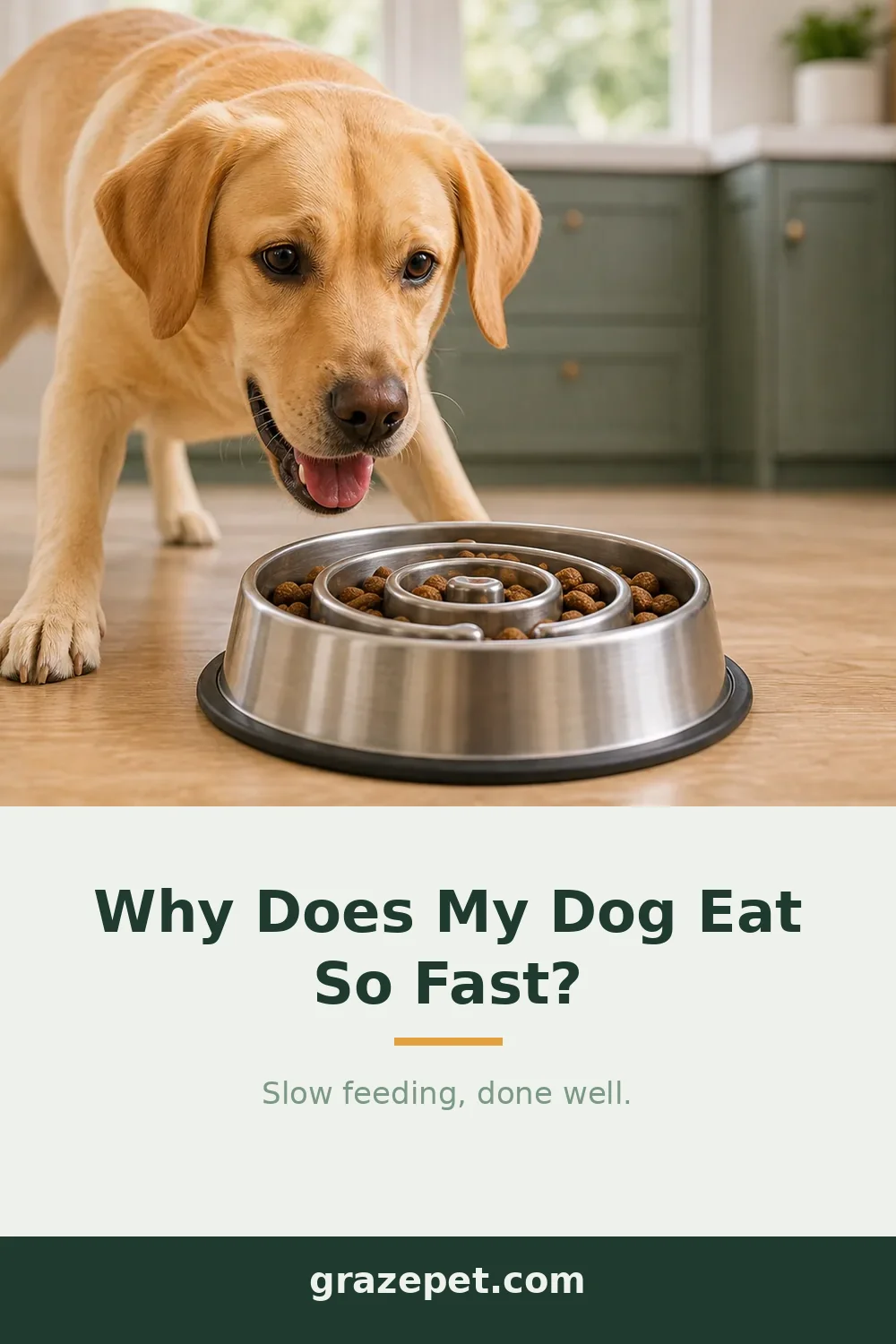
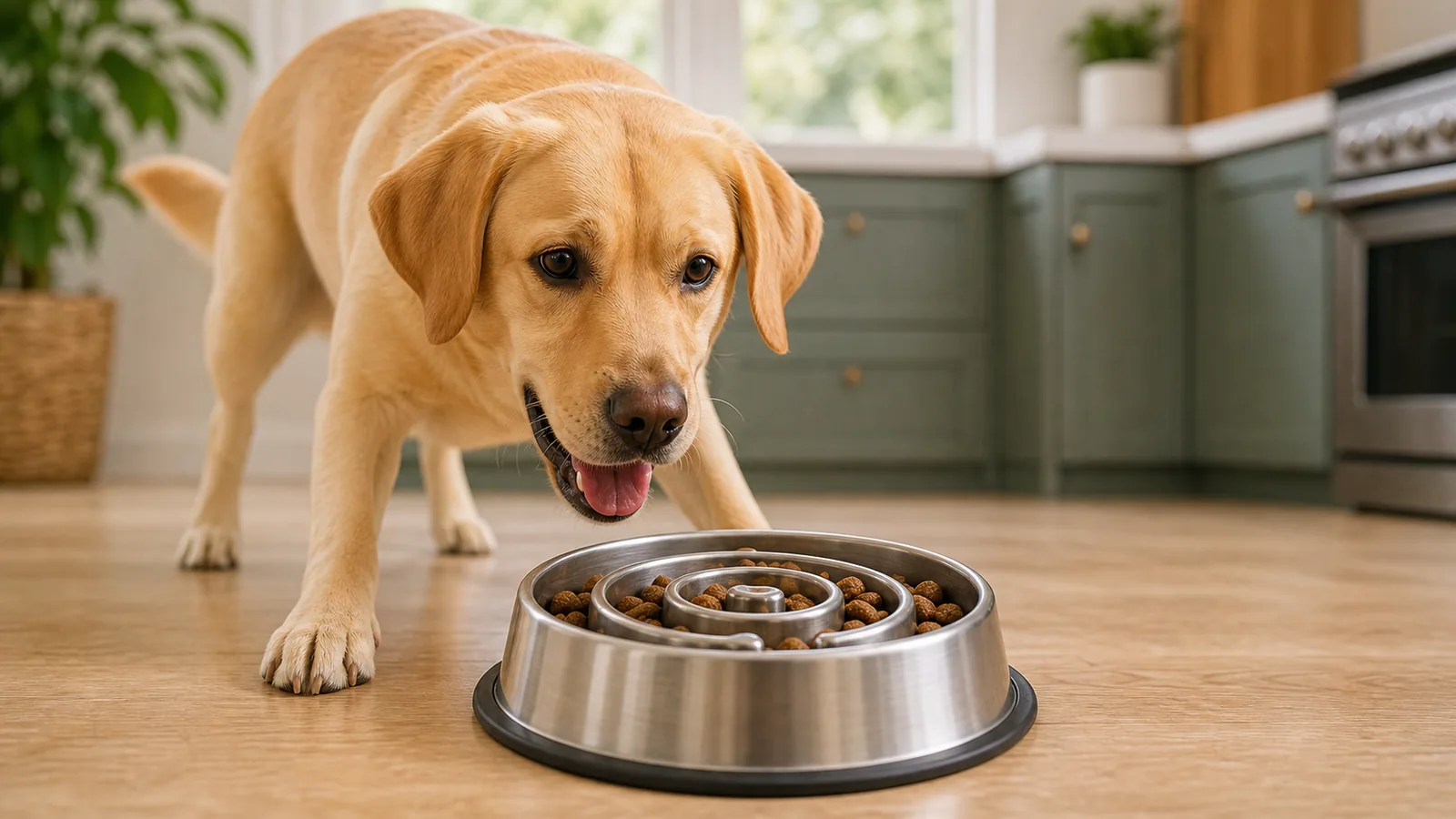
- Use a slow feeder bowl — the most effective, hands-off fix. The built-in maze turns a 10-second gulp into a multi-minute meal. A stainless steel slow feeder does this at every meal and stays hygienic, unlike scratch-prone plastic.
- Try a snuffle mat or scatter feeding to tap your dog's foraging instinct.
- Split meals into smaller, more frequent portions to reduce desperate hunger.
- Feed dogs separately in multi-dog homes to remove competition.
- Add a dog-safe obstacle (like a large, clean ball) to a regular bowl as a quick DIY pacer.
We break down all of these — ranked and explained — in our full guide on how to stop your dog eating too fast. If you want the single most reliable everyday fix, the slow feeder is where most owners start.
👉 See the Stainless Steel Slow Feeder Dog Bowl →
The bottom line
So, why does my dog eat so fast? Usually it's instinct, competition, hunger, or excitement — all normal, and all fixable. The thing to watch for is a sudden change in appetite or signs of distress after eating, which deserve a vet's attention. For everyday gulping, slowing meals with a slow feeder is the simplest, most reliable fix — better digestion, less gas and vomiting, and a calmer dog at dinner.
❓ FAQ (also add FAQ schema)
Why does my dog eat so fast? Most often it's instinct, past or present competition with other dogs, genuine hunger from meal timing, or pure excitement about food. For most dogs it's a normal habit rather than a health problem — but a sudden change in speed or appetite is worth a vet check.
Is it bad for my dog to eat too fast? It can be. Fast eating causes gas, vomiting, and choking, and raises bloat (GDV) risk in deep-chested breeds. Slowing meals reduces these risks and is an easy health upgrade.
How do I get my dog to eat more slowly? The most reliable fix is a slow feeder bowl, whose maze paces every meal. Snuffle mats, scatter feeding, smaller more frequent meals, and feeding dogs separately also help.
When should I worry about my dog eating fast? See your vet if your dog suddenly eats much faster or seems constantly ravenous, vomits or retches after eating, has a swollen hard belly, or seems distressed — these can signal a medical issue or bloat.
Save this guide