7 Dog Enrichment Ideas to Beat Boredom
A bored dog is a destructive dog. Chewed shoes, dug-up gardens, endless barking — most of it traces back to one thing: not enough to do. The fix is enrichment: activities like snuffle mats, slow feeders, and short training sessions that work your dog's brain, not just their legs — 15 minutes of it leaves a dog more settled than a long walk.
Below are 7 dog enrichment ideas you can start today, from quick five-minute games to simple gear that makes everyday meals more interesting. Most cost little or nothing, and all of them help a restless dog settle.
Why enrichment matters
Dogs are problem-solvers wired to sniff, forage, chew, and work for food. When daily life doesn't give them an outlet, that energy comes out as boredom behaviors. Mental work is also tiring in a way exercise alone isn't — 15 minutes of sniffing or puzzle-solving leaves a dog more settled than a long walk. Enrichment isn't a luxury; it's a basic need.
7 dog enrichment ideas
1. Snuffle mats and scent games
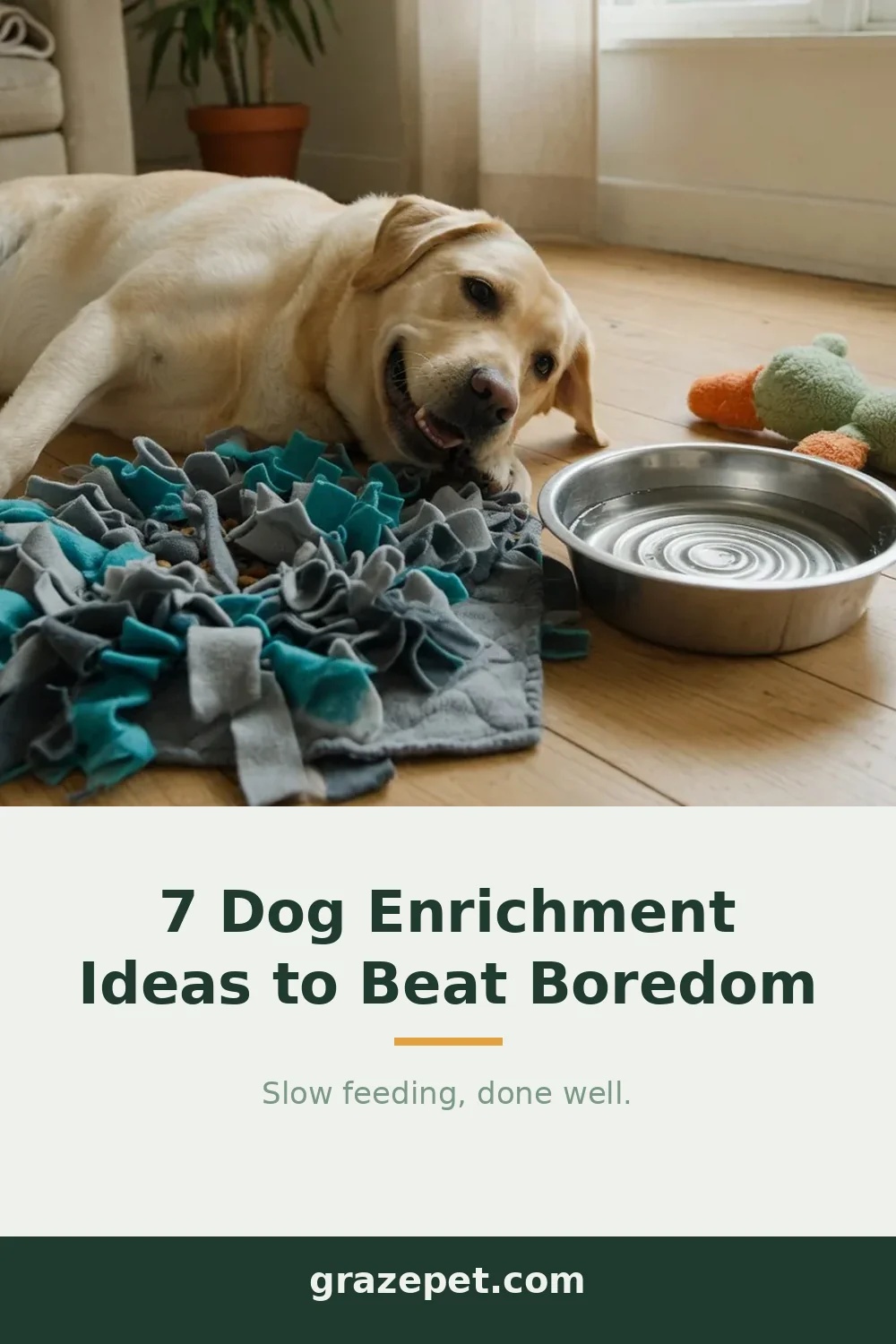
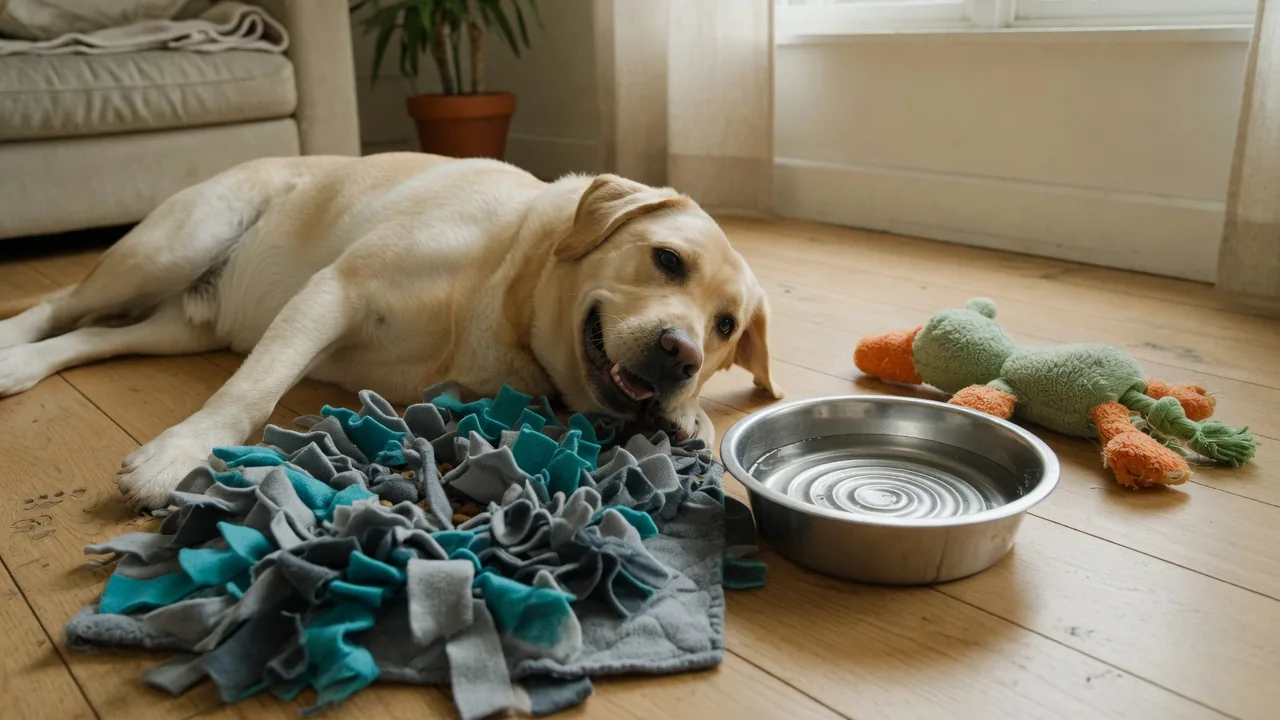
Scatter kibble into a snuffle mat and let your dog sniff each piece out. Scent work is one of the most calming, satisfying activities a dog can do, and it turns a 30-second meal into 10–15 minutes of focused work. No mat? Toss kibble across a clean lawn for a quick "find it" game. (More on why this works in are snuffle mats good for dogs.)
2. Turn meals into a puzzle with a slow feeder
Feeding from a flat bowl is a missed enrichment opportunity. A stainless steel slow feeder makes your dog nudge food out of a maze, adding light mental work to every meal while slowing fast eaters. It's enrichment that happens automatically, twice a day, with zero extra effort from you.
3. Stuffed chew toys
Pack a rubber chew toy with kibble, a little wet food, or plain yogurt and freeze it. Licking and working it out is soothing and can keep a dog busy for ages. Great for crate time or when you need a quiet half hour.
4. DIY cardboard foraging
Don't toss that delivery box. Hide treats in scrunched paper inside a cardboard box and let your dog dig and shred to find them. Cheap, fun, and surprisingly tiring — just supervise so they don't eat the cardboard.
5. Teach a new trick
Five minutes of training is real mental work. Teach "spin," "touch," or "go to your mat." Learning engages your dog's brain and strengthens your bond, and you can do it in the living room.
6. Rotate toys and add novelty
Ten toys out at once becomes background noise. Keep most put away and rotate a few at a time — the "new" toy every week feels fresh. Novelty itself is enrichment.
7. Let them sniff on walks
A walk where your dog gets to stop and sniff is far more enriching than a brisk march on a tight leash. Build in "sniffari" time where the nose leads. It's their version of reading the news.
How to build an enrichment routine
You don't need all seven every day. Mix it up:
- Daily: feed at least one meal through a slow feeder or snuffle mat.
- A few times a week: a stuffed frozen toy, a scent game, or a short training session.
- Weekly: rotate toys and add something new.
The variety is the point. A predictable routine with rotating enrichment keeps your dog engaged without you reinventing the wheel each day.
The bottom line
Most "bad behavior" is just an under-stimulated dog asking for a job. These dog enrichment ideas give them one — and the two easiest wins are the ones that hook into mealtime, because they happen automatically. Start there, then layer in games and training as you go.
Two simple upgrades cover most dogs:
👉 Snuffle Mat for Dogs → for daily foraging and calm 👉 Stainless Steel Slow Feeder Dog Bowl → to turn every meal into a puzzle
❓ FAQ (also add FAQ schema)
What is dog enrichment? Enrichment is any activity that engages your dog's natural instincts — sniffing, foraging, chewing, problem-solving — to give their brain a workout. It reduces boredom behaviors and helps dogs settle.
How do I mentally stimulate my dog at home? Use snuffle mats, slow feeder bowls, stuffed frozen toys, scent games, short training sessions, and toy rotation. Most take only a few minutes and don't need much space.
Is mental stimulation as good as exercise for dogs? It's a complement, not a replacement. Dogs still need physical exercise, but mental work tires them in a different way and can leave them more settled than a walk alone. Most dogs do best with both.
What enrichment is best for a fast eater? A slow feeder bowl or a snuffle mat. Both spread food out so your dog has to work for each bite, which slows gulping and adds mental stimulation at the same time.
Save this guide