Dog Bloat (GDV): Signs, Causes & How to Prevent It
The first signs of dog bloat (GDV) are a suddenly swollen or hard belly, unproductive retching, restlessness, and drooling — if you notice these, treat it as an emergency and contact your vet immediately. Bloat is one of the fastest-moving emergencies in dogs, and knowing the dog bloat symptoms could save your dog's life. Also called GDV (gastric dilatation-volvulus), bloat happens when a dog's stomach fills with gas and, in the dangerous form, twists on itself — cutting off blood flow and progressing within hours.
This guide explains what to watch for, what causes it, which dogs are most at risk, and practical steps that may help reduce the risk. One thing up front, because it matters: if you think your dog has bloat, this is an emergency — call your vet or the nearest emergency clinic right now. Do not wait to see if it passes.
⚠️ This article is general information, not veterinary advice. Bloat is a life-threatening emergency. When in doubt, contact your vet immediately.
What is bloat (GDV) in dogs?
"Bloat" is used two ways:
- Simple bloat (gastric dilatation): the stomach fills with gas and stretches, but doesn't twist.
- GDV (gastric dilatation-volvulus): the gas-filled stomach rotates, trapping its contents and cutting off blood supply. This is the life-threatening form.
From the outside you often can't tell which one is happening — and simple bloat can progress to GDV. That's why any suspected bloat should be treated as an emergency rather than something to monitor at home.
Dog bloat symptoms: what to watch for
The classic dog bloat symptoms tend to come on suddenly, often within an hour or two of eating, drinking a lot, or exercising. Contact your vet immediately if you notice:
- A swollen, hard, or distended abdomen
- Unproductive retching — trying to vomit but bringing up little or nothing
- Restlessness, pacing, and an inability to settle
- Excessive drooling
- A hunched-up posture or looking anxiously at the belly
- Rapid, heavy panting or signs of pain
- In later stages: pale gums, weakness, or collapse
You will not always see every sign, and you don't need to. If even one or two of these appear in a way that worries you — especially the swollen belly plus unproductive retching — treat it as an emergency and go to the vet. Minutes matter with GDV.
What causes bloat in dogs?
The exact cause of GDV isn't fully understood, and it's usually a combination of factors rather than a single trigger. Researchers and vets have linked it to things like:
- Eating too fast and swallowing air with food
- Large, single daily meals instead of smaller, split meals
- Eating from a raised bowl in some studies (evidence is mixed)
- Heavy exercise soon before or after a big meal
- Stress or anxiety around feeding
- Body shape — deep, narrow chests
- Genetics — a first-degree relative with a history of bloat raises risk
It's important to be honest here: because the causes are multi-factorial and not fully proven, no single change guarantees prevention. The goal is to reduce the factors you can control.
Which dogs are most at risk?
Bloat can affect almost any dog, but risk is higher in large and giant deep-chested breeds, including:
- Great Danes (among the highest risk)
- German Shepherds
- Standard Poodles
- Boxers
- Weimaraners
- Doberman Pinschers
- Setters, Bloodhounds, and other large deep-chested breeds
Other factors that can raise risk include older age, being underweight, a nervous temperament, and a family history of bloat. If your dog is on this list, it's worth a specific conversation with your vet about prevention — and, in some high-risk breeds, about a preventive surgery called gastropexy, which tacks the stomach in place to stop it twisting.
How to help reduce the risk of bloat
You can't eliminate the risk, but these steps may help reduce it. None is a guarantee:
1. Slow down fast eating
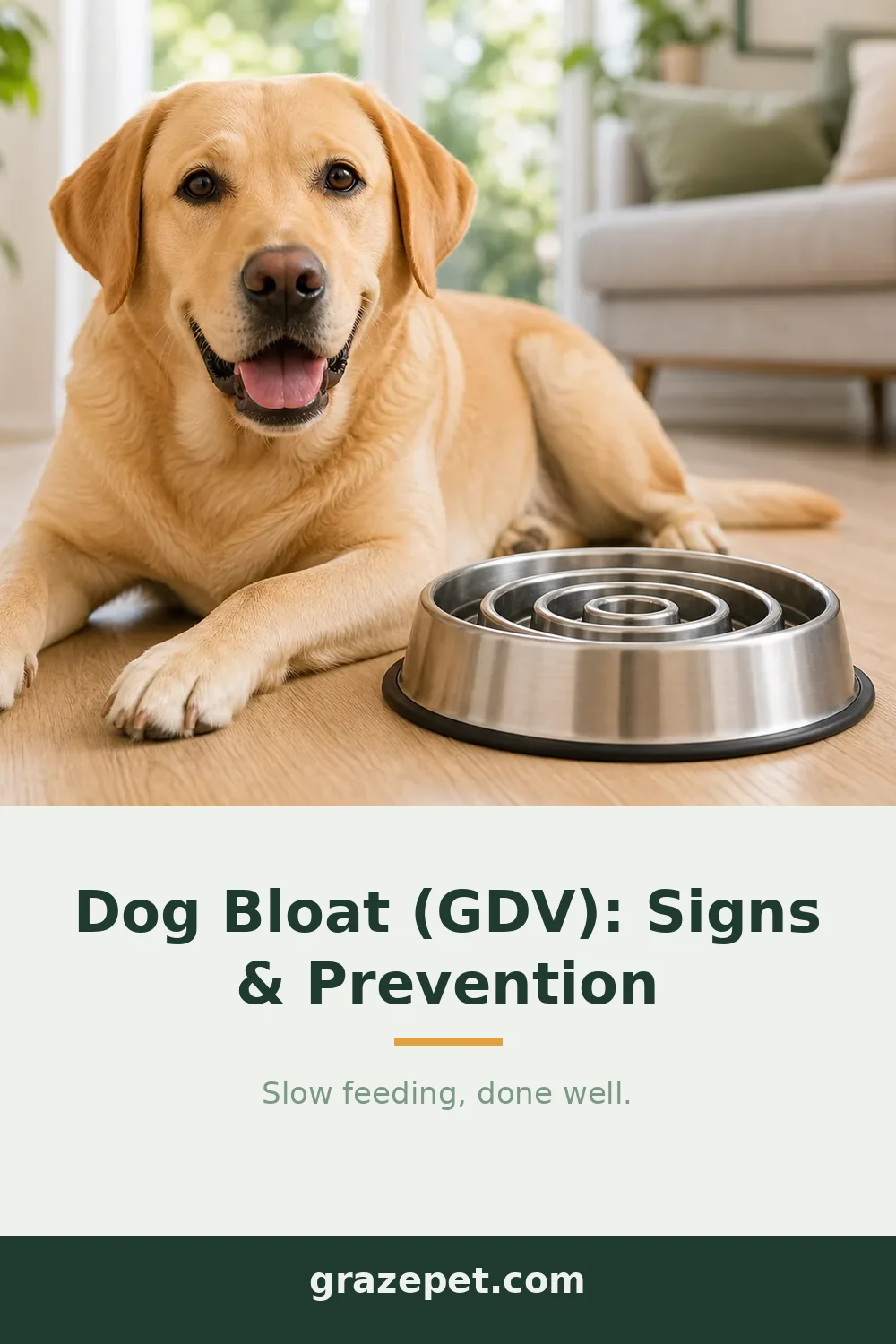
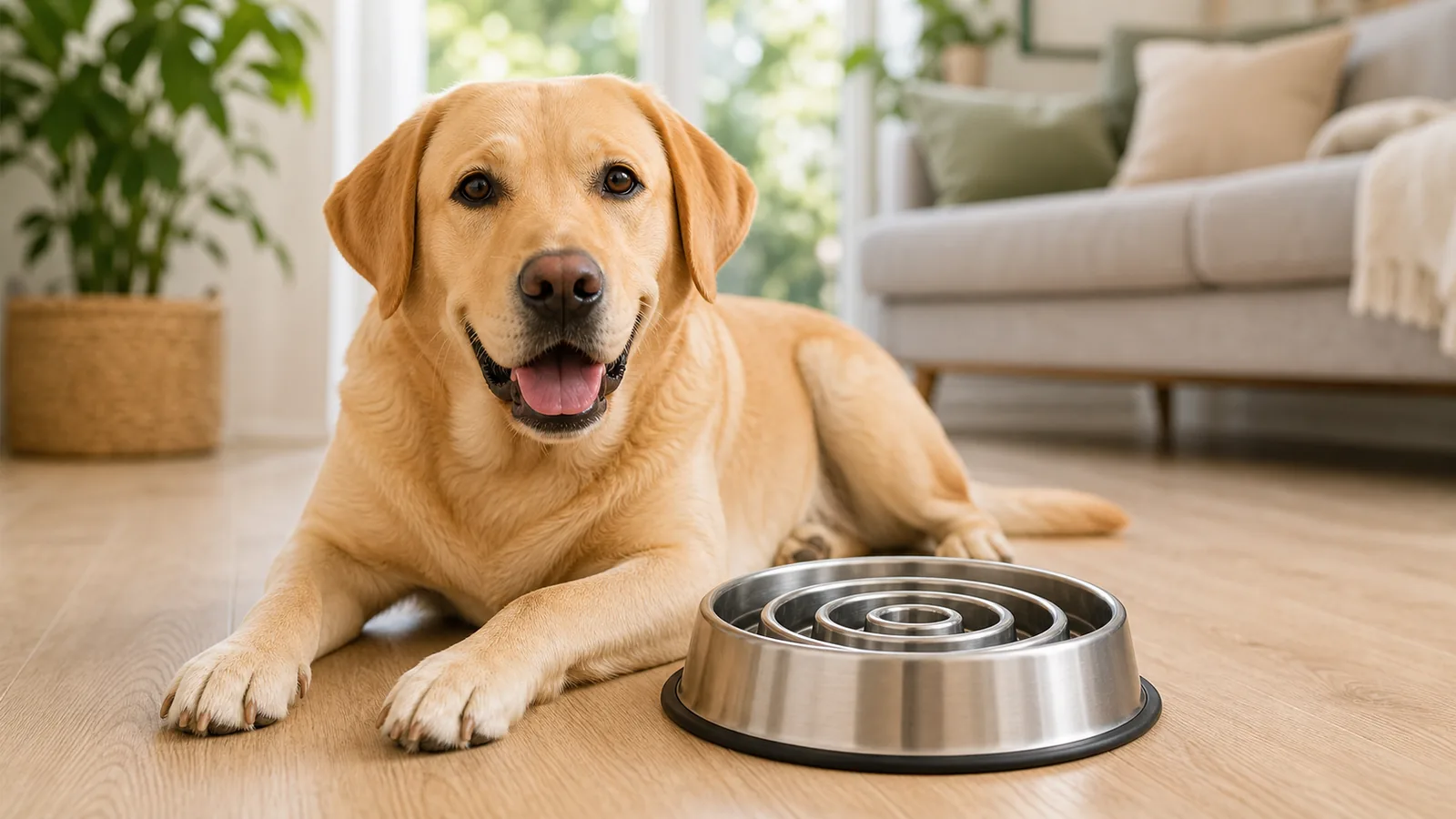
Gulping means swallowing more air, one of the factors associated with bloat. A slow feeder bowl paces meals and is one of the simplest at-home steps. Our guide on whether slow feeder bowls are good for dogs explains how they work — and a hygienic stainless steel slow feeder is an easy way to slow a fast eater at every meal.
2. Split meals into smaller portions
Two or three smaller meals a day, instead of one large one, may put less strain on the stomach than a single big feed.
3. Avoid hard exercise around mealtimes
Many vets suggest a calm window before and after meals — no vigorous play or running right after a big bowl of food.
4. Reduce mealtime stress and competition
In multi-dog homes, feeding dogs separately can lower the anxious rushing that drives gulping.
5. Talk to your vet about high-risk breeds
For the highest-risk breeds, ask your vet about preventive options like gastropexy. This is a medical decision that only your vet can guide.
These steps support — but never replace — veterinary advice. If your dog is high-risk, your vet's guidance comes first.
What happens at the vet
With suspected GDV, a vet will typically stabilize the dog, relieve the gas pressure, take X-rays to confirm whether the stomach has twisted, and — if it's GDV — perform emergency surgery to untwist the stomach and often tack it in place. Knowing what to expect can help you act faster: survival improves dramatically the sooner treatment begins, which is exactly why recognizing the symptoms early is so important.
The bottom line
Bloat (GDV) is a fast, life-threatening emergency, and the single most useful thing any owner can do is recognize the symptoms and act immediately — a swollen belly plus unproductive retching means vet, now. You can't fully prevent bloat, but slowing fast eating, splitting meals, calming mealtimes, and avoiding exercise around food are sensible steps that may help reduce the risk. For at-risk breeds, make a prevention plan with your vet.
A slow feeder is one small, easy piece of that puzzle — helpful, but never a substitute for veterinary care.
❓ FAQ (also add FAQ schema)
What are the first signs of bloat in a dog? Often a suddenly swollen or hard belly, unproductive retching (trying to vomit with little coming up), restlessness and pacing, drooling, and a hunched posture. These can appear within an hour or two of eating. Treat them as an emergency and contact your vet immediately.
How quickly does dog bloat progress? GDV can progress within hours and is rapidly life-threatening. There is no safe "wait and see" window — if you suspect bloat, go to the vet or an emergency clinic right away.
Can a slow feeder prevent bloat? No bowl can prevent bloat. A slow feeder may help reduce one contributing factor — swallowed air from gulping — but it is not a cure or a guarantee. It's one sensible precaution among several, alongside veterinary guidance.
Which dogs are most at risk of bloat? Large, deep-chested breeds such as Great Danes, German Shepherds, Standard Poodles, Boxers, Weimaraners and Dobermans are at higher risk. Older age, a nervous temperament, and a family history of bloat can add to it.
Is bloat always an emergency? Yes — treat any suspected bloat as an emergency. Even simple bloat can progress to the twisted, life-threatening form (GDV), so it should never be monitored at home.
Save this guide